Hearing First Slough – Ear Wax Removal Using Microsuction

Expert Microsuction Ear Wax Removal In Slough
The only specialist microsuction ear wax removal Slough clinic providing Microsuction Ear Wax Removal and Manual Instrument Ear Wax Removal by our expert ear wax removal Slough practitioners. All of our ear wax removal practitioners are hand picked by our founder, Jason Levy. We really are the ear wax removal specialists!
Our convenient location in Slough provides ear wax removal services for clients in Slough, Langley, Iver, West Drayton, Egham, Staines, Burnham, Stockley Park, Stoke Poges, Loudwater, Goulds Green, Hillingdon, Holtspur, Well End, Cookham, Wycombe Marsh, Wooburn Green, Cippenham, Farnham Royal, George Green, Dorney, Little Marlow, Hitcham, Eton Wick, Boveney, Clewer, Brands Hill, Datchet, Upton, Wexham, Manor Park, Britwell, Salt Hill, Chalvey, Lent Rise, Lynch Hill, Dropmore, Widmoor, Bourne End, Flackwell Heath, Windsor, Bray, Maidenhead, Holyport, Taplow, The Broadway, Gerrards Cross, Furze Platt, Boyn Hill, Cowley, Uxbridge, Hayes, West Drayton, Fulmer, Middle Green, Harmondsworth, Harlington, Stanwell, Heathrow, Hedgerley, Ickenham, Horton, Wraysbury, Poyle, Thorney, Richings Park, Shreding Green, Berkshire, Buckinghamshire and Middlesex.
Expert Microsuction Ear Wax Removal In Slough
The only specialist microsuction ear wax removal Slough clinic providing Microsuction Ear Wax Removal and Manual Instrument Ear Wax Removal by our expert ear wax removal Slough practitioners. All of our ear wax removal practitioners are hand picked by our founder, Jason Levy. We really are the ear wax removal specialists!
Our convenient location in Slough provides ear wax removal services for clients in Slough, Langley, Iver, West Drayton, Egham, Staines, Burnham, Stockley Park, Stoke Poges, Loudwater, Goulds Green, Hillingdon, Holtspur, Well End, Cookham, Wycombe Marsh, Wooburn Green, Cippenham, Farnham Royal, George Green, Dorney, Little Marlow, Hitcham, Eton Wick, Boveney, Clewer, Brands Hill, Datchet, Upton, Wexham, Manor Park, Britwell, Salt Hill, Chalvey, Lent Rise, Lynch Hill, Dropmore, Widmoor, Bourne End, Flackwell Heath, Windsor, Bray, Maidenhead, Holyport, Taplow, The Broadway, Gerrards Cross, Furze Platt, Boyn Hill, Cowley, Uxbridge, Hayes, West Drayton, Fulmer, Middle Green, Harmondsworth, Harlington, Stanwell, Heathrow, Hedgerley, Ickenham, Horton, Wraysbury, Poyle, Thorney, Richings Park, Shreding Green, Berkshire, Buckinghamshire and Middlesex.
Hearing First Slough – Ear Wax Removal Using Microsuction
Address:
63 Chequers Orchard Iver, SG6 3EFProfessional ear wax removal Slough clinicians. We are the only clinic that offer The Hearing First Waxfree Guarantee™, so if you have an ear wax problem, book an appointment at our ear wax removal clinic in Slough. We are Audiologists specialising in ear wax removal. Your local ear wax experts in SL0.
Hearing First Slough – Ear Wax Removal Using Microsuction Map
Find A Hearing First Ear Wax Removal Clinic Near You
Frequently Asked Questions
I need ear wax removal using microsuction – do you provide this service?
Yes. All of our microsuction practitioners are trained, certified and insured to provide microsuction ear wax removal.
With 43 locations in London, Berks, Bucks, Cambridgeshire, Essex, Herts, Kent, Leicestershire, Norfolk, Oxfordshire, Suffolk, Surrey, Sussex, Staffordshire, Warwickshire, the West Midlands, Merseyside and Lancashire we’ve got you covered!
To book online, please click this link.
I need ear wax removal using manual instruments – do you provide this service?
Yes. All of our microsuction practitioners are certified, trained and insured to provide manual instrument ear wax removal, which is especially suitable for people who are very sensitive to loud noise.
With 43 locations in London, Berks, Bucks, Cambridgeshire, Essex Herts, Kent, Leicestershire, Norfolk, Oxfordshire, Suffolk, Surrey, Sussex, Staffordshire, Warwickshire, the West Midlands, Merseyside and Lancashire we’ve got you covered!
To book online, please click this link.
How must does ear wax removal cost?
Pricing can vary if it is one or two ears, at peak or off-peak times, how far in advance the booking is made, and by location.
Click here to check the most up to date prices for your location
My ears are very sensitive to loud noise. Is microsuction ear wax removal right for me?
If you find that moderately loud noise like a vacuum cleaner or hand dryer causes you physical pain, then microsuction may not be right for you. Instead, we would recommend manual instrument ear wax removal. Fortunately all of our practitioners are trained to offer manual instrument ear wax removal, which is especially suitable for people who are very sensitive to loud noise.
With 43 locations in London, Berks, Bucks, Cambridgeshire, Essex, Herts, Kent, Leicestershire, Norfolk, Oxfordshire, Suffolk, Surrey, Sussex, Staffordshire, Warwickshire, the West Midlands, Merseyside and Lancashire we’ve got you covered!
To book online, please click this link.
Do You Provide Microsuction Ear Wax Removal For Under 18s?
Yes: We provide microsuction ear wax removal for children aged 12-17 when accompanied by a parent or guardian.
With 43 locations in London, Berks, Bucks, Cambridgeshire, Essex, Herts, Kent, Leicestershire, Norfolk, Oxfordshire, Suffolk, Surrey, Sussex, Staffordshire, Warwickshire, the West Midlands, Merseyside and Lancashire we’ve got you covered!
To book online, please click this link.
Do You Provide Microsuction Ear Wax Removal For Under 12s?
Since the beginning of the Covid-19 crisis, we have unfortunately ceased to offer our service for under 12s.
How do you remove impacted ear wax?
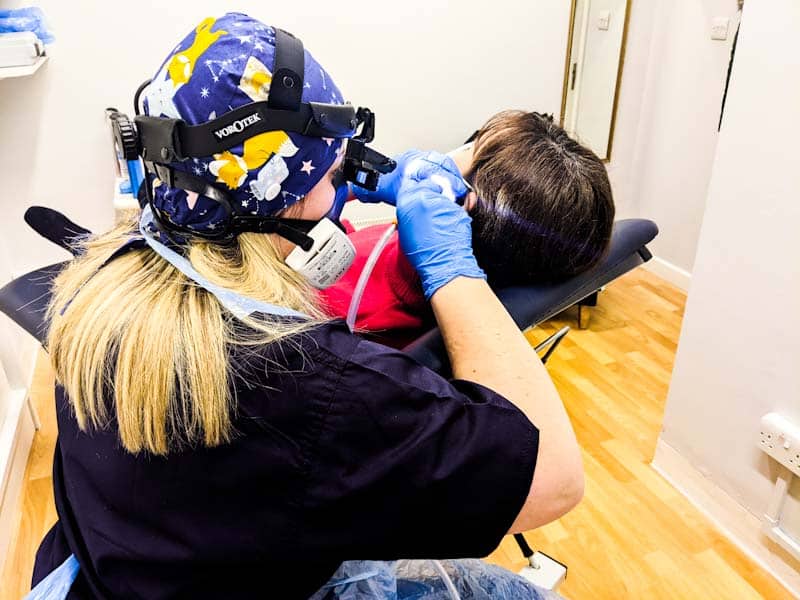
If your ear has been examined by a doctor, nurse or Audiologist and your ear wax has been confirmed as being impacted, you should buy Waxsol from a Pharmacy and use it for two days before your procedure as advised in the patient leaflet. Otherwise we recommend that you use two squirts of Earol spray two to three times a day for at least three days before your procedure. When you come to your appointment, we will discuss any issues that may affect the procedure, examine your ear, then examine your ear with a portable ENT microscope. As long as it is safe to proceed, we will use gentle medical suction as well as specialist ENT instruments to safely and gently remove your impacted ear wax
To book online, please click this link.
Where can I get ear wax removal?
With 43 locations in London, Berks, Bucks, Cambridgeshire, Essex, Herts, Kent, Leicestershire, Norfolk, Oxfordshire, Suffolk, Surrey, Sussex, Staffordshire, Warwickshire, the West Midlands, Merseyside and Lancashire we’ve got you covered!
To find your nearest clinic and to book online, please click this link.
Do I need to soften my ear wax?
If you have confirmed soft ear wax, then you do not need to soften it as it is already soft. Also, if you have a perforated ear drum that has not healed, then you should not use ear drops before a microsuction procedure.
In every other case, pre-softening the wax is recommended: in “Aural microsuction for wax impaction: survey of efficacy and patient perception“, a significant finding was “Patients who had used cerumenolytics [ear drops or sprays] reported significantly less pain and vertigo [dizziness]”. Combining this important information with the study below (Suction-generated noise levels during aural toilet), we can conclude that patients should use 2 to 3 squirts of Earol spray (optionally with the addition of 3 glycerine drops 2 – 3 times a day) for at least 3 days prior to a microsuction procedure. Very hard impacted ear wax can also be softened with Waxsol used for two days prior to a microsuction procedure.
It is worth noting that there has been a recent review of various studies comparing the effectiveness of different types of ear drops. The conclusion is that no one brand of ear drop has been comprehensively shown to be better than any other. Nevertheless, we still recommend the use of Earol spray with the optional addition of glycerine drops as this has been shown to increase the comfort as well as reduce the chances of vertigo during a microsuction procedure.
We specifically recommend you do not use sodium bicarbonate or hydrogen peroxide ear drops: In a study called “Suction-generated noise levels during aural toilet“, noise levels were measured in the ear of an artificial model head using various suction tubes on different substances. It was noted that the suctioning of water generated very high levels of noise (over 130 dB(A)). For this reason we do not generally recommend the use of aggressive ear drops that contain sodium bicarbonate or urea hydrogen peroxide as it can make ear wax very watery, greatly increasing the noise level during the procedure. In addition, prolonged use of sodium bicarbonate ear drops can lead to an opportunistic infection of the ear canal (because sodium bicarbonate reduces the protective acidity level within the canal); and prolonged use of urea hydrogen peroxide drops can cause severe irritation to the skin surface in the ear canal in some people (hydrogen peroxide is bleach, after all).
To find your nearest clinic and to book online, please click this link.
On another website it says I don’t need to soften me ear wax. Why do you say it does?
We give research-backed reasons why you need to soften your ear wax in the above answer to “Do I need to soften my ear wax?”
Other websites say you don’t need to soften your ear wax because they want to get you through their door. If they then find that your ear wax is too hard, could you then be sure that they would stop and tell you that they weren’t entirely honest and you do actually need to soften your ear wax – and you’ll have to come back at another time?
We would rather be completely up front, outlining the benefits of pre-softening with Earol for you safety and comfort, as well as it greatly improving the chances of a successful procedure.
To find your nearest clinic and to book online, please click this link.
Do you offer ear syringing or ear irrigation?
At the Hearing First Microsuction Ear Wax Removal Network we never syringe or irrigate. Instead, we use the far safer microsuction and manual instrument methods to remove ear wax.
Syringing was routinely offered in GP surgeries, and was largely replaced in the 1980s with electric ear irrigators. However, in a 2002 article (Removal of ear wax | The BMJ), the BMJ reported that ear syringing carries with it a high chance of complications: perforation of the ear drum, otitis externa, damage to the external canal, pain, deafness, vertigo, and tinnitus are all possible with syringing.
Syringing and irrigation is also contraindicated (not recommended) in case of current or previous ear drum perforation, ear infection, presence of a grommet, or a history of ear surgery, whereas microsuction can be safely used in these cases.
Microsuction is much safer than syringing, but requires a significantly higher level of training. All of our audiologists are hand picked and undergo additional training in advanced ear wax removal methods, giving us an unrivalled success rate of 99.8%.
To find your nearest clinic and to book online, please click this link.
Do you provide microsuction ear wax removal on weekends?
We provide ear wax removal at our Oxford clinic every other Saturday.
Currently we have no weekend service at our other clinics due to staff shortage. Are you an Audiologist who is skilled in ear wax removal? We want to hear from you! Email us at ku.oc.tsrifgniraeh@sreerac with your CV and covering letter.
Do you provide ear wax removal near me?
Yes. We provide microsuction ear wax removal for clients in Slough, Langley, Iver, West Drayton, Egham, Staines, Burnham, Stockley Park, Stoke Poges, Loudwater, Goulds Green, Hillingdon, Holtspur, Well End, Cookham, Wycombe Marsh, Wooburn Green, Cippenham, Farnham Royal, George Green, Dorney, Little Marlow, Hitcham, Eton Wick, Boveney, Clewer, Brands Hill, Datchet, Upton, Wexham, Manor Park, Britwell, Salt Hill, Chalvey, Lent Rise, Lynch Hill, Dropmore, Widmoor, Bourne End, Flackwell Heath, Windsor, Bray, Maidenhead, Holyport, Taplow, The Broadway, Gerrards Cross, Furze Platt, Boyn Hill, Cowley, Uxbridge, Hayes, West Drayton, Fulmer, Middle Green, Harmondsworth, Harlington, Stanwell, Heathrow, Hedgerley, Ickenham, Horton, Wraysbury, Poyle, Thorney, Richings Park, Shreding Green, Berkshire, Buckinghamshire and Middlesex.
Click here to book microsuction now
How Much Does Ear Wax Removal In Slough Cost?
Pricing can vary if it is one or two ears, at peak or off-peak times, and how far in advance the booking is made, but typically starts from £34.
Click here to check the most up to date prices
More Frequently Asked Questions
-
Why should I choose Hearing First as my ear wax removal provider?

Here are six reasons why Hearing First is the best choice for safe and professional ear wax removal:
✔ Waxfree Guarantee™ – We are the only ear wax removal provider to offer this exclusive guarantee.
✔ In-House Clinicians – All of our Audiologists are directly employed by Hearing First—we are not a referral service.
✔ Audiology Experts – Our clinicians are qualified Audiologists who specialise in hearing—we do not employ pharmacy assistants, podiatrists, or beauticians.
✔ Ongoing Professional Training – Our Audiologists undergo regular professional development to stay at the forefront of audiology advancements.
✔ Advanced Equipment – We use the Vorotek O-Scope, which provides superior depth perception up to the eardrum, making it safer than loupes, video-endoscopes, or the Tympa system.
✔ Safe & Effective Techniques – All of our Audiologists are trained in both microsuction and manual instrument methods, the most precise and comfortable ear wax removal techniques available.
With Hearing First, you’re in the hands of dedicated registered professionals who prioritise your well-being and hearing care. -
What are the four methods of ear wax removal?
The four methods of ear wax removal are:
1. Irrigation (aka syringing)
2. Endoscopic ear wax removal
3. Microsuction
4. Manual instruments -
Do you use all four methods of ear wax removal?
There are four recognised methods of ear wax removal, but while each has its own merits, they are not equal in terms of effectiveness and safety. No method is completely risk-free, but some are significantly safer than others. The key factor in ensuring a safe and successful procedure is the expertise and training of the practitioner. Is the person treating you a qualified Audiologist with in-depth knowledge of the ear, or are they a beautician, podiatrist, or pharmacy assistant with limited ear care training?
The Four Methods of Ear Wax Removal
❌ Irrigation (Not Used at Hearing First)
We have never used irrigation due to its higher risk of complications, including eardrum perforation. This method, sometimes referred to as “spray and pray”, involves flushing the ear with water without direct visualisation of the ear canal. The force of the water jet can unintentionally strike the eardrum, particularly if an undiagnosed infection has weakened it.❌ Endoscopic Microsuction (Not Used at Hearing First)
We conducted a year-long evaluation of this method and found several significant drawbacks:
✗ The endoscope is bulky, making it uncomfortable in narrow ear canals.
✗ 2D imaging lacks depth perception, increasing the risk of accidental injury.
✗ The heavy battery pack causes hand fatigue, making it impractical for all-day clinic use.
✗ It is better suited for video demonstrations than clinical precision.✅ Microsuction (Preferred Method at Hearing First)
✔ Widely regarded as the safest method for ear wax removal.
✔ Performed using a fixed or portable ENT microscope (e.g. Vorotek O-Scope) for superior depth perception.
✔ Ideal when wax has been properly softened.
✔ If wax is deep, we use a fine end suction tube, reducing airflow by 75% for a quieter, more comfortable experience.✅ Manual Instrument Removal (Used When Necessary)
✔ Effective when wax is too firm or sticky for microsuction.
✔ Used if wax is adhering to the ear canal wall (often due to insufficient softening).
✔ While patients may feel temporary pressure, the instant relief when the wax is removed makes it worthwhile.A Tailored Approach for the Best Results
In many cases, our clinicians use a combination of microsuction and manual instruments, as wax can vary in consistency depending on how long it has been in the ear and how well it has softened.
No matter which method is used, as long as you follow our Waxbusting Protocol™, you are covered by our Waxfree Guarantee™—if we can’t remove your wax at the first appointment, your second visit is free!
Why do I need to soften my ear wax?

Our audiologists are highly trained professionals, and your safety is their top priority. The skin lining your ear canal is extremely delicate—it ranges from 1mm thick at the entrance to just 0.1mm (4 thousandths of an inch) at the eardrum.
Ear wax is often hard and sticky—if it weren’t, it would naturally work its way out, as the ear is self-cleaning for most people. When wax becomes impacted, it can stick to the delicate ear canal lining, increasing the risk of scratches, irritation, or damage during removal.
Pre-softening the wax is highly recommended because:
✔ It makes removal safer and more comfortable
✔ It reduces the risk of irritation or injury to the ear canal
✔ Clinical research confirms it lowers the chances of dizziness or discomfort during the procedure
For the safest and most effective treatment, we always recommend following our pre-softening guidelines before your appointment.
When I use drops or spray my hearing gets worse. Should I stop?
No, don’t stop! We normally expect this to occur.
When you apply ear drops or spray, the liquid fills the tiny gaps around the wax, temporarily reducing your hearing. If the wax is dry, it will also expand as it absorbs the softener—much like a raisin plumping up in water.
This is a sign that the wax softener is working, helping to break down the wax for a smoother, more comfortable removal.
For the best results, continue following the Hearing First Wax Busting Protocol™ or apply Earol olive oil spray 4 times a day for 5 days until your appointment.
I’m unable to soften both ears due to my work or caring duties. What can I do?
This is a common challenge, and is one of the reasons why we offer a discount for single-ear procedures.
We recommend booking an appointment for one ear first, following the Hearing First Wax Busting Protocol™ for that ear. Once it has been treated, you can then repeat the process for your other ear at a later appointment.
This approach ensures both ears receive the proper care while fitting around your schedule.
I need ear wax removal urgently and don’t have time to soften it. What should I do?
If you can book at least one day in advance, we recommend speaking to a pharmacist and purchasing Waxsol or sodium bicarbonate with glycerol ear drops over the counter. Use them in both ears the night before and again on the morning of your appointment. While this isn’t as effective as the Hearing First Wax Busting Protocol™, it’s better than nothing and can improve the chances of successful removal.
If you book on the same day and haven’t softened your wax at all, you’ll need to agree to a disclaimer. We will do our best to remove the wax, but unfortunately, we cannot guarantee success in these cases.
I can’t find Earol, but I found something called Cl-ear Olive Oil Ear Spray – is that ok?
Yes. Cl-ear Olive Oil Ear Spray is almost equivalent to Earol, and can be used as part of our Waxbusting Protocol™. The difference between them is that Earol is in a sealed sterile container and can be used for up to 6 months, while Cl-ear Ear Spray is good to use for up to 28 days.
The Pharmacist says ordinary pharmacy grade olive oil with a dropper is just the same as Earol. Can I use that and still take advantage of the Hearing First Waxfree Guarantee™?
No, it must be an olive oil spray rather than drops.
Earol uses a micronised spray, which breaks the oil into tiny droplets that penetrate ear wax far more effectively than standard olive oil drops. Additionally, Earol (and other olive oil sprays) should be applied with the head upright, encouraging wax to move towards the ear canal entrance.
In contrast, olive oil drops require you to tilt your head to the side, which can cause wax to shift closer to the eardrum, making removal more difficult.
Other brands, such as Cl-ear Olive Oil Spray, can be used as an alternative to Earol.
At Hearing First, we have performed over 60,000 ear wax removal procedures, refining the Hearing First Wax Busting Protocol™ to ensure safe and effective treatment. To qualify for the Hearing First Waxfree Guarantee™, only this protocol can be used.
The Pharmacist says Otex Express is the best ear wax softener. Can I use that and still take advantage of the Hearing First Waxfree Guarantee™?
No, unfortunately, you can’t. While Otex Express is heavily marketed—even to pharmacists—our clinical experience tells a different story.
We’ve treated many patients who have used Otex Express and experienced sore, red ear canals and peeling skin due to the hydrogen peroxide it contains. This can cause unnecessary irritation and discomfort during the wax removal procedure.
At Hearing First, we’ve carried out over 60,000 ear wax removal procedures, refining our approach to ensure the best results with maximum comfort. Our Hearing First Wax Busting Protocol™ is a safe, effective method designed to prepare your ears for wax removal without causing irritation.
To qualify for the Hearing First Waxfree Guarantee™, we require patients to follow this protocol exclusively, ensuring the best possible outcome.
The nurse / doctor / pharmacist recommended sodium bicarbonate ear drops as a cheap and effective wax softener. Can I use that and still take advantage of the Hearing First Waxfree Guarantee™?
Yes, you can. Be careful to only use sodium bicarbonate for two days at the beginning of the Waxbusting Protocol™, followed by three days of using Earol olive oil spray. The ear canal surface is designed to be acidic in order to discourage the growth of bacterial and fungal spores. While sodium bicarbonate is indeed effective at softening ear wax, it is alkaline and can neutralise the acidity of the canal surface, sometimes causing the upper layer of skin to peel off, especially when used for more than a few days. This can increase the chances of a painful outer ear infection (otitis externa), and make make the ear canal swollen and sensitive, making for an unnecessarily uncomfortable ear wax removal procedure.
Over the course of more than 60,000 ear wax removal procedures, we have developed the Hearing First Wax Busting Protocol™, which is safe and effective, and only this protocol will be accepted for the Hearing First Waxfree Guarantee™
Do you have any advice for ear care after ear wax removal?
When you use the Hearing First Wax Busting Protocol™, it greatly reduces the chances of scratches or damage to the ear canal surface. However, there may be microscopic scratches that we cannot see. We therefore recommend that you keep your ears dry for 4 to 5 days to allow the skin surface to start to recover. During this period, when you shower or wash your hair, you will need to get some cotton wool balls and Vaseline (or other petroleum jelly), saturate two cotton wool balls with the Vaseline, squish them up and place one in the outer bowl of each ear – this will prevent water from entering the ear canal.
Moving forwards, in order to reduce wax build up our advice has changed to keeping your ears dry as much as possible, rather than regularly applying olive oil. Our Director, Mary Levy studied this phenomenon over the course of 6 months and her research is published here.
I get itchy ears, especially after swimming or showering, and they sometimes get sore – what should I do?
We would always recommend booking an ear examination with an Audiologist or doctor before trying self-treatment, but a good product is Otinova, which can be purchased online in our web shop here. It contains several ingredients which are antibacterial and antifungal and reduce itching. If the itching continues despite 7 days treatment, we recommend you seek medical advice, as a prescription strength medicine may be necessary.
I’ve seen a plumber / beautician / nurse offering wax removal much cheaper – aren’t they just as good?
When choosing a provider for ear wax removal, it’s important to consider more than just price. Since ear wax removal is an unregulated procedure in the UK, you should be extremely cautious about who you trust with your ears. Here’s why:
✔ Medical expertise matters – NHS GP surgeries have largely stopped using nurses for ear wax removal, as it requires specialised skills.
✔ Your ears are delicate – Your eardrum is just 0.1mm (4 thousandths of an inch) thick. While surgery can repair damage, success isn’t guaranteed. You only have one set of ears—protect them.
✔ Training makes a difference – Lay people offering wax removal typically complete only a one- or two-day course. They lack in-depth knowledge of ear anatomy, physiology, and potential complications. Without ongoing supervision under an ear specialist, their experience is extremely limited.
✔ Our expertise – At Hearing First, all our audiologists have studied Audiology for at least six months, with most having three years of formal education in ear anatomy, physiology, and pathology. Most also hold a Postgraduate Diploma in Pathology of the Auditory System and ENT Emergencies, equipping them to recognise and manage complex ear health issues.
Choosing a provider with the right expertise ensures not just effective treatment, but also your long-term ear health and safety.
Who should be allowed to perform ear wax removal?
This is an important question, especially since ear wax removal is currently unregulated in the UK. In reality, anyone can call themselves an “ear wax removal practitioner” after just a one- or two-day course, obtain indemnity insurance, and start a business—with little to no experience.
However, the ear is an extremely delicate organ, and improper wax removal can cause serious damage. The eardrum, for example, is only 0.1mm (4 thousandths of an inch) thick, and while surgery can sometimes repair it, the risks of permanent harm are significant.
For public safety, we strongly recommend that anyone performing ear wax removal should have at least six months of formal training in:
✔ Ear anatomy (understanding the structure of the ear)
✔ Physiology (how the ear functions)
✔ Pathology (identifying conditions that may appear to be wax but could indicate a more serious issue)
At a minimum, this level of training corresponds to roles such as Associate Audiologist or Audiologist Assistant. Even then, these individuals should only operate under the supervision of a Registered Hearing Aid Dispenser—an experienced audiologist registered with the Health and Care Professions Council (HCPC), the only statutory professional regulator of Audiologists. The list therefore includes:
🔹 HCPC-Registered Hearing Aid Dispensers
🔹 Audiologists
🔹 Associate Audiologists / Audiologist Assistants
Other suitable professionals include:
🔹 ENT surgeons
🔹 ENT nurses with a minimum of three years of experience working under an ENT specialist
We strongly advise that anyone carrying out ear wax removal should either:
✔ Be registered with a relevant statutory professional body (e.g., HCPC, GMC)
✔ Work under the supervision of a qualified professional on such a register
This ensures they adhere to strict professional codes of conduct, ethics, and safety standards—giving you confidence that your ear health is in expert hands.
What if I haven’t been able to follow the Wax Busting Protocol™ for the full five days or couldn’t find the recommended products?
You’re still in excellent hands. Hearing First’s audiologists are highly trained in microsuction and manual instrument ear wax removal and have an industry-leading first appointment success rate of 99.8%.
In the unlikely event that your wax is too hard or too impacted to be fully removed in one session, we offer a 40% discount on a follow-up appointment. While we always aim for complete removal in one visit, your long-term ear health is our priority.
Your ears and hearing are delicate and precious, and our audiologists will always err on the side of caution. In some cases, it’s better to remove the wax comfortably and effectively over two appointments rather than risk discomfort by forcing it in one go.
Hearing First Slough – Ear Wax Removal Using Microsuction
Address:
63 Chequers Orchard Iver, SG6 3EFProfessional ear wax removal Slough clinicians. We are the only clinic that offer The Hearing First Waxfree Guarantee™, so if you have an ear wax problem, book an appointment at our ear wax removal clinic in Slough. We are Audiologists specialising in ear wax removal. Your local ear wax experts in SL0.
Expert Microsuction Ear Wax Removal In Slough
The only specialist microsuction ear wax removal Slough clinic providing Microsuction Ear Wax Removal and Manual Instrument Ear Wax Removal by our expert ear wax removal Slough practitioners. All of our ear wax removal practitioners are hand picked by our founder, Jason Levy. We really are the ear wax removal specialists!
Our convenient location in Slough provides ear wax removal services for clients in Slough, Langley, Iver, West Drayton, Egham, Staines, Burnham, Stockley Park, Stoke Poges, Loudwater, Goulds Green, Hillingdon, Holtspur, Well End, Cookham, Wycombe Marsh, Wooburn Green, Cippenham, Farnham Royal, George Green, Dorney, Little Marlow, Hitcham, Eton Wick, Boveney, Clewer, Brands Hill, Datchet, Upton, Wexham, Manor Park, Britwell, Salt Hill, Chalvey, Lent Rise, Lynch Hill, Dropmore, Widmoor, Bourne End, Flackwell Heath, Windsor, Bray, Maidenhead, Holyport, Taplow, The Broadway, Gerrards Cross, Furze Platt, Boyn Hill, Cowley, Uxbridge, Hayes, West Drayton, Fulmer, Middle Green, Harmondsworth, Harlington, Stanwell, Heathrow, Hedgerley, Ickenham, Horton, Wraysbury, Poyle, Thorney, Richings Park, Shreding Green, Berkshire, Buckinghamshire and Middlesex.
Hearing First Slough – Ear Wax Removal Using Microsuction
Address:
63 Chequers Orchard Iver, SG6 3EFProfessional ear wax removal Slough clinicians. We are the only clinic that offer The Hearing First Waxfree Guarantee™, so if you have an ear wax problem, book an appointment at our ear wax removal clinic in Slough. We are Audiologists specialising in ear wax removal. Your local ear wax experts in SL0.
Hearing First Slough – Ear Wax Removal Using Microsuction Map
Find A Hearing First Ear Wax Removal Clinic Near You
Frequently Asked Questions
I need ear wax removal using microsuction – do you provide this service?
Yes. All of our microsuction practitioners are trained, certified and insured to provide microsuction ear wax removal.
With 43 locations in London, Berks, Bucks, Cambridgeshire, Essex, Herts, Kent, Leicestershire, Norfolk, Oxfordshire, Suffolk, Surrey, Sussex, Staffordshire, Warwickshire, the West Midlands, Merseyside and Lancashire we’ve got you covered!
To book online, please click this link.
I need ear wax removal using manual instruments – do you provide this service?
Yes. All of our microsuction practitioners are certified, trained and insured to provide manual instrument ear wax removal, which is especially suitable for people who are very sensitive to loud noise.
With 43 locations in London, Berks, Bucks, Cambridgeshire, Essex Herts, Kent, Leicestershire, Norfolk, Oxfordshire, Suffolk, Surrey, Sussex, Staffordshire, Warwickshire, the West Midlands, Merseyside and Lancashire we’ve got you covered!
To book online, please click this link.
How must does ear wax removal cost?
Pricing can vary if it is one or two ears, at peak or off-peak times, how far in advance the booking is made, and by location.
Click here to check the most up to date prices for your location
My ears are very sensitive to loud noise. Is microsuction ear wax removal right for me?
If you find that moderately loud noise like a vacuum cleaner or hand dryer causes you physical pain, then microsuction may not be right for you. Instead, we would recommend manual instrument ear wax removal. Fortunately all of our practitioners are trained to offer manual instrument ear wax removal, which is especially suitable for people who are very sensitive to loud noise.
With 43 locations in London, Berks, Bucks, Cambridgeshire, Essex, Herts, Kent, Leicestershire, Norfolk, Oxfordshire, Suffolk, Surrey, Sussex, Staffordshire, Warwickshire, the West Midlands, Merseyside and Lancashire we’ve got you covered!
To book online, please click this link.
Do You Provide Microsuction Ear Wax Removal For Under 18s?
Yes: We provide microsuction ear wax removal for children aged 12-17 when accompanied by a parent or guardian.
With 43 locations in London, Berks, Bucks, Cambridgeshire, Essex, Herts, Kent, Leicestershire, Norfolk, Oxfordshire, Suffolk, Surrey, Sussex, Staffordshire, Warwickshire, the West Midlands, Merseyside and Lancashire we’ve got you covered!
To book online, please click this link.
Do You Provide Microsuction Ear Wax Removal For Under 12s?
Since the beginning of the Covid-19 crisis, we have unfortunately ceased to offer our service for under 12s.
How do you remove impacted ear wax?
If your ear has been examined by a doctor, nurse or Audiologist and your ear wax has been confirmed as being impacted, you should buy Waxsol from a Pharmacy and use it for two days before your procedure as advised in the patient leaflet. Otherwise we recommend that you use two squirts of Earol spray two to three times a day for at least three days before your procedure. When you come to your appointment, we will discuss any issues that may affect the procedure, examine your ear, then examine your ear with a portable ENT microscope. As long as it is safe to proceed, we will use gentle medical suction as well as specialist ENT instruments to safely and gently remove your impacted ear wax
To book online, please click this link.
Where can I get ear wax removal?
With 43 locations in London, Berks, Bucks, Cambridgeshire, Essex, Herts, Kent, Leicestershire, Norfolk, Oxfordshire, Suffolk, Surrey, Sussex, Staffordshire, Warwickshire, the West Midlands, Merseyside and Lancashire we’ve got you covered!
To find your nearest clinic and to book online, please click this link.
Do I need to soften my ear wax?
If you have confirmed soft ear wax, then you do not need to soften it as it is already soft. Also, if you have a perforated ear drum that has not healed, then you should not use ear drops before a microsuction procedure.
In every other case, pre-softening the wax is recommended: in “Aural microsuction for wax impaction: survey of efficacy and patient perception“, a significant finding was “Patients who had used cerumenolytics [ear drops or sprays] reported significantly less pain and vertigo [dizziness]”. Combining this important information with the study below (Suction-generated noise levels during aural toilet), we can conclude that patients should use 2 to 3 squirts of Earol spray (optionally with the addition of 3 glycerine drops 2 – 3 times a day) for at least 3 days prior to a microsuction procedure. Very hard impacted ear wax can also be softened with Waxsol used for two days prior to a microsuction procedure.
It is worth noting that there has been a recent review of various studies comparing the effectiveness of different types of ear drops. The conclusion is that no one brand of ear drop has been comprehensively shown to be better than any other. Nevertheless, we still recommend the use of Earol spray with the optional addition of glycerine drops as this has been shown to increase the comfort as well as reduce the chances of vertigo during a microsuction procedure.
We specifically recommend you do not use sodium bicarbonate or hydrogen peroxide ear drops: In a study called “Suction-generated noise levels during aural toilet“, noise levels were measured in the ear of an artificial model head using various suction tubes on different substances. It was noted that the suctioning of water generated very high levels of noise (over 130 dB(A)). For this reason we do not generally recommend the use of aggressive ear drops that contain sodium bicarbonate or urea hydrogen peroxide as it can make ear wax very watery, greatly increasing the noise level during the procedure. In addition, prolonged use of sodium bicarbonate ear drops can lead to an opportunistic infection of the ear canal (because sodium bicarbonate reduces the protective acidity level within the canal); and prolonged use of urea hydrogen peroxide drops can cause severe irritation to the skin surface in the ear canal in some people (hydrogen peroxide is bleach, after all).
To find your nearest clinic and to book online, please click this link.
On another website it says I don’t need to soften me ear wax. Why do you say it does?
We give research-backed reasons why you need to soften your ear wax in the above answer to “Do I need to soften my ear wax?”
Other websites say you don’t need to soften your ear wax because they want to get you through their door. If they then find that your ear wax is too hard, could you then be sure that they would stop and tell you that they weren’t entirely honest and you do actually need to soften your ear wax – and you’ll have to come back at another time?
We would rather be completely up front, outlining the benefits of pre-softening with Earol for you safety and comfort, as well as it greatly improving the chances of a successful procedure.
To find your nearest clinic and to book online, please click this link.
Do you offer ear syringing or ear irrigation?
At the Hearing First Microsuction Ear Wax Removal Network we never syringe or irrigate. Instead, we use the far safer microsuction and manual instrument methods to remove ear wax.
Syringing was routinely offered in GP surgeries, and was largely replaced in the 1980s with electric ear irrigators. However, in a 2002 article (Removal of ear wax | The BMJ), the BMJ reported that ear syringing carries with it a high chance of complications: perforation of the ear drum, otitis externa, damage to the external canal, pain, deafness, vertigo, and tinnitus are all possible with syringing.
Syringing and irrigation is also contraindicated (not recommended) in case of current or previous ear drum perforation, ear infection, presence of a grommet, or a history of ear surgery, whereas microsuction can be safely used in these cases.
Microsuction is much safer than syringing, but requires a significantly higher level of training. All of our audiologists are hand picked and undergo additional training in advanced ear wax removal methods, giving us an unrivalled success rate of 99.8%.
To find your nearest clinic and to book online, please click this link.
Do you provide microsuction ear wax removal on weekends?
We provide ear wax removal at our Oxford clinic every other Saturday.
Currently we have no weekend service at our other clinics due to staff shortage. Are you an Audiologist who is skilled in ear wax removal? We want to hear from you! Email us at ku.oc.tsrifgniraeh@sreerac with your CV and covering letter.
Do you provide ear wax removal near me?
Yes. We provide microsuction ear wax removal for clients in Slough, Langley, Iver, West Drayton, Egham, Staines, Burnham, Stockley Park, Stoke Poges, Loudwater, Goulds Green, Hillingdon, Holtspur, Well End, Cookham, Wycombe Marsh, Wooburn Green, Cippenham, Farnham Royal, George Green, Dorney, Little Marlow, Hitcham, Eton Wick, Boveney, Clewer, Brands Hill, Datchet, Upton, Wexham, Manor Park, Britwell, Salt Hill, Chalvey, Lent Rise, Lynch Hill, Dropmore, Widmoor, Bourne End, Flackwell Heath, Windsor, Bray, Maidenhead, Holyport, Taplow, The Broadway, Gerrards Cross, Furze Platt, Boyn Hill, Cowley, Uxbridge, Hayes, West Drayton, Fulmer, Middle Green, Harmondsworth, Harlington, Stanwell, Heathrow, Hedgerley, Ickenham, Horton, Wraysbury, Poyle, Thorney, Richings Park, Shreding Green, Berkshire, Buckinghamshire and Middlesex.
Click here to book microsuction now
How Much Does Ear Wax Removal In Slough Cost?
Pricing can vary if it is one or two ears, at peak or off-peak times, and how far in advance the booking is made, but typically starts from £34.
Click here to check the most up to date prices
More Frequently Asked Questions
-
Why should I choose Hearing First as my ear wax removal provider?
Here are six reasons why Hearing First is the best choice for safe and professional ear wax removal:
✔ Waxfree Guarantee™ – We are the only ear wax removal provider to offer this exclusive guarantee.
✔ In-House Clinicians – All of our Audiologists are directly employed by Hearing First—we are not a referral service.
✔ Audiology Experts – Our clinicians are qualified Audiologists who specialise in hearing—we do not employ pharmacy assistants, podiatrists, or beauticians.
✔ Ongoing Professional Training – Our Audiologists undergo regular professional development to stay at the forefront of audiology advancements.
✔ Advanced Equipment – We use the Vorotek O-Scope, which provides superior depth perception up to the eardrum, making it safer than loupes, video-endoscopes, or the Tympa system.
✔ Safe & Effective Techniques – All of our Audiologists are trained in both microsuction and manual instrument methods, the most precise and comfortable ear wax removal techniques available.
With Hearing First, you’re in the hands of dedicated registered professionals who prioritise your well-being and hearing care. -
What are the four methods of ear wax removal?
The four methods of ear wax removal are:
1. Irrigation (aka syringing)
2. Endoscopic ear wax removal
3. Microsuction
4. Manual instruments -
Do you use all four methods of ear wax removal?
There are four recognised methods of ear wax removal, but while each has its own merits, they are not equal in terms of effectiveness and safety. No method is completely risk-free, but some are significantly safer than others. The key factor in ensuring a safe and successful procedure is the expertise and training of the practitioner. Is the person treating you a qualified Audiologist with in-depth knowledge of the ear, or are they a beautician, podiatrist, or pharmacy assistant with limited ear care training?
The Four Methods of Ear Wax Removal
❌ Irrigation (Not Used at Hearing First)
We have never used irrigation due to its higher risk of complications, including eardrum perforation. This method, sometimes referred to as “spray and pray”, involves flushing the ear with water without direct visualisation of the ear canal. The force of the water jet can unintentionally strike the eardrum, particularly if an undiagnosed infection has weakened it.❌ Endoscopic Microsuction (Not Used at Hearing First)
We conducted a year-long evaluation of this method and found several significant drawbacks:
✗ The endoscope is bulky, making it uncomfortable in narrow ear canals.
✗ 2D imaging lacks depth perception, increasing the risk of accidental injury.
✗ The heavy battery pack causes hand fatigue, making it impractical for all-day clinic use.
✗ It is better suited for video demonstrations than clinical precision.✅ Microsuction (Preferred Method at Hearing First)
✔ Widely regarded as the safest method for ear wax removal.
✔ Performed using a fixed or portable ENT microscope (e.g. Vorotek O-Scope) for superior depth perception.
✔ Ideal when wax has been properly softened.
✔ If wax is deep, we use a fine end suction tube, reducing airflow by 75% for a quieter, more comfortable experience.✅ Manual Instrument Removal (Used When Necessary)
✔ Effective when wax is too firm or sticky for microsuction.
✔ Used if wax is adhering to the ear canal wall (often due to insufficient softening).
✔ While patients may feel temporary pressure, the instant relief when the wax is removed makes it worthwhile.A Tailored Approach for the Best Results
In many cases, our clinicians use a combination of microsuction and manual instruments, as wax can vary in consistency depending on how long it has been in the ear and how well it has softened.
No matter which method is used, as long as you follow our Waxbusting Protocol™, you are covered by our Waxfree Guarantee™—if we can’t remove your wax at the first appointment, your second visit is free!
Why do I need to soften my ear wax?
Our audiologists are highly trained professionals, and your safety is their top priority. The skin lining your ear canal is extremely delicate—it ranges from 1mm thick at the entrance to just 0.1mm (4 thousandths of an inch) at the eardrum.
Ear wax is often hard and sticky—if it weren’t, it would naturally work its way out, as the ear is self-cleaning for most people. When wax becomes impacted, it can stick to the delicate ear canal lining, increasing the risk of scratches, irritation, or damage during removal.
Pre-softening the wax is highly recommended because:
✔ It makes removal safer and more comfortable
✔ It reduces the risk of irritation or injury to the ear canal
✔ Clinical research confirms it lowers the chances of dizziness or discomfort during the procedure
For the safest and most effective treatment, we always recommend following our pre-softening guidelines before your appointment.
When I use drops or spray my hearing gets worse. Should I stop?
No, don’t stop! We normally expect this to occur.
When you apply ear drops or spray, the liquid fills the tiny gaps around the wax, temporarily reducing your hearing. If the wax is dry, it will also expand as it absorbs the softener—much like a raisin plumping up in water.
This is a sign that the wax softener is working, helping to break down the wax for a smoother, more comfortable removal.
For the best results, continue following the Hearing First Wax Busting Protocol™ or apply Earol olive oil spray 4 times a day for 5 days until your appointment.
I’m unable to soften both ears due to my work or caring duties. What can I do?
This is a common challenge, and is one of the reasons why we offer a discount for single-ear procedures.
We recommend booking an appointment for one ear first, following the Hearing First Wax Busting Protocol™ for that ear. Once it has been treated, you can then repeat the process for your other ear at a later appointment.
This approach ensures both ears receive the proper care while fitting around your schedule.
I need ear wax removal urgently and don’t have time to soften it. What should I do?
If you can book at least one day in advance, we recommend speaking to a pharmacist and purchasing Waxsol or sodium bicarbonate with glycerol ear drops over the counter. Use them in both ears the night before and again on the morning of your appointment. While this isn’t as effective as the Hearing First Wax Busting Protocol™, it’s better than nothing and can improve the chances of successful removal.
If you book on the same day and haven’t softened your wax at all, you’ll need to agree to a disclaimer. We will do our best to remove the wax, but unfortunately, we cannot guarantee success in these cases.
I can’t find Earol, but I found something called Cl-ear Olive Oil Ear Spray – is that ok?
Yes. Cl-ear Olive Oil Ear Spray is almost equivalent to Earol, and can be used as part of our Waxbusting Protocol™. The difference between them is that Earol is in a sealed sterile container and can be used for up to 6 months, while Cl-ear Ear Spray is good to use for up to 28 days.
The Pharmacist says ordinary pharmacy grade olive oil with a dropper is just the same as Earol. Can I use that and still take advantage of the Hearing First Waxfree Guarantee™?
No, it must be an olive oil spray rather than drops.
Earol uses a micronised spray, which breaks the oil into tiny droplets that penetrate ear wax far more effectively than standard olive oil drops. Additionally, Earol (and other olive oil sprays) should be applied with the head upright, encouraging wax to move towards the ear canal entrance.
In contrast, olive oil drops require you to tilt your head to the side, which can cause wax to shift closer to the eardrum, making removal more difficult.
Other brands, such as Cl-ear Olive Oil Spray, can be used as an alternative to Earol.
At Hearing First, we have performed over 60,000 ear wax removal procedures, refining the Hearing First Wax Busting Protocol™ to ensure safe and effective treatment. To qualify for the Hearing First Waxfree Guarantee™, only this protocol can be used.
The Pharmacist says Otex Express is the best ear wax softener. Can I use that and still take advantage of the Hearing First Waxfree Guarantee™?
No, unfortunately, you can’t. While Otex Express is heavily marketed—even to pharmacists—our clinical experience tells a different story.
We’ve treated many patients who have used Otex Express and experienced sore, red ear canals and peeling skin due to the hydrogen peroxide it contains. This can cause unnecessary irritation and discomfort during the wax removal procedure.
At Hearing First, we’ve carried out over 60,000 ear wax removal procedures, refining our approach to ensure the best results with maximum comfort. Our Hearing First Wax Busting Protocol™ is a safe, effective method designed to prepare your ears for wax removal without causing irritation.
To qualify for the Hearing First Waxfree Guarantee™, we require patients to follow this protocol exclusively, ensuring the best possible outcome.
The nurse / doctor / pharmacist recommended sodium bicarbonate ear drops as a cheap and effective wax softener. Can I use that and still take advantage of the Hearing First Waxfree Guarantee™?
Yes, you can. Be careful to only use sodium bicarbonate for two days at the beginning of the Waxbusting Protocol™, followed by three days of using Earol olive oil spray. The ear canal surface is designed to be acidic in order to discourage the growth of bacterial and fungal spores. While sodium bicarbonate is indeed effective at softening ear wax, it is alkaline and can neutralise the acidity of the canal surface, sometimes causing the upper layer of skin to peel off, especially when used for more than a few days. This can increase the chances of a painful outer ear infection (otitis externa), and make make the ear canal swollen and sensitive, making for an unnecessarily uncomfortable ear wax removal procedure.
Over the course of more than 60,000 ear wax removal procedures, we have developed the Hearing First Wax Busting Protocol™, which is safe and effective, and only this protocol will be accepted for the Hearing First Waxfree Guarantee™
Do you have any advice for ear care after ear wax removal?
When you use the Hearing First Wax Busting Protocol™, it greatly reduces the chances of scratches or damage to the ear canal surface. However, there may be microscopic scratches that we cannot see. We therefore recommend that you keep your ears dry for 4 to 5 days to allow the skin surface to start to recover. During this period, when you shower or wash your hair, you will need to get some cotton wool balls and Vaseline (or other petroleum jelly), saturate two cotton wool balls with the Vaseline, squish them up and place one in the outer bowl of each ear – this will prevent water from entering the ear canal.
Moving forwards, in order to reduce wax build up our advice has changed to keeping your ears dry as much as possible, rather than regularly applying olive oil. Our Director, Mary Levy studied this phenomenon over the course of 6 months and her research is published here.
I get itchy ears, especially after swimming or showering, and they sometimes get sore – what should I do?
We would always recommend booking an ear examination with an Audiologist or doctor before trying self-treatment, but a good product is Otinova, which can be purchased online in our web shop here. It contains several ingredients which are antibacterial and antifungal and reduce itching. If the itching continues despite 7 days treatment, we recommend you seek medical advice, as a prescription strength medicine may be necessary.
I’ve seen a plumber / beautician / nurse offering wax removal much cheaper – aren’t they just as good?
When choosing a provider for ear wax removal, it’s important to consider more than just price. Since ear wax removal is an unregulated procedure in the UK, you should be extremely cautious about who you trust with your ears. Here’s why:
✔ Medical expertise matters – NHS GP surgeries have largely stopped using nurses for ear wax removal, as it requires specialised skills.
✔ Your ears are delicate – Your eardrum is just 0.1mm (4 thousandths of an inch) thick. While surgery can repair damage, success isn’t guaranteed. You only have one set of ears—protect them.
✔ Training makes a difference – Lay people offering wax removal typically complete only a one- or two-day course. They lack in-depth knowledge of ear anatomy, physiology, and potential complications. Without ongoing supervision under an ear specialist, their experience is extremely limited.
✔ Our expertise – At Hearing First, all our audiologists have studied Audiology for at least six months, with most having three years of formal education in ear anatomy, physiology, and pathology. Most also hold a Postgraduate Diploma in Pathology of the Auditory System and ENT Emergencies, equipping them to recognise and manage complex ear health issues.
Choosing a provider with the right expertise ensures not just effective treatment, but also your long-term ear health and safety.
Who should be allowed to perform ear wax removal?
This is an important question, especially since ear wax removal is currently unregulated in the UK. In reality, anyone can call themselves an “ear wax removal practitioner” after just a one- or two-day course, obtain indemnity insurance, and start a business—with little to no experience.
However, the ear is an extremely delicate organ, and improper wax removal can cause serious damage. The eardrum, for example, is only 0.1mm (4 thousandths of an inch) thick, and while surgery can sometimes repair it, the risks of permanent harm are significant.
For public safety, we strongly recommend that anyone performing ear wax removal should have at least six months of formal training in:
✔ Ear anatomy (understanding the structure of the ear)
✔ Physiology (how the ear functions)
✔ Pathology (identifying conditions that may appear to be wax but could indicate a more serious issue)
At a minimum, this level of training corresponds to roles such as Associate Audiologist or Audiologist Assistant. Even then, these individuals should only operate under the supervision of a Registered Hearing Aid Dispenser—an experienced audiologist registered with the Health and Care Professions Council (HCPC), the only statutory professional regulator of Audiologists. The list therefore includes:
🔹 HCPC-Registered Hearing Aid Dispensers
🔹 Audiologists
🔹 Associate Audiologists / Audiologist Assistants
Other suitable professionals include:
🔹 ENT surgeons
🔹 ENT nurses with a minimum of three years of experience working under an ENT specialist
We strongly advise that anyone carrying out ear wax removal should either:
✔ Be registered with a relevant statutory professional body (e.g., HCPC, GMC)
✔ Work under the supervision of a qualified professional on such a register
This ensures they adhere to strict professional codes of conduct, ethics, and safety standards—giving you confidence that your ear health is in expert hands.
What if I haven’t been able to follow the Wax Busting Protocol™ for the full five days or couldn’t find the recommended products?
You’re still in excellent hands. Hearing First’s audiologists are highly trained in microsuction and manual instrument ear wax removal and have an industry-leading first appointment success rate of 99.8%.
In the unlikely event that your wax is too hard or too impacted to be fully removed in one session, we offer a 40% discount on a follow-up appointment. While we always aim for complete removal in one visit, your long-term ear health is our priority.
Your ears and hearing are delicate and precious, and our audiologists will always err on the side of caution. In some cases, it’s better to remove the wax comfortably and effectively over two appointments rather than risk discomfort by forcing it in one go.
Hearing First Slough – Ear Wax Removal Using Microsuction Map
Expert Microsuction Ear Wax Removal In Slough
The only specialist microsuction ear wax removal Slough clinic providing Microsuction Ear Wax Removal and Manual Instrument Ear Wax Removal by our expert ear wax removal Slough practitioners. All of our ear wax removal practitioners are hand picked by our founder, Jason Levy. We really are the ear wax removal specialists!
Our convenient location in Slough provides ear wax removal services for clients in Slough, Langley, Iver, West Drayton, Egham, Staines, Burnham, Stockley Park, Stoke Poges, Loudwater, Goulds Green, Hillingdon, Holtspur, Well End, Cookham, Wycombe Marsh, Wooburn Green, Cippenham, Farnham Royal, George Green, Dorney, Little Marlow, Hitcham, Eton Wick, Boveney, Clewer, Brands Hill, Datchet, Upton, Wexham, Manor Park, Britwell, Salt Hill, Chalvey, Lent Rise, Lynch Hill, Dropmore, Widmoor, Bourne End, Flackwell Heath, Windsor, Bray, Maidenhead, Holyport, Taplow, The Broadway, Gerrards Cross, Furze Platt, Boyn Hill, Cowley, Uxbridge, Hayes, West Drayton, Fulmer, Middle Green, Harmondsworth, Harlington, Stanwell, Heathrow, Hedgerley, Ickenham, Horton, Wraysbury, Poyle, Thorney, Richings Park, Shreding Green, Berkshire, Buckinghamshire and Middlesex.
Hearing First Slough – Ear Wax Removal Using Microsuction
Address:
63 Chequers Orchard Iver, SG6 3EFProfessional ear wax removal Slough clinicians. We are the only clinic that offer The Hearing First Waxfree Guarantee™, so if you have an ear wax problem, book an appointment at our ear wax removal clinic in Slough. We are Audiologists specialising in ear wax removal. Your local ear wax experts in SL0.
Hearing First Slough – Ear Wax Removal Using Microsuction Map
Find A Hearing First Ear Wax Removal Clinic Near You
Frequently Asked Questions
I need ear wax removal using microsuction – do you provide this service?
Yes. All of our microsuction practitioners are trained, certified and insured to provide microsuction ear wax removal.
With 43 locations in London, Berks, Bucks, Cambridgeshire, Essex, Herts, Kent, Leicestershire, Norfolk, Oxfordshire, Suffolk, Surrey, Sussex, Staffordshire, Warwickshire, the West Midlands, Merseyside and Lancashire we’ve got you covered!
To book online, please click this link.
I need ear wax removal using manual instruments – do you provide this service?
Yes. All of our microsuction practitioners are certified, trained and insured to provide manual instrument ear wax removal, which is especially suitable for people who are very sensitive to loud noise.
With 43 locations in London, Berks, Bucks, Cambridgeshire, Essex Herts, Kent, Leicestershire, Norfolk, Oxfordshire, Suffolk, Surrey, Sussex, Staffordshire, Warwickshire, the West Midlands, Merseyside and Lancashire we’ve got you covered!
To book online, please click this link.
How must does ear wax removal cost?
Pricing can vary if it is one or two ears, at peak or off-peak times, how far in advance the booking is made, and by location.
Click here to check the most up to date prices for your location
My ears are very sensitive to loud noise. Is microsuction ear wax removal right for me?
If you find that moderately loud noise like a vacuum cleaner or hand dryer causes you physical pain, then microsuction may not be right for you. Instead, we would recommend manual instrument ear wax removal. Fortunately all of our practitioners are trained to offer manual instrument ear wax removal, which is especially suitable for people who are very sensitive to loud noise.
With 43 locations in London, Berks, Bucks, Cambridgeshire, Essex, Herts, Kent, Leicestershire, Norfolk, Oxfordshire, Suffolk, Surrey, Sussex, Staffordshire, Warwickshire, the West Midlands, Merseyside and Lancashire we’ve got you covered!
To book online, please click this link.
Do You Provide Microsuction Ear Wax Removal For Under 18s?
Yes: We provide microsuction ear wax removal for children aged 12-17 when accompanied by a parent or guardian.
With 43 locations in London, Berks, Bucks, Cambridgeshire, Essex, Herts, Kent, Leicestershire, Norfolk, Oxfordshire, Suffolk, Surrey, Sussex, Staffordshire, Warwickshire, the West Midlands, Merseyside and Lancashire we’ve got you covered!
To book online, please click this link.
Do You Provide Microsuction Ear Wax Removal For Under 12s?
Since the beginning of the Covid-19 crisis, we have unfortunately ceased to offer our service for under 12s.
How do you remove impacted ear wax?
If your ear has been examined by a doctor, nurse or Audiologist and your ear wax has been confirmed as being impacted, you should buy Waxsol from a Pharmacy and use it for two days before your procedure as advised in the patient leaflet. Otherwise we recommend that you use two squirts of Earol spray two to three times a day for at least three days before your procedure. When you come to your appointment, we will discuss any issues that may affect the procedure, examine your ear, then examine your ear with a portable ENT microscope. As long as it is safe to proceed, we will use gentle medical suction as well as specialist ENT instruments to safely and gently remove your impacted ear wax
To book online, please click this link.
Where can I get ear wax removal?
With 43 locations in London, Berks, Bucks, Cambridgeshire, Essex, Herts, Kent, Leicestershire, Norfolk, Oxfordshire, Suffolk, Surrey, Sussex, Staffordshire, Warwickshire, the West Midlands, Merseyside and Lancashire we’ve got you covered!
To find your nearest clinic and to book online, please click this link.
Do I need to soften my ear wax?
If you have confirmed soft ear wax, then you do not need to soften it as it is already soft. Also, if you have a perforated ear drum that has not healed, then you should not use ear drops before a microsuction procedure.
In every other case, pre-softening the wax is recommended: in “Aural microsuction for wax impaction: survey of efficacy and patient perception“, a significant finding was “Patients who had used cerumenolytics [ear drops or sprays] reported significantly less pain and vertigo [dizziness]”. Combining this important information with the study below (Suction-generated noise levels during aural toilet), we can conclude that patients should use 2 to 3 squirts of Earol spray (optionally with the addition of 3 glycerine drops 2 – 3 times a day) for at least 3 days prior to a microsuction procedure. Very hard impacted ear wax can also be softened with Waxsol used for two days prior to a microsuction procedure.
It is worth noting that there has been a recent review of various studies comparing the effectiveness of different types of ear drops. The conclusion is that no one brand of ear drop has been comprehensively shown to be better than any other. Nevertheless, we still recommend the use of Earol spray with the optional addition of glycerine drops as this has been shown to increase the comfort as well as reduce the chances of vertigo during a microsuction procedure.
We specifically recommend you do not use sodium bicarbonate or hydrogen peroxide ear drops: In a study called “Suction-generated noise levels during aural toilet“, noise levels were measured in the ear of an artificial model head using various suction tubes on different substances. It was noted that the suctioning of water generated very high levels of noise (over 130 dB(A)). For this reason we do not generally recommend the use of aggressive ear drops that contain sodium bicarbonate or urea hydrogen peroxide as it can make ear wax very watery, greatly increasing the noise level during the procedure. In addition, prolonged use of sodium bicarbonate ear drops can lead to an opportunistic infection of the ear canal (because sodium bicarbonate reduces the protective acidity level within the canal); and prolonged use of urea hydrogen peroxide drops can cause severe irritation to the skin surface in the ear canal in some people (hydrogen peroxide is bleach, after all).
To find your nearest clinic and to book online, please click this link.
On another website it says I don’t need to soften me ear wax. Why do you say it does?
We give research-backed reasons why you need to soften your ear wax in the above answer to “Do I need to soften my ear wax?”
Other websites say you don’t need to soften your ear wax because they want to get you through their door. If they then find that your ear wax is too hard, could you then be sure that they would stop and tell you that they weren’t entirely honest and you do actually need to soften your ear wax – and you’ll have to come back at another time?
We would rather be completely up front, outlining the benefits of pre-softening with Earol for you safety and comfort, as well as it greatly improving the chances of a successful procedure.
To find your nearest clinic and to book online, please click this link.
Do you offer ear syringing or ear irrigation?
At the Hearing First Microsuction Ear Wax Removal Network we never syringe or irrigate. Instead, we use the far safer microsuction and manual instrument methods to remove ear wax.
Syringing was routinely offered in GP surgeries, and was largely replaced in the 1980s with electric ear irrigators. However, in a 2002 article (Removal of ear wax | The BMJ), the BMJ reported that ear syringing carries with it a high chance of complications: perforation of the ear drum, otitis externa, damage to the external canal, pain, deafness, vertigo, and tinnitus are all possible with syringing.
Syringing and irrigation is also contraindicated (not recommended) in case of current or previous ear drum perforation, ear infection, presence of a grommet, or a history of ear surgery, whereas microsuction can be safely used in these cases.
Microsuction is much safer than syringing, but requires a significantly higher level of training. All of our audiologists are hand picked and undergo additional training in advanced ear wax removal methods, giving us an unrivalled success rate of 99.8%.
To find your nearest clinic and to book online, please click this link.
Do you provide microsuction ear wax removal on weekends?
We provide ear wax removal at our Oxford clinic every other Saturday.
Currently we have no weekend service at our other clinics due to staff shortage. Are you an Audiologist who is skilled in ear wax removal? We want to hear from you! Email us at ku.oc.tsrifgniraeh@sreerac with your CV and covering letter.
Do you provide ear wax removal near me?
Yes. We provide microsuction ear wax removal for clients in Slough, Langley, Iver, West Drayton, Egham, Staines, Burnham, Stockley Park, Stoke Poges, Loudwater, Goulds Green, Hillingdon, Holtspur, Well End, Cookham, Wycombe Marsh, Wooburn Green, Cippenham, Farnham Royal, George Green, Dorney, Little Marlow, Hitcham, Eton Wick, Boveney, Clewer, Brands Hill, Datchet, Upton, Wexham, Manor Park, Britwell, Salt Hill, Chalvey, Lent Rise, Lynch Hill, Dropmore, Widmoor, Bourne End, Flackwell Heath, Windsor, Bray, Maidenhead, Holyport, Taplow, The Broadway, Gerrards Cross, Furze Platt, Boyn Hill, Cowley, Uxbridge, Hayes, West Drayton, Fulmer, Middle Green, Harmondsworth, Harlington, Stanwell, Heathrow, Hedgerley, Ickenham, Horton, Wraysbury, Poyle, Thorney, Richings Park, Shreding Green, Berkshire, Buckinghamshire and Middlesex.
Click here to book microsuction now
How Much Does Ear Wax Removal In Slough Cost?
Pricing can vary if it is one or two ears, at peak or off-peak times, and how far in advance the booking is made, but typically starts from £34.
Click here to check the most up to date prices
More Frequently Asked Questions
-
Why should I choose Hearing First as my ear wax removal provider?
Here are six reasons why Hearing First is the best choice for safe and professional ear wax removal:
✔ Waxfree Guarantee™ – We are the only ear wax removal provider to offer this exclusive guarantee.
✔ In-House Clinicians – All of our Audiologists are directly employed by Hearing First—we are not a referral service.
✔ Audiology Experts – Our clinicians are qualified Audiologists who specialise in hearing—we do not employ pharmacy assistants, podiatrists, or beauticians.
✔ Ongoing Professional Training – Our Audiologists undergo regular professional development to stay at the forefront of audiology advancements.
✔ Advanced Equipment – We use the Vorotek O-Scope, which provides superior depth perception up to the eardrum, making it safer than loupes, video-endoscopes, or the Tympa system.
✔ Safe & Effective Techniques – All of our Audiologists are trained in both microsuction and manual instrument methods, the most precise and comfortable ear wax removal techniques available.
With Hearing First, you’re in the hands of dedicated registered professionals who prioritise your well-being and hearing care. -
What are the four methods of ear wax removal?
The four methods of ear wax removal are:
1. Irrigation (aka syringing)
2. Endoscopic ear wax removal
3. Microsuction
4. Manual instruments -
Do you use all four methods of ear wax removal?
There are four recognised methods of ear wax removal, but while each has its own merits, they are not equal in terms of effectiveness and safety. No method is completely risk-free, but some are significantly safer than others. The key factor in ensuring a safe and successful procedure is the expertise and training of the practitioner. Is the person treating you a qualified Audiologist with in-depth knowledge of the ear, or are they a beautician, podiatrist, or pharmacy assistant with limited ear care training?
The Four Methods of Ear Wax Removal
❌ Irrigation (Not Used at Hearing First)
We have never used irrigation due to its higher risk of complications, including eardrum perforation. This method, sometimes referred to as “spray and pray”, involves flushing the ear with water without direct visualisation of the ear canal. The force of the water jet can unintentionally strike the eardrum, particularly if an undiagnosed infection has weakened it.❌ Endoscopic Microsuction (Not Used at Hearing First)
We conducted a year-long evaluation of this method and found several significant drawbacks:
✗ The endoscope is bulky, making it uncomfortable in narrow ear canals.
✗ 2D imaging lacks depth perception, increasing the risk of accidental injury.
✗ The heavy battery pack causes hand fatigue, making it impractical for all-day clinic use.
✗ It is better suited for video demonstrations than clinical precision.✅ Microsuction (Preferred Method at Hearing First)
✔ Widely regarded as the safest method for ear wax removal.
✔ Performed using a fixed or portable ENT microscope (e.g. Vorotek O-Scope) for superior depth perception.
✔ Ideal when wax has been properly softened.
✔ If wax is deep, we use a fine end suction tube, reducing airflow by 75% for a quieter, more comfortable experience.✅ Manual Instrument Removal (Used When Necessary)
✔ Effective when wax is too firm or sticky for microsuction.
✔ Used if wax is adhering to the ear canal wall (often due to insufficient softening).
✔ While patients may feel temporary pressure, the instant relief when the wax is removed makes it worthwhile.A Tailored Approach for the Best Results
In many cases, our clinicians use a combination of microsuction and manual instruments, as wax can vary in consistency depending on how long it has been in the ear and how well it has softened.
No matter which method is used, as long as you follow our Waxbusting Protocol™, you are covered by our Waxfree Guarantee™—if we can’t remove your wax at the first appointment, your second visit is free!
Why do I need to soften my ear wax?
Our audiologists are highly trained professionals, and your safety is their top priority. The skin lining your ear canal is extremely delicate—it ranges from 1mm thick at the entrance to just 0.1mm (4 thousandths of an inch) at the eardrum.
Ear wax is often hard and sticky—if it weren’t, it would naturally work its way out, as the ear is self-cleaning for most people. When wax becomes impacted, it can stick to the delicate ear canal lining, increasing the risk of scratches, irritation, or damage during removal.
Pre-softening the wax is highly recommended because:
✔ It makes removal safer and more comfortable
✔ It reduces the risk of irritation or injury to the ear canal
✔ Clinical research confirms it lowers the chances of dizziness or discomfort during the procedure
For the safest and most effective treatment, we always recommend following our pre-softening guidelines before your appointment.
When I use drops or spray my hearing gets worse. Should I stop?
No, don’t stop! We normally expect this to occur.
When you apply ear drops or spray, the liquid fills the tiny gaps around the wax, temporarily reducing your hearing. If the wax is dry, it will also expand as it absorbs the softener—much like a raisin plumping up in water.
This is a sign that the wax softener is working, helping to break down the wax for a smoother, more comfortable removal.
For the best results, continue following the Hearing First Wax Busting Protocol™ or apply Earol olive oil spray 4 times a day for 5 days until your appointment.
I’m unable to soften both ears due to my work or caring duties. What can I do?
This is a common challenge, and is one of the reasons why we offer a discount for single-ear procedures.
We recommend booking an appointment for one ear first, following the Hearing First Wax Busting Protocol™ for that ear. Once it has been treated, you can then repeat the process for your other ear at a later appointment.
This approach ensures both ears receive the proper care while fitting around your schedule.
I need ear wax removal urgently and don’t have time to soften it. What should I do?
If you can book at least one day in advance, we recommend speaking to a pharmacist and purchasing Waxsol or sodium bicarbonate with glycerol ear drops over the counter. Use them in both ears the night before and again on the morning of your appointment. While this isn’t as effective as the Hearing First Wax Busting Protocol™, it’s better than nothing and can improve the chances of successful removal.
If you book on the same day and haven’t softened your wax at all, you’ll need to agree to a disclaimer. We will do our best to remove the wax, but unfortunately, we cannot guarantee success in these cases.
I can’t find Earol, but I found something called Cl-ear Olive Oil Ear Spray – is that ok?
Yes. Cl-ear Olive Oil Ear Spray is almost equivalent to Earol, and can be used as part of our Waxbusting Protocol™. The difference between them is that Earol is in a sealed sterile container and can be used for up to 6 months, while Cl-ear Ear Spray is good to use for up to 28 days.
The Pharmacist says ordinary pharmacy grade olive oil with a dropper is just the same as Earol. Can I use that and still take advantage of the Hearing First Waxfree Guarantee™?
No, it must be an olive oil spray rather than drops.
Earol uses a micronised spray, which breaks the oil into tiny droplets that penetrate ear wax far more effectively than standard olive oil drops. Additionally, Earol (and other olive oil sprays) should be applied with the head upright, encouraging wax to move towards the ear canal entrance.
In contrast, olive oil drops require you to tilt your head to the side, which can cause wax to shift closer to the eardrum, making removal more difficult.
Other brands, such as Cl-ear Olive Oil Spray, can be used as an alternative to Earol.
At Hearing First, we have performed over 60,000 ear wax removal procedures, refining the Hearing First Wax Busting Protocol™ to ensure safe and effective treatment. To qualify for the Hearing First Waxfree Guarantee™, only this protocol can be used.
The Pharmacist says Otex Express is the best ear wax softener. Can I use that and still take advantage of the Hearing First Waxfree Guarantee™?
No, unfortunately, you can’t. While Otex Express is heavily marketed—even to pharmacists—our clinical experience tells a different story.
We’ve treated many patients who have used Otex Express and experienced sore, red ear canals and peeling skin due to the hydrogen peroxide it contains. This can cause unnecessary irritation and discomfort during the wax removal procedure.
At Hearing First, we’ve carried out over 60,000 ear wax removal procedures, refining our approach to ensure the best results with maximum comfort. Our Hearing First Wax Busting Protocol™ is a safe, effective method designed to prepare your ears for wax removal without causing irritation.
To qualify for the Hearing First Waxfree Guarantee™, we require patients to follow this protocol exclusively, ensuring the best possible outcome.
The nurse / doctor / pharmacist recommended sodium bicarbonate ear drops as a cheap and effective wax softener. Can I use that and still take advantage of the Hearing First Waxfree Guarantee™?
Yes, you can. Be careful to only use sodium bicarbonate for two days at the beginning of the Waxbusting Protocol™, followed by three days of using Earol olive oil spray. The ear canal surface is designed to be acidic in order to discourage the growth of bacterial and fungal spores. While sodium bicarbonate is indeed effective at softening ear wax, it is alkaline and can neutralise the acidity of the canal surface, sometimes causing the upper layer of skin to peel off, especially when used for more than a few days. This can increase the chances of a painful outer ear infection (otitis externa), and make make the ear canal swollen and sensitive, making for an unnecessarily uncomfortable ear wax removal procedure.
Over the course of more than 60,000 ear wax removal procedures, we have developed the Hearing First Wax Busting Protocol™, which is safe and effective, and only this protocol will be accepted for the Hearing First Waxfree Guarantee™
Do you have any advice for ear care after ear wax removal?
When you use the Hearing First Wax Busting Protocol™, it greatly reduces the chances of scratches or damage to the ear canal surface. However, there may be microscopic scratches that we cannot see. We therefore recommend that you keep your ears dry for 4 to 5 days to allow the skin surface to start to recover. During this period, when you shower or wash your hair, you will need to get some cotton wool balls and Vaseline (or other petroleum jelly), saturate two cotton wool balls with the Vaseline, squish them up and place one in the outer bowl of each ear – this will prevent water from entering the ear canal.
Moving forwards, in order to reduce wax build up our advice has changed to keeping your ears dry as much as possible, rather than regularly applying olive oil. Our Director, Mary Levy studied this phenomenon over the course of 6 months and her research is published here.
I get itchy ears, especially after swimming or showering, and they sometimes get sore – what should I do?
We would always recommend booking an ear examination with an Audiologist or doctor before trying self-treatment, but a good product is Otinova, which can be purchased online in our web shop here. It contains several ingredients which are antibacterial and antifungal and reduce itching. If the itching continues despite 7 days treatment, we recommend you seek medical advice, as a prescription strength medicine may be necessary.
I’ve seen a plumber / beautician / nurse offering wax removal much cheaper – aren’t they just as good?
When choosing a provider for ear wax removal, it’s important to consider more than just price. Since ear wax removal is an unregulated procedure in the UK, you should be extremely cautious about who you trust with your ears. Here’s why:
✔ Medical expertise matters – NHS GP surgeries have largely stopped using nurses for ear wax removal, as it requires specialised skills.
✔ Your ears are delicate – Your eardrum is just 0.1mm (4 thousandths of an inch) thick. While surgery can repair damage, success isn’t guaranteed. You only have one set of ears—protect them.
✔ Training makes a difference – Lay people offering wax removal typically complete only a one- or two-day course. They lack in-depth knowledge of ear anatomy, physiology, and potential complications. Without ongoing supervision under an ear specialist, their experience is extremely limited.
✔ Our expertise – At Hearing First, all our audiologists have studied Audiology for at least six months, with most having three years of formal education in ear anatomy, physiology, and pathology. Most also hold a Postgraduate Diploma in Pathology of the Auditory System and ENT Emergencies, equipping them to recognise and manage complex ear health issues.
Choosing a provider with the right expertise ensures not just effective treatment, but also your long-term ear health and safety.
Who should be allowed to perform ear wax removal?
This is an important question, especially since ear wax removal is currently unregulated in the UK. In reality, anyone can call themselves an “ear wax removal practitioner” after just a one- or two-day course, obtain indemnity insurance, and start a business—with little to no experience.
However, the ear is an extremely delicate organ, and improper wax removal can cause serious damage. The eardrum, for example, is only 0.1mm (4 thousandths of an inch) thick, and while surgery can sometimes repair it, the risks of permanent harm are significant.
For public safety, we strongly recommend that anyone performing ear wax removal should have at least six months of formal training in:
✔ Ear anatomy (understanding the structure of the ear)
✔ Physiology (how the ear functions)
✔ Pathology (identifying conditions that may appear to be wax but could indicate a more serious issue)
At a minimum, this level of training corresponds to roles such as Associate Audiologist or Audiologist Assistant. Even then, these individuals should only operate under the supervision of a Registered Hearing Aid Dispenser—an experienced audiologist registered with the Health and Care Professions Council (HCPC), the only statutory professional regulator of Audiologists. The list therefore includes:
🔹 HCPC-Registered Hearing Aid Dispensers
🔹 Audiologists
🔹 Associate Audiologists / Audiologist Assistants
Other suitable professionals include:
🔹 ENT surgeons
🔹 ENT nurses with a minimum of three years of experience working under an ENT specialist
We strongly advise that anyone carrying out ear wax removal should either:
✔ Be registered with a relevant statutory professional body (e.g., HCPC, GMC)
✔ Work under the supervision of a qualified professional on such a register
This ensures they adhere to strict professional codes of conduct, ethics, and safety standards—giving you confidence that your ear health is in expert hands.
What if I haven’t been able to follow the Wax Busting Protocol™ for the full five days or couldn’t find the recommended products?
You’re still in excellent hands. Hearing First’s audiologists are highly trained in microsuction and manual instrument ear wax removal and have an industry-leading first appointment success rate of 99.8%.
In the unlikely event that your wax is too hard or too impacted to be fully removed in one session, we offer a 40% discount on a follow-up appointment. While we always aim for complete removal in one visit, your long-term ear health is our priority.
Your ears and hearing are delicate and precious, and our audiologists will always err on the side of caution. In some cases, it’s better to remove the wax comfortably and effectively over two appointments rather than risk discomfort by forcing it in one go.
Expert Microsuction Ear Wax Removal In Slough
The only specialist microsuction ear wax removal Slough clinic providing Microsuction Ear Wax Removal and Manual Instrument Ear Wax Removal by our expert ear wax removal Slough practitioners. All of our ear wax removal practitioners are hand picked by our founder, Jason Levy. We really are the ear wax removal specialists!
Our convenient location in Slough provides ear wax removal services for clients in Slough, Langley, Iver, West Drayton, Egham, Staines, Burnham, Stockley Park, Stoke Poges, Loudwater, Goulds Green, Hillingdon, Holtspur, Well End, Cookham, Wycombe Marsh, Wooburn Green, Cippenham, Farnham Royal, George Green, Dorney, Little Marlow, Hitcham, Eton Wick, Boveney, Clewer, Brands Hill, Datchet, Upton, Wexham, Manor Park, Britwell, Salt Hill, Chalvey, Lent Rise, Lynch Hill, Dropmore, Widmoor, Bourne End, Flackwell Heath, Windsor, Bray, Maidenhead, Holyport, Taplow, The Broadway, Gerrards Cross, Furze Platt, Boyn Hill, Cowley, Uxbridge, Hayes, West Drayton, Fulmer, Middle Green, Harmondsworth, Harlington, Stanwell, Heathrow, Hedgerley, Ickenham, Horton, Wraysbury, Poyle, Thorney, Richings Park, Shreding Green, Berkshire, Buckinghamshire and Middlesex.
Hearing First Slough – Ear Wax Removal Using Microsuction
Address:
63 Chequers Orchard Iver, SG6 3EFProfessional ear wax removal Slough clinicians. We are the only clinic that offer The Hearing First Waxfree Guarantee™, so if you have an ear wax problem, book an appointment at our ear wax removal clinic in Slough. We are Audiologists specialising in ear wax removal. Your local ear wax experts in SL0.
Hearing First Slough – Ear Wax Removal Using Microsuction Map
Find A Hearing First Ear Wax Removal Clinic Near You
Frequently Asked Questions
I need ear wax removal using microsuction – do you provide this service?
Yes. All of our microsuction practitioners are trained, certified and insured to provide microsuction ear wax removal.
With 43 locations in London, Berks, Bucks, Cambridgeshire, Essex, Herts, Kent, Leicestershire, Norfolk, Oxfordshire, Suffolk, Surrey, Sussex, Staffordshire, Warwickshire, the West Midlands, Merseyside and Lancashire we’ve got you covered!
To book online, please click this link.
I need ear wax removal using manual instruments – do you provide this service?
Yes. All of our microsuction practitioners are certified, trained and insured to provide manual instrument ear wax removal, which is especially suitable for people who are very sensitive to loud noise.
With 43 locations in London, Berks, Bucks, Cambridgeshire, Essex Herts, Kent, Leicestershire, Norfolk, Oxfordshire, Suffolk, Surrey, Sussex, Staffordshire, Warwickshire, the West Midlands, Merseyside and Lancashire we’ve got you covered!
To book online, please click this link.
How must does ear wax removal cost?
Pricing can vary if it is one or two ears, at peak or off-peak times, how far in advance the booking is made, and by location.
Click here to check the most up to date prices for your location
My ears are very sensitive to loud noise. Is microsuction ear wax removal right for me?
If you find that moderately loud noise like a vacuum cleaner or hand dryer causes you physical pain, then microsuction may not be right for you. Instead, we would recommend manual instrument ear wax removal. Fortunately all of our practitioners are trained to offer manual instrument ear wax removal, which is especially suitable for people who are very sensitive to loud noise.
With 43 locations in London, Berks, Bucks, Cambridgeshire, Essex, Herts, Kent, Leicestershire, Norfolk, Oxfordshire, Suffolk, Surrey, Sussex, Staffordshire, Warwickshire, the West Midlands, Merseyside and Lancashire we’ve got you covered!
To book online, please click this link.
Do You Provide Microsuction Ear Wax Removal For Under 18s?
Yes: We provide microsuction ear wax removal for children aged 12-17 when accompanied by a parent or guardian.
With 43 locations in London, Berks, Bucks, Cambridgeshire, Essex, Herts, Kent, Leicestershire, Norfolk, Oxfordshire, Suffolk, Surrey, Sussex, Staffordshire, Warwickshire, the West Midlands, Merseyside and Lancashire we’ve got you covered!
To book online, please click this link.
Do You Provide Microsuction Ear Wax Removal For Under 12s?
Since the beginning of the Covid-19 crisis, we have unfortunately ceased to offer our service for under 12s.
How do you remove impacted ear wax?
If your ear has been examined by a doctor, nurse or Audiologist and your ear wax has been confirmed as being impacted, you should buy Waxsol from a Pharmacy and use it for two days before your procedure as advised in the patient leaflet. Otherwise we recommend that you use two squirts of Earol spray two to three times a day for at least three days before your procedure. When you come to your appointment, we will discuss any issues that may affect the procedure, examine your ear, then examine your ear with a portable ENT microscope. As long as it is safe to proceed, we will use gentle medical suction as well as specialist ENT instruments to safely and gently remove your impacted ear wax
To book online, please click this link.
Where can I get ear wax removal?
With 43 locations in London, Berks, Bucks, Cambridgeshire, Essex, Herts, Kent, Leicestershire, Norfolk, Oxfordshire, Suffolk, Surrey, Sussex, Staffordshire, Warwickshire, the West Midlands, Merseyside and Lancashire we’ve got you covered!
To find your nearest clinic and to book online, please click this link.
Do I need to soften my ear wax?
If you have confirmed soft ear wax, then you do not need to soften it as it is already soft. Also, if you have a perforated ear drum that has not healed, then you should not use ear drops before a microsuction procedure.
In every other case, pre-softening the wax is recommended: in “Aural microsuction for wax impaction: survey of efficacy and patient perception“, a significant finding was “Patients who had used cerumenolytics [ear drops or sprays] reported significantly less pain and vertigo [dizziness]”. Combining this important information with the study below (Suction-generated noise levels during aural toilet), we can conclude that patients should use 2 to 3 squirts of Earol spray (optionally with the addition of 3 glycerine drops 2 – 3 times a day) for at least 3 days prior to a microsuction procedure. Very hard impacted ear wax can also be softened with Waxsol used for two days prior to a microsuction procedure.
It is worth noting that there has been a recent review of various studies comparing the effectiveness of different types of ear drops. The conclusion is that no one brand of ear drop has been comprehensively shown to be better than any other. Nevertheless, we still recommend the use of Earol spray with the optional addition of glycerine drops as this has been shown to increase the comfort as well as reduce the chances of vertigo during a microsuction procedure.
We specifically recommend you do not use sodium bicarbonate or hydrogen peroxide ear drops: In a study called “Suction-generated noise levels during aural toilet“, noise levels were measured in the ear of an artificial model head using various suction tubes on different substances. It was noted that the suctioning of water generated very high levels of noise (over 130 dB(A)). For this reason we do not generally recommend the use of aggressive ear drops that contain sodium bicarbonate or urea hydrogen peroxide as it can make ear wax very watery, greatly increasing the noise level during the procedure. In addition, prolonged use of sodium bicarbonate ear drops can lead to an opportunistic infection of the ear canal (because sodium bicarbonate reduces the protective acidity level within the canal); and prolonged use of urea hydrogen peroxide drops can cause severe irritation to the skin surface in the ear canal in some people (hydrogen peroxide is bleach, after all).
To find your nearest clinic and to book online, please click this link.
On another website it says I don’t need to soften me ear wax. Why do you say it does?
We give research-backed reasons why you need to soften your ear wax in the above answer to “Do I need to soften my ear wax?”
Other websites say you don’t need to soften your ear wax because they want to get you through their door. If they then find that your ear wax is too hard, could you then be sure that they would stop and tell you that they weren’t entirely honest and you do actually need to soften your ear wax – and you’ll have to come back at another time?
We would rather be completely up front, outlining the benefits of pre-softening with Earol for you safety and comfort, as well as it greatly improving the chances of a successful procedure.
To find your nearest clinic and to book online, please click this link.
Do you offer ear syringing or ear irrigation?
At the Hearing First Microsuction Ear Wax Removal Network we never syringe or irrigate. Instead, we use the far safer microsuction and manual instrument methods to remove ear wax.
Syringing was routinely offered in GP surgeries, and was largely replaced in the 1980s with electric ear irrigators. However, in a 2002 article (Removal of ear wax | The BMJ), the BMJ reported that ear syringing carries with it a high chance of complications: perforation of the ear drum, otitis externa, damage to the external canal, pain, deafness, vertigo, and tinnitus are all possible with syringing.
Syringing and irrigation is also contraindicated (not recommended) in case of current or previous ear drum perforation, ear infection, presence of a grommet, or a history of ear surgery, whereas microsuction can be safely used in these cases.
Microsuction is much safer than syringing, but requires a significantly higher level of training. All of our audiologists are hand picked and undergo additional training in advanced ear wax removal methods, giving us an unrivalled success rate of 99.8%.
To find your nearest clinic and to book online, please click this link.
Do you provide microsuction ear wax removal on weekends?
We provide ear wax removal at our Oxford clinic every other Saturday.
Currently we have no weekend service at our other clinics due to staff shortage. Are you an Audiologist who is skilled in ear wax removal? We want to hear from you! Email us at ku.oc.tsrifgniraeh@sreerac with your CV and covering letter.
Do you provide ear wax removal near me?
Yes. We provide microsuction ear wax removal for clients in Slough, Langley, Iver, West Drayton, Egham, Staines, Burnham, Stockley Park, Stoke Poges, Loudwater, Goulds Green, Hillingdon, Holtspur, Well End, Cookham, Wycombe Marsh, Wooburn Green, Cippenham, Farnham Royal, George Green, Dorney, Little Marlow, Hitcham, Eton Wick, Boveney, Clewer, Brands Hill, Datchet, Upton, Wexham, Manor Park, Britwell, Salt Hill, Chalvey, Lent Rise, Lynch Hill, Dropmore, Widmoor, Bourne End, Flackwell Heath, Windsor, Bray, Maidenhead, Holyport, Taplow, The Broadway, Gerrards Cross, Furze Platt, Boyn Hill, Cowley, Uxbridge, Hayes, West Drayton, Fulmer, Middle Green, Harmondsworth, Harlington, Stanwell, Heathrow, Hedgerley, Ickenham, Horton, Wraysbury, Poyle, Thorney, Richings Park, Shreding Green, Berkshire, Buckinghamshire and Middlesex.
Click here to book microsuction now
How Much Does Ear Wax Removal In Slough Cost?
Pricing can vary if it is one or two ears, at peak or off-peak times, and how far in advance the booking is made, but typically starts from £34.
Click here to check the most up to date prices
More Frequently Asked Questions
-
Why should I choose Hearing First as my ear wax removal provider?
Here are six reasons why Hearing First is the best choice for safe and professional ear wax removal:
✔ Waxfree Guarantee™ – We are the only ear wax removal provider to offer this exclusive guarantee.
✔ In-House Clinicians – All of our Audiologists are directly employed by Hearing First—we are not a referral service.
✔ Audiology Experts – Our clinicians are qualified Audiologists who specialise in hearing—we do not employ pharmacy assistants, podiatrists, or beauticians.
✔ Ongoing Professional Training – Our Audiologists undergo regular professional development to stay at the forefront of audiology advancements.
✔ Advanced Equipment – We use the Vorotek O-Scope, which provides superior depth perception up to the eardrum, making it safer than loupes, video-endoscopes, or the Tympa system.
✔ Safe & Effective Techniques – All of our Audiologists are trained in both microsuction and manual instrument methods, the most precise and comfortable ear wax removal techniques available.
With Hearing First, you’re in the hands of dedicated registered professionals who prioritise your well-being and hearing care. -
What are the four methods of ear wax removal?
The four methods of ear wax removal are:
1. Irrigation (aka syringing)
2. Endoscopic ear wax removal
3. Microsuction
4. Manual instruments -
Do you use all four methods of ear wax removal?
There are four recognised methods of ear wax removal, but while each has its own merits, they are not equal in terms of effectiveness and safety. No method is completely risk-free, but some are significantly safer than others. The key factor in ensuring a safe and successful procedure is the expertise and training of the practitioner. Is the person treating you a qualified Audiologist with in-depth knowledge of the ear, or are they a beautician, podiatrist, or pharmacy assistant with limited ear care training?
The Four Methods of Ear Wax Removal
❌ Irrigation (Not Used at Hearing First)
We have never used irrigation due to its higher risk of complications, including eardrum perforation. This method, sometimes referred to as “spray and pray”, involves flushing the ear with water without direct visualisation of the ear canal. The force of the water jet can unintentionally strike the eardrum, particularly if an undiagnosed infection has weakened it.❌ Endoscopic Microsuction (Not Used at Hearing First)
We conducted a year-long evaluation of this method and found several significant drawbacks:
✗ The endoscope is bulky, making it uncomfortable in narrow ear canals.
✗ 2D imaging lacks depth perception, increasing the risk of accidental injury.
✗ The heavy battery pack causes hand fatigue, making it impractical for all-day clinic use.
✗ It is better suited for video demonstrations than clinical precision.✅ Microsuction (Preferred Method at Hearing First)
✔ Widely regarded as the safest method for ear wax removal.
✔ Performed using a fixed or portable ENT microscope (e.g. Vorotek O-Scope) for superior depth perception.
✔ Ideal when wax has been properly softened.
✔ If wax is deep, we use a fine end suction tube, reducing airflow by 75% for a quieter, more comfortable experience.✅ Manual Instrument Removal (Used When Necessary)
✔ Effective when wax is too firm or sticky for microsuction.
✔ Used if wax is adhering to the ear canal wall (often due to insufficient softening).
✔ While patients may feel temporary pressure, the instant relief when the wax is removed makes it worthwhile.A Tailored Approach for the Best Results
In many cases, our clinicians use a combination of microsuction and manual instruments, as wax can vary in consistency depending on how long it has been in the ear and how well it has softened.
No matter which method is used, as long as you follow our Waxbusting Protocol™, you are covered by our Waxfree Guarantee™—if we can’t remove your wax at the first appointment, your second visit is free!
Why do I need to soften my ear wax?
Our audiologists are highly trained professionals, and your safety is their top priority. The skin lining your ear canal is extremely delicate—it ranges from 1mm thick at the entrance to just 0.1mm (4 thousandths of an inch) at the eardrum.
Ear wax is often hard and sticky—if it weren’t, it would naturally work its way out, as the ear is self-cleaning for most people. When wax becomes impacted, it can stick to the delicate ear canal lining, increasing the risk of scratches, irritation, or damage during removal.
Pre-softening the wax is highly recommended because:
✔ It makes removal safer and more comfortable
✔ It reduces the risk of irritation or injury to the ear canal
✔ Clinical research confirms it lowers the chances of dizziness or discomfort during the procedure
For the safest and most effective treatment, we always recommend following our pre-softening guidelines before your appointment.
When I use drops or spray my hearing gets worse. Should I stop?
No, don’t stop! We normally expect this to occur.
When you apply ear drops or spray, the liquid fills the tiny gaps around the wax, temporarily reducing your hearing. If the wax is dry, it will also expand as it absorbs the softener—much like a raisin plumping up in water.
This is a sign that the wax softener is working, helping to break down the wax for a smoother, more comfortable removal.
For the best results, continue following the Hearing First Wax Busting Protocol™ or apply Earol olive oil spray 4 times a day for 5 days until your appointment.
I’m unable to soften both ears due to my work or caring duties. What can I do?
This is a common challenge, and is one of the reasons why we offer a discount for single-ear procedures.
We recommend booking an appointment for one ear first, following the Hearing First Wax Busting Protocol™ for that ear. Once it has been treated, you can then repeat the process for your other ear at a later appointment.
This approach ensures both ears receive the proper care while fitting around your schedule.
I need ear wax removal urgently and don’t have time to soften it. What should I do?
If you can book at least one day in advance, we recommend speaking to a pharmacist and purchasing Waxsol or sodium bicarbonate with glycerol ear drops over the counter. Use them in both ears the night before and again on the morning of your appointment. While this isn’t as effective as the Hearing First Wax Busting Protocol™, it’s better than nothing and can improve the chances of successful removal.
If you book on the same day and haven’t softened your wax at all, you’ll need to agree to a disclaimer. We will do our best to remove the wax, but unfortunately, we cannot guarantee success in these cases.
I can’t find Earol, but I found something called Cl-ear Olive Oil Ear Spray – is that ok?
Yes. Cl-ear Olive Oil Ear Spray is almost equivalent to Earol, and can be used as part of our Waxbusting Protocol™. The difference between them is that Earol is in a sealed sterile container and can be used for up to 6 months, while Cl-ear Ear Spray is good to use for up to 28 days.
The Pharmacist says ordinary pharmacy grade olive oil with a dropper is just the same as Earol. Can I use that and still take advantage of the Hearing First Waxfree Guarantee™?
No, it must be an olive oil spray rather than drops.
Earol uses a micronised spray, which breaks the oil into tiny droplets that penetrate ear wax far more effectively than standard olive oil drops. Additionally, Earol (and other olive oil sprays) should be applied with the head upright, encouraging wax to move towards the ear canal entrance.
In contrast, olive oil drops require you to tilt your head to the side, which can cause wax to shift closer to the eardrum, making removal more difficult.
Other brands, such as Cl-ear Olive Oil Spray, can be used as an alternative to Earol.
At Hearing First, we have performed over 60,000 ear wax removal procedures, refining the Hearing First Wax Busting Protocol™ to ensure safe and effective treatment. To qualify for the Hearing First Waxfree Guarantee™, only this protocol can be used.
The Pharmacist says Otex Express is the best ear wax softener. Can I use that and still take advantage of the Hearing First Waxfree Guarantee™?
No, unfortunately, you can’t. While Otex Express is heavily marketed—even to pharmacists—our clinical experience tells a different story.
We’ve treated many patients who have used Otex Express and experienced sore, red ear canals and peeling skin due to the hydrogen peroxide it contains. This can cause unnecessary irritation and discomfort during the wax removal procedure.
At Hearing First, we’ve carried out over 60,000 ear wax removal procedures, refining our approach to ensure the best results with maximum comfort. Our Hearing First Wax Busting Protocol™ is a safe, effective method designed to prepare your ears for wax removal without causing irritation.
To qualify for the Hearing First Waxfree Guarantee™, we require patients to follow this protocol exclusively, ensuring the best possible outcome.
The nurse / doctor / pharmacist recommended sodium bicarbonate ear drops as a cheap and effective wax softener. Can I use that and still take advantage of the Hearing First Waxfree Guarantee™?
Yes, you can. Be careful to only use sodium bicarbonate for two days at the beginning of the Waxbusting Protocol™, followed by three days of using Earol olive oil spray. The ear canal surface is designed to be acidic in order to discourage the growth of bacterial and fungal spores. While sodium bicarbonate is indeed effective at softening ear wax, it is alkaline and can neutralise the acidity of the canal surface, sometimes causing the upper layer of skin to peel off, especially when used for more than a few days. This can increase the chances of a painful outer ear infection (otitis externa), and make make the ear canal swollen and sensitive, making for an unnecessarily uncomfortable ear wax removal procedure.
Over the course of more than 60,000 ear wax removal procedures, we have developed the Hearing First Wax Busting Protocol™, which is safe and effective, and only this protocol will be accepted for the Hearing First Waxfree Guarantee™
Do you have any advice for ear care after ear wax removal?
When you use the Hearing First Wax Busting Protocol™, it greatly reduces the chances of scratches or damage to the ear canal surface. However, there may be microscopic scratches that we cannot see. We therefore recommend that you keep your ears dry for 4 to 5 days to allow the skin surface to start to recover. During this period, when you shower or wash your hair, you will need to get some cotton wool balls and Vaseline (or other petroleum jelly), saturate two cotton wool balls with the Vaseline, squish them up and place one in the outer bowl of each ear – this will prevent water from entering the ear canal.
Moving forwards, in order to reduce wax build up our advice has changed to keeping your ears dry as much as possible, rather than regularly applying olive oil. Our Director, Mary Levy studied this phenomenon over the course of 6 months and her research is published here.
I get itchy ears, especially after swimming or showering, and they sometimes get sore – what should I do?
We would always recommend booking an ear examination with an Audiologist or doctor before trying self-treatment, but a good product is Otinova, which can be purchased online in our web shop here. It contains several ingredients which are antibacterial and antifungal and reduce itching. If the itching continues despite 7 days treatment, we recommend you seek medical advice, as a prescription strength medicine may be necessary.
I’ve seen a plumber / beautician / nurse offering wax removal much cheaper – aren’t they just as good?
When choosing a provider for ear wax removal, it’s important to consider more than just price. Since ear wax removal is an unregulated procedure in the UK, you should be extremely cautious about who you trust with your ears. Here’s why:
✔ Medical expertise matters – NHS GP surgeries have largely stopped using nurses for ear wax removal, as it requires specialised skills.
✔ Your ears are delicate – Your eardrum is just 0.1mm (4 thousandths of an inch) thick. While surgery can repair damage, success isn’t guaranteed. You only have one set of ears—protect them.
✔ Training makes a difference – Lay people offering wax removal typically complete only a one- or two-day course. They lack in-depth knowledge of ear anatomy, physiology, and potential complications. Without ongoing supervision under an ear specialist, their experience is extremely limited.
✔ Our expertise – At Hearing First, all our audiologists have studied Audiology for at least six months, with most having three years of formal education in ear anatomy, physiology, and pathology. Most also hold a Postgraduate Diploma in Pathology of the Auditory System and ENT Emergencies, equipping them to recognise and manage complex ear health issues.
Choosing a provider with the right expertise ensures not just effective treatment, but also your long-term ear health and safety.
Who should be allowed to perform ear wax removal?
This is an important question, especially since ear wax removal is currently unregulated in the UK. In reality, anyone can call themselves an “ear wax removal practitioner” after just a one- or two-day course, obtain indemnity insurance, and start a business—with little to no experience.
However, the ear is an extremely delicate organ, and improper wax removal can cause serious damage. The eardrum, for example, is only 0.1mm (4 thousandths of an inch) thick, and while surgery can sometimes repair it, the risks of permanent harm are significant.
For public safety, we strongly recommend that anyone performing ear wax removal should have at least six months of formal training in:
✔ Ear anatomy (understanding the structure of the ear)
✔ Physiology (how the ear functions)
✔ Pathology (identifying conditions that may appear to be wax but could indicate a more serious issue)
At a minimum, this level of training corresponds to roles such as Associate Audiologist or Audiologist Assistant. Even then, these individuals should only operate under the supervision of a Registered Hearing Aid Dispenser—an experienced audiologist registered with the Health and Care Professions Council (HCPC), the only statutory professional regulator of Audiologists. The list therefore includes:
🔹 HCPC-Registered Hearing Aid Dispensers
🔹 Audiologists
🔹 Associate Audiologists / Audiologist Assistants
Other suitable professionals include:
🔹 ENT surgeons
🔹 ENT nurses with a minimum of three years of experience working under an ENT specialist
We strongly advise that anyone carrying out ear wax removal should either:
✔ Be registered with a relevant statutory professional body (e.g., HCPC, GMC)
✔ Work under the supervision of a qualified professional on such a register
This ensures they adhere to strict professional codes of conduct, ethics, and safety standards—giving you confidence that your ear health is in expert hands.
What if I haven’t been able to follow the Wax Busting Protocol™ for the full five days or couldn’t find the recommended products?
You’re still in excellent hands. Hearing First’s audiologists are highly trained in microsuction and manual instrument ear wax removal and have an industry-leading first appointment success rate of 99.8%.
In the unlikely event that your wax is too hard or too impacted to be fully removed in one session, we offer a 40% discount on a follow-up appointment. While we always aim for complete removal in one visit, your long-term ear health is our priority.
Your ears and hearing are delicate and precious, and our audiologists will always err on the side of caution. In some cases, it’s better to remove the wax comfortably and effectively over two appointments rather than risk discomfort by forcing it in one go.
Find A Hearing First Ear Wax Removal Clinic Near You
Expert Microsuction Ear Wax Removal In Slough
The only specialist microsuction ear wax removal Slough clinic providing Microsuction Ear Wax Removal and Manual Instrument Ear Wax Removal by our expert ear wax removal Slough practitioners. All of our ear wax removal practitioners are hand picked by our founder, Jason Levy. We really are the ear wax removal specialists!
Our convenient location in Slough provides ear wax removal services for clients in Slough, Langley, Iver, West Drayton, Egham, Staines, Burnham, Stockley Park, Stoke Poges, Loudwater, Goulds Green, Hillingdon, Holtspur, Well End, Cookham, Wycombe Marsh, Wooburn Green, Cippenham, Farnham Royal, George Green, Dorney, Little Marlow, Hitcham, Eton Wick, Boveney, Clewer, Brands Hill, Datchet, Upton, Wexham, Manor Park, Britwell, Salt Hill, Chalvey, Lent Rise, Lynch Hill, Dropmore, Widmoor, Bourne End, Flackwell Heath, Windsor, Bray, Maidenhead, Holyport, Taplow, The Broadway, Gerrards Cross, Furze Platt, Boyn Hill, Cowley, Uxbridge, Hayes, West Drayton, Fulmer, Middle Green, Harmondsworth, Harlington, Stanwell, Heathrow, Hedgerley, Ickenham, Horton, Wraysbury, Poyle, Thorney, Richings Park, Shreding Green, Berkshire, Buckinghamshire and Middlesex.
Hearing First Slough – Ear Wax Removal Using Microsuction
Address:
63 Chequers Orchard Iver, SG6 3EFProfessional ear wax removal Slough clinicians. We are the only clinic that offer The Hearing First Waxfree Guarantee™, so if you have an ear wax problem, book an appointment at our ear wax removal clinic in Slough. We are Audiologists specialising in ear wax removal. Your local ear wax experts in SL0.
Hearing First Slough – Ear Wax Removal Using Microsuction Map
Find A Hearing First Ear Wax Removal Clinic Near You
Frequently Asked Questions
I need ear wax removal using microsuction – do you provide this service?
Yes. All of our microsuction practitioners are trained, certified and insured to provide microsuction ear wax removal.
With 43 locations in London, Berks, Bucks, Cambridgeshire, Essex, Herts, Kent, Leicestershire, Norfolk, Oxfordshire, Suffolk, Surrey, Sussex, Staffordshire, Warwickshire, the West Midlands, Merseyside and Lancashire we’ve got you covered!
To book online, please click this link.
I need ear wax removal using manual instruments – do you provide this service?
Yes. All of our microsuction practitioners are certified, trained and insured to provide manual instrument ear wax removal, which is especially suitable for people who are very sensitive to loud noise.
With 43 locations in London, Berks, Bucks, Cambridgeshire, Essex Herts, Kent, Leicestershire, Norfolk, Oxfordshire, Suffolk, Surrey, Sussex, Staffordshire, Warwickshire, the West Midlands, Merseyside and Lancashire we’ve got you covered!
To book online, please click this link.
How must does ear wax removal cost?
Pricing can vary if it is one or two ears, at peak or off-peak times, how far in advance the booking is made, and by location.
Click here to check the most up to date prices for your location
My ears are very sensitive to loud noise. Is microsuction ear wax removal right for me?
If you find that moderately loud noise like a vacuum cleaner or hand dryer causes you physical pain, then microsuction may not be right for you. Instead, we would recommend manual instrument ear wax removal. Fortunately all of our practitioners are trained to offer manual instrument ear wax removal, which is especially suitable for people who are very sensitive to loud noise.
With 43 locations in London, Berks, Bucks, Cambridgeshire, Essex, Herts, Kent, Leicestershire, Norfolk, Oxfordshire, Suffolk, Surrey, Sussex, Staffordshire, Warwickshire, the West Midlands, Merseyside and Lancashire we’ve got you covered!
To book online, please click this link.
Do You Provide Microsuction Ear Wax Removal For Under 18s?
Yes: We provide microsuction ear wax removal for children aged 12-17 when accompanied by a parent or guardian.
With 43 locations in London, Berks, Bucks, Cambridgeshire, Essex, Herts, Kent, Leicestershire, Norfolk, Oxfordshire, Suffolk, Surrey, Sussex, Staffordshire, Warwickshire, the West Midlands, Merseyside and Lancashire we’ve got you covered!
To book online, please click this link.
Do You Provide Microsuction Ear Wax Removal For Under 12s?
Since the beginning of the Covid-19 crisis, we have unfortunately ceased to offer our service for under 12s.
How do you remove impacted ear wax?
If your ear has been examined by a doctor, nurse or Audiologist and your ear wax has been confirmed as being impacted, you should buy Waxsol from a Pharmacy and use it for two days before your procedure as advised in the patient leaflet. Otherwise we recommend that you use two squirts of Earol spray two to three times a day for at least three days before your procedure. When you come to your appointment, we will discuss any issues that may affect the procedure, examine your ear, then examine your ear with a portable ENT microscope. As long as it is safe to proceed, we will use gentle medical suction as well as specialist ENT instruments to safely and gently remove your impacted ear wax
To book online, please click this link.
Where can I get ear wax removal?
With 43 locations in London, Berks, Bucks, Cambridgeshire, Essex, Herts, Kent, Leicestershire, Norfolk, Oxfordshire, Suffolk, Surrey, Sussex, Staffordshire, Warwickshire, the West Midlands, Merseyside and Lancashire we’ve got you covered!
To find your nearest clinic and to book online, please click this link.
Do I need to soften my ear wax?
If you have confirmed soft ear wax, then you do not need to soften it as it is already soft. Also, if you have a perforated ear drum that has not healed, then you should not use ear drops before a microsuction procedure.
In every other case, pre-softening the wax is recommended: in “Aural microsuction for wax impaction: survey of efficacy and patient perception“, a significant finding was “Patients who had used cerumenolytics [ear drops or sprays] reported significantly less pain and vertigo [dizziness]”. Combining this important information with the study below (Suction-generated noise levels during aural toilet), we can conclude that patients should use 2 to 3 squirts of Earol spray (optionally with the addition of 3 glycerine drops 2 – 3 times a day) for at least 3 days prior to a microsuction procedure. Very hard impacted ear wax can also be softened with Waxsol used for two days prior to a microsuction procedure.
It is worth noting that there has been a recent review of various studies comparing the effectiveness of different types of ear drops. The conclusion is that no one brand of ear drop has been comprehensively shown to be better than any other. Nevertheless, we still recommend the use of Earol spray with the optional addition of glycerine drops as this has been shown to increase the comfort as well as reduce the chances of vertigo during a microsuction procedure.
We specifically recommend you do not use sodium bicarbonate or hydrogen peroxide ear drops: In a study called “Suction-generated noise levels during aural toilet“, noise levels were measured in the ear of an artificial model head using various suction tubes on different substances. It was noted that the suctioning of water generated very high levels of noise (over 130 dB(A)). For this reason we do not generally recommend the use of aggressive ear drops that contain sodium bicarbonate or urea hydrogen peroxide as it can make ear wax very watery, greatly increasing the noise level during the procedure. In addition, prolonged use of sodium bicarbonate ear drops can lead to an opportunistic infection of the ear canal (because sodium bicarbonate reduces the protective acidity level within the canal); and prolonged use of urea hydrogen peroxide drops can cause severe irritation to the skin surface in the ear canal in some people (hydrogen peroxide is bleach, after all).
To find your nearest clinic and to book online, please click this link.
On another website it says I don’t need to soften me ear wax. Why do you say it does?
We give research-backed reasons why you need to soften your ear wax in the above answer to “Do I need to soften my ear wax?”
Other websites say you don’t need to soften your ear wax because they want to get you through their door. If they then find that your ear wax is too hard, could you then be sure that they would stop and tell you that they weren’t entirely honest and you do actually need to soften your ear wax – and you’ll have to come back at another time?
We would rather be completely up front, outlining the benefits of pre-softening with Earol for you safety and comfort, as well as it greatly improving the chances of a successful procedure.
To find your nearest clinic and to book online, please click this link.
Do you offer ear syringing or ear irrigation?
At the Hearing First Microsuction Ear Wax Removal Network we never syringe or irrigate. Instead, we use the far safer microsuction and manual instrument methods to remove ear wax.
Syringing was routinely offered in GP surgeries, and was largely replaced in the 1980s with electric ear irrigators. However, in a 2002 article (Removal of ear wax | The BMJ), the BMJ reported that ear syringing carries with it a high chance of complications: perforation of the ear drum, otitis externa, damage to the external canal, pain, deafness, vertigo, and tinnitus are all possible with syringing.
Syringing and irrigation is also contraindicated (not recommended) in case of current or previous ear drum perforation, ear infection, presence of a grommet, or a history of ear surgery, whereas microsuction can be safely used in these cases.
Microsuction is much safer than syringing, but requires a significantly higher level of training. All of our audiologists are hand picked and undergo additional training in advanced ear wax removal methods, giving us an unrivalled success rate of 99.8%.
To find your nearest clinic and to book online, please click this link.
Do you provide microsuction ear wax removal on weekends?
We provide ear wax removal at our Oxford clinic every other Saturday.
Currently we have no weekend service at our other clinics due to staff shortage. Are you an Audiologist who is skilled in ear wax removal? We want to hear from you! Email us at ku.oc.tsrifgniraeh@sreerac with your CV and covering letter.
Do you provide ear wax removal near me?
Yes. We provide microsuction ear wax removal for clients in Slough, Langley, Iver, West Drayton, Egham, Staines, Burnham, Stockley Park, Stoke Poges, Loudwater, Goulds Green, Hillingdon, Holtspur, Well End, Cookham, Wycombe Marsh, Wooburn Green, Cippenham, Farnham Royal, George Green, Dorney, Little Marlow, Hitcham, Eton Wick, Boveney, Clewer, Brands Hill, Datchet, Upton, Wexham, Manor Park, Britwell, Salt Hill, Chalvey, Lent Rise, Lynch Hill, Dropmore, Widmoor, Bourne End, Flackwell Heath, Windsor, Bray, Maidenhead, Holyport, Taplow, The Broadway, Gerrards Cross, Furze Platt, Boyn Hill, Cowley, Uxbridge, Hayes, West Drayton, Fulmer, Middle Green, Harmondsworth, Harlington, Stanwell, Heathrow, Hedgerley, Ickenham, Horton, Wraysbury, Poyle, Thorney, Richings Park, Shreding Green, Berkshire, Buckinghamshire and Middlesex.
Click here to book microsuction now
How Much Does Ear Wax Removal In Slough Cost?
Pricing can vary if it is one or two ears, at peak or off-peak times, and how far in advance the booking is made, but typically starts from £34.
Click here to check the most up to date prices
More Frequently Asked Questions
-
Why should I choose Hearing First as my ear wax removal provider?
Here are six reasons why Hearing First is the best choice for safe and professional ear wax removal:
✔ Waxfree Guarantee™ – We are the only ear wax removal provider to offer this exclusive guarantee.
✔ In-House Clinicians – All of our Audiologists are directly employed by Hearing First—we are not a referral service.
✔ Audiology Experts – Our clinicians are qualified Audiologists who specialise in hearing—we do not employ pharmacy assistants, podiatrists, or beauticians.
✔ Ongoing Professional Training – Our Audiologists undergo regular professional development to stay at the forefront of audiology advancements.
✔ Advanced Equipment – We use the Vorotek O-Scope, which provides superior depth perception up to the eardrum, making it safer than loupes, video-endoscopes, or the Tympa system.
✔ Safe & Effective Techniques – All of our Audiologists are trained in both microsuction and manual instrument methods, the most precise and comfortable ear wax removal techniques available.
With Hearing First, you’re in the hands of dedicated registered professionals who prioritise your well-being and hearing care. -
What are the four methods of ear wax removal?
The four methods of ear wax removal are:
1. Irrigation (aka syringing)
2. Endoscopic ear wax removal
3. Microsuction
4. Manual instruments -
Do you use all four methods of ear wax removal?
There are four recognised methods of ear wax removal, but while each has its own merits, they are not equal in terms of effectiveness and safety. No method is completely risk-free, but some are significantly safer than others. The key factor in ensuring a safe and successful procedure is the expertise and training of the practitioner. Is the person treating you a qualified Audiologist with in-depth knowledge of the ear, or are they a beautician, podiatrist, or pharmacy assistant with limited ear care training?
The Four Methods of Ear Wax Removal
❌ Irrigation (Not Used at Hearing First)
We have never used irrigation due to its higher risk of complications, including eardrum perforation. This method, sometimes referred to as “spray and pray”, involves flushing the ear with water without direct visualisation of the ear canal. The force of the water jet can unintentionally strike the eardrum, particularly if an undiagnosed infection has weakened it.❌ Endoscopic Microsuction (Not Used at Hearing First)
We conducted a year-long evaluation of this method and found several significant drawbacks:
✗ The endoscope is bulky, making it uncomfortable in narrow ear canals.
✗ 2D imaging lacks depth perception, increasing the risk of accidental injury.
✗ The heavy battery pack causes hand fatigue, making it impractical for all-day clinic use.
✗ It is better suited for video demonstrations than clinical precision.✅ Microsuction (Preferred Method at Hearing First)
✔ Widely regarded as the safest method for ear wax removal.
✔ Performed using a fixed or portable ENT microscope (e.g. Vorotek O-Scope) for superior depth perception.
✔ Ideal when wax has been properly softened.
✔ If wax is deep, we use a fine end suction tube, reducing airflow by 75% for a quieter, more comfortable experience.✅ Manual Instrument Removal (Used When Necessary)
✔ Effective when wax is too firm or sticky for microsuction.
✔ Used if wax is adhering to the ear canal wall (often due to insufficient softening).
✔ While patients may feel temporary pressure, the instant relief when the wax is removed makes it worthwhile.A Tailored Approach for the Best Results
In many cases, our clinicians use a combination of microsuction and manual instruments, as wax can vary in consistency depending on how long it has been in the ear and how well it has softened.
No matter which method is used, as long as you follow our Waxbusting Protocol™, you are covered by our Waxfree Guarantee™—if we can’t remove your wax at the first appointment, your second visit is free!
Why do I need to soften my ear wax?
Our audiologists are highly trained professionals, and your safety is their top priority. The skin lining your ear canal is extremely delicate—it ranges from 1mm thick at the entrance to just 0.1mm (4 thousandths of an inch) at the eardrum.
Ear wax is often hard and sticky—if it weren’t, it would naturally work its way out, as the ear is self-cleaning for most people. When wax becomes impacted, it can stick to the delicate ear canal lining, increasing the risk of scratches, irritation, or damage during removal.
Pre-softening the wax is highly recommended because:
✔ It makes removal safer and more comfortable
✔ It reduces the risk of irritation or injury to the ear canal
✔ Clinical research confirms it lowers the chances of dizziness or discomfort during the procedure
For the safest and most effective treatment, we always recommend following our pre-softening guidelines before your appointment.
When I use drops or spray my hearing gets worse. Should I stop?
No, don’t stop! We normally expect this to occur.
When you apply ear drops or spray, the liquid fills the tiny gaps around the wax, temporarily reducing your hearing. If the wax is dry, it will also expand as it absorbs the softener—much like a raisin plumping up in water.
This is a sign that the wax softener is working, helping to break down the wax for a smoother, more comfortable removal.
For the best results, continue following the Hearing First Wax Busting Protocol™ or apply Earol olive oil spray 4 times a day for 5 days until your appointment.
I’m unable to soften both ears due to my work or caring duties. What can I do?
This is a common challenge, and is one of the reasons why we offer a discount for single-ear procedures.
We recommend booking an appointment for one ear first, following the Hearing First Wax Busting Protocol™ for that ear. Once it has been treated, you can then repeat the process for your other ear at a later appointment.
This approach ensures both ears receive the proper care while fitting around your schedule.
I need ear wax removal urgently and don’t have time to soften it. What should I do?
If you can book at least one day in advance, we recommend speaking to a pharmacist and purchasing Waxsol or sodium bicarbonate with glycerol ear drops over the counter. Use them in both ears the night before and again on the morning of your appointment. While this isn’t as effective as the Hearing First Wax Busting Protocol™, it’s better than nothing and can improve the chances of successful removal.
If you book on the same day and haven’t softened your wax at all, you’ll need to agree to a disclaimer. We will do our best to remove the wax, but unfortunately, we cannot guarantee success in these cases.
I can’t find Earol, but I found something called Cl-ear Olive Oil Ear Spray – is that ok?
Yes. Cl-ear Olive Oil Ear Spray is almost equivalent to Earol, and can be used as part of our Waxbusting Protocol™. The difference between them is that Earol is in a sealed sterile container and can be used for up to 6 months, while Cl-ear Ear Spray is good to use for up to 28 days.
The Pharmacist says ordinary pharmacy grade olive oil with a dropper is just the same as Earol. Can I use that and still take advantage of the Hearing First Waxfree Guarantee™?
No, it must be an olive oil spray rather than drops.
Earol uses a micronised spray, which breaks the oil into tiny droplets that penetrate ear wax far more effectively than standard olive oil drops. Additionally, Earol (and other olive oil sprays) should be applied with the head upright, encouraging wax to move towards the ear canal entrance.
In contrast, olive oil drops require you to tilt your head to the side, which can cause wax to shift closer to the eardrum, making removal more difficult.
Other brands, such as Cl-ear Olive Oil Spray, can be used as an alternative to Earol.
At Hearing First, we have performed over 60,000 ear wax removal procedures, refining the Hearing First Wax Busting Protocol™ to ensure safe and effective treatment. To qualify for the Hearing First Waxfree Guarantee™, only this protocol can be used.
The Pharmacist says Otex Express is the best ear wax softener. Can I use that and still take advantage of the Hearing First Waxfree Guarantee™?
No, unfortunately, you can’t. While Otex Express is heavily marketed—even to pharmacists—our clinical experience tells a different story.
We’ve treated many patients who have used Otex Express and experienced sore, red ear canals and peeling skin due to the hydrogen peroxide it contains. This can cause unnecessary irritation and discomfort during the wax removal procedure.
At Hearing First, we’ve carried out over 60,000 ear wax removal procedures, refining our approach to ensure the best results with maximum comfort. Our Hearing First Wax Busting Protocol™ is a safe, effective method designed to prepare your ears for wax removal without causing irritation.
To qualify for the Hearing First Waxfree Guarantee™, we require patients to follow this protocol exclusively, ensuring the best possible outcome.
The nurse / doctor / pharmacist recommended sodium bicarbonate ear drops as a cheap and effective wax softener. Can I use that and still take advantage of the Hearing First Waxfree Guarantee™?
Yes, you can. Be careful to only use sodium bicarbonate for two days at the beginning of the Waxbusting Protocol™, followed by three days of using Earol olive oil spray. The ear canal surface is designed to be acidic in order to discourage the growth of bacterial and fungal spores. While sodium bicarbonate is indeed effective at softening ear wax, it is alkaline and can neutralise the acidity of the canal surface, sometimes causing the upper layer of skin to peel off, especially when used for more than a few days. This can increase the chances of a painful outer ear infection (otitis externa), and make make the ear canal swollen and sensitive, making for an unnecessarily uncomfortable ear wax removal procedure.
Over the course of more than 60,000 ear wax removal procedures, we have developed the Hearing First Wax Busting Protocol™, which is safe and effective, and only this protocol will be accepted for the Hearing First Waxfree Guarantee™
Do you have any advice for ear care after ear wax removal?
When you use the Hearing First Wax Busting Protocol™, it greatly reduces the chances of scratches or damage to the ear canal surface. However, there may be microscopic scratches that we cannot see. We therefore recommend that you keep your ears dry for 4 to 5 days to allow the skin surface to start to recover. During this period, when you shower or wash your hair, you will need to get some cotton wool balls and Vaseline (or other petroleum jelly), saturate two cotton wool balls with the Vaseline, squish them up and place one in the outer bowl of each ear – this will prevent water from entering the ear canal.
Moving forwards, in order to reduce wax build up our advice has changed to keeping your ears dry as much as possible, rather than regularly applying olive oil. Our Director, Mary Levy studied this phenomenon over the course of 6 months and her research is published here.
I get itchy ears, especially after swimming or showering, and they sometimes get sore – what should I do?
We would always recommend booking an ear examination with an Audiologist or doctor before trying self-treatment, but a good product is Otinova, which can be purchased online in our web shop here. It contains several ingredients which are antibacterial and antifungal and reduce itching. If the itching continues despite 7 days treatment, we recommend you seek medical advice, as a prescription strength medicine may be necessary.
I’ve seen a plumber / beautician / nurse offering wax removal much cheaper – aren’t they just as good?
When choosing a provider for ear wax removal, it’s important to consider more than just price. Since ear wax removal is an unregulated procedure in the UK, you should be extremely cautious about who you trust with your ears. Here’s why:
✔ Medical expertise matters – NHS GP surgeries have largely stopped using nurses for ear wax removal, as it requires specialised skills.
✔ Your ears are delicate – Your eardrum is just 0.1mm (4 thousandths of an inch) thick. While surgery can repair damage, success isn’t guaranteed. You only have one set of ears—protect them.
✔ Training makes a difference – Lay people offering wax removal typically complete only a one- or two-day course. They lack in-depth knowledge of ear anatomy, physiology, and potential complications. Without ongoing supervision under an ear specialist, their experience is extremely limited.
✔ Our expertise – At Hearing First, all our audiologists have studied Audiology for at least six months, with most having three years of formal education in ear anatomy, physiology, and pathology. Most also hold a Postgraduate Diploma in Pathology of the Auditory System and ENT Emergencies, equipping them to recognise and manage complex ear health issues.
Choosing a provider with the right expertise ensures not just effective treatment, but also your long-term ear health and safety.
Who should be allowed to perform ear wax removal?
This is an important question, especially since ear wax removal is currently unregulated in the UK. In reality, anyone can call themselves an “ear wax removal practitioner” after just a one- or two-day course, obtain indemnity insurance, and start a business—with little to no experience.
However, the ear is an extremely delicate organ, and improper wax removal can cause serious damage. The eardrum, for example, is only 0.1mm (4 thousandths of an inch) thick, and while surgery can sometimes repair it, the risks of permanent harm are significant.
For public safety, we strongly recommend that anyone performing ear wax removal should have at least six months of formal training in:
✔ Ear anatomy (understanding the structure of the ear)
✔ Physiology (how the ear functions)
✔ Pathology (identifying conditions that may appear to be wax but could indicate a more serious issue)
At a minimum, this level of training corresponds to roles such as Associate Audiologist or Audiologist Assistant. Even then, these individuals should only operate under the supervision of a Registered Hearing Aid Dispenser—an experienced audiologist registered with the Health and Care Professions Council (HCPC), the only statutory professional regulator of Audiologists. The list therefore includes:
🔹 HCPC-Registered Hearing Aid Dispensers
🔹 Audiologists
🔹 Associate Audiologists / Audiologist Assistants
Other suitable professionals include:
🔹 ENT surgeons
🔹 ENT nurses with a minimum of three years of experience working under an ENT specialist
We strongly advise that anyone carrying out ear wax removal should either:
✔ Be registered with a relevant statutory professional body (e.g., HCPC, GMC)
✔ Work under the supervision of a qualified professional on such a register
This ensures they adhere to strict professional codes of conduct, ethics, and safety standards—giving you confidence that your ear health is in expert hands.
What if I haven’t been able to follow the Wax Busting Protocol™ for the full five days or couldn’t find the recommended products?
You’re still in excellent hands. Hearing First’s audiologists are highly trained in microsuction and manual instrument ear wax removal and have an industry-leading first appointment success rate of 99.8%.
In the unlikely event that your wax is too hard or too impacted to be fully removed in one session, we offer a 40% discount on a follow-up appointment. While we always aim for complete removal in one visit, your long-term ear health is our priority.
Your ears and hearing are delicate and precious, and our audiologists will always err on the side of caution. In some cases, it’s better to remove the wax comfortably and effectively over two appointments rather than risk discomfort by forcing it in one go.
Frequently Asked Questions
I need ear wax removal using microsuction – do you provide this service?
Yes. All of our microsuction practitioners are trained, certified and insured to provide microsuction ear wax removal.
With 43 locations in London, Berks, Bucks, Cambridgeshire, Essex, Herts, Kent, Leicestershire, Norfolk, Oxfordshire, Suffolk, Surrey, Sussex, Staffordshire, Warwickshire, the West Midlands, Merseyside and Lancashire we’ve got you covered!
To book online, please click this link.
I need ear wax removal using manual instruments – do you provide this service?
Yes. All of our microsuction practitioners are certified, trained and insured to provide manual instrument ear wax removal, which is especially suitable for people who are very sensitive to loud noise.
With 43 locations in London, Berks, Bucks, Cambridgeshire, Essex Herts, Kent, Leicestershire, Norfolk, Oxfordshire, Suffolk, Surrey, Sussex, Staffordshire, Warwickshire, the West Midlands, Merseyside and Lancashire we’ve got you covered!
To book online, please click this link.
How must does ear wax removal cost?
Pricing can vary if it is one or two ears, at peak or off-peak times, how far in advance the booking is made, and by location.
Click here to check the most up to date prices for your location
My ears are very sensitive to loud noise. Is microsuction ear wax removal right for me?
If you find that moderately loud noise like a vacuum cleaner or hand dryer causes you physical pain, then microsuction may not be right for you. Instead, we would recommend manual instrument ear wax removal. Fortunately all of our practitioners are trained to offer manual instrument ear wax removal, which is especially suitable for people who are very sensitive to loud noise.
With 43 locations in London, Berks, Bucks, Cambridgeshire, Essex, Herts, Kent, Leicestershire, Norfolk, Oxfordshire, Suffolk, Surrey, Sussex, Staffordshire, Warwickshire, the West Midlands, Merseyside and Lancashire we’ve got you covered!
To book online, please click this link.
Do You Provide Microsuction Ear Wax Removal For Under 18s?
Yes: We provide microsuction ear wax removal for children aged 12-17 when accompanied by a parent or guardian.
With 43 locations in London, Berks, Bucks, Cambridgeshire, Essex, Herts, Kent, Leicestershire, Norfolk, Oxfordshire, Suffolk, Surrey, Sussex, Staffordshire, Warwickshire, the West Midlands, Merseyside and Lancashire we’ve got you covered!
To book online, please click this link.
Do You Provide Microsuction Ear Wax Removal For Under 12s?
Since the beginning of the Covid-19 crisis, we have unfortunately ceased to offer our service for under 12s.
How do you remove impacted ear wax?
If your ear has been examined by a doctor, nurse or Audiologist and your ear wax has been confirmed as being impacted, you should buy Waxsol from a Pharmacy and use it for two days before your procedure as advised in the patient leaflet. Otherwise we recommend that you use two squirts of Earol spray two to three times a day for at least three days before your procedure. When you come to your appointment, we will discuss any issues that may affect the procedure, examine your ear, then examine your ear with a portable ENT microscope. As long as it is safe to proceed, we will use gentle medical suction as well as specialist ENT instruments to safely and gently remove your impacted ear wax
To book online, please click this link.
Where can I get ear wax removal?
With 43 locations in London, Berks, Bucks, Cambridgeshire, Essex, Herts, Kent, Leicestershire, Norfolk, Oxfordshire, Suffolk, Surrey, Sussex, Staffordshire, Warwickshire, the West Midlands, Merseyside and Lancashire we’ve got you covered!
To find your nearest clinic and to book online, please click this link.
Do I need to soften my ear wax?
If you have confirmed soft ear wax, then you do not need to soften it as it is already soft. Also, if you have a perforated ear drum that has not healed, then you should not use ear drops before a microsuction procedure.
In every other case, pre-softening the wax is recommended: in “Aural microsuction for wax impaction: survey of efficacy and patient perception“, a significant finding was “Patients who had used cerumenolytics [ear drops or sprays] reported significantly less pain and vertigo [dizziness]”. Combining this important information with the study below (Suction-generated noise levels during aural toilet), we can conclude that patients should use 2 to 3 squirts of Earol spray (optionally with the addition of 3 glycerine drops 2 – 3 times a day) for at least 3 days prior to a microsuction procedure. Very hard impacted ear wax can also be softened with Waxsol used for two days prior to a microsuction procedure.
It is worth noting that there has been a recent review of various studies comparing the effectiveness of different types of ear drops. The conclusion is that no one brand of ear drop has been comprehensively shown to be better than any other. Nevertheless, we still recommend the use of Earol spray with the optional addition of glycerine drops as this has been shown to increase the comfort as well as reduce the chances of vertigo during a microsuction procedure.
We specifically recommend you do not use sodium bicarbonate or hydrogen peroxide ear drops: In a study called “Suction-generated noise levels during aural toilet“, noise levels were measured in the ear of an artificial model head using various suction tubes on different substances. It was noted that the suctioning of water generated very high levels of noise (over 130 dB(A)). For this reason we do not generally recommend the use of aggressive ear drops that contain sodium bicarbonate or urea hydrogen peroxide as it can make ear wax very watery, greatly increasing the noise level during the procedure. In addition, prolonged use of sodium bicarbonate ear drops can lead to an opportunistic infection of the ear canal (because sodium bicarbonate reduces the protective acidity level within the canal); and prolonged use of urea hydrogen peroxide drops can cause severe irritation to the skin surface in the ear canal in some people (hydrogen peroxide is bleach, after all).
To find your nearest clinic and to book online, please click this link.
On another website it says I don’t need to soften me ear wax. Why do you say it does?
We give research-backed reasons why you need to soften your ear wax in the above answer to “Do I need to soften my ear wax?”
Other websites say you don’t need to soften your ear wax because they want to get you through their door. If they then find that your ear wax is too hard, could you then be sure that they would stop and tell you that they weren’t entirely honest and you do actually need to soften your ear wax – and you’ll have to come back at another time?
We would rather be completely up front, outlining the benefits of pre-softening with Earol for you safety and comfort, as well as it greatly improving the chances of a successful procedure.
To find your nearest clinic and to book online, please click this link.
Do you offer ear syringing or ear irrigation?
At the Hearing First Microsuction Ear Wax Removal Network we never syringe or irrigate. Instead, we use the far safer microsuction and manual instrument methods to remove ear wax.
Syringing was routinely offered in GP surgeries, and was largely replaced in the 1980s with electric ear irrigators. However, in a 2002 article (Removal of ear wax | The BMJ), the BMJ reported that ear syringing carries with it a high chance of complications: perforation of the ear drum, otitis externa, damage to the external canal, pain, deafness, vertigo, and tinnitus are all possible with syringing.
Syringing and irrigation is also contraindicated (not recommended) in case of current or previous ear drum perforation, ear infection, presence of a grommet, or a history of ear surgery, whereas microsuction can be safely used in these cases.
Microsuction is much safer than syringing, but requires a significantly higher level of training. All of our audiologists are hand picked and undergo additional training in advanced ear wax removal methods, giving us an unrivalled success rate of 99.8%.
To find your nearest clinic and to book online, please click this link.
Do you provide microsuction ear wax removal on weekends?
We provide ear wax removal at our Oxford clinic every other Saturday.
Currently we have no weekend service at our other clinics due to staff shortage. Are you an Audiologist who is skilled in ear wax removal? We want to hear from you! Email us at ku.oc.tsrifgniraeh@sreerac with your CV and covering letter.
Expert Microsuction Ear Wax Removal In Slough
The only specialist microsuction ear wax removal Slough clinic providing Microsuction Ear Wax Removal and Manual Instrument Ear Wax Removal by our expert ear wax removal Slough practitioners. All of our ear wax removal practitioners are hand picked by our founder, Jason Levy. We really are the ear wax removal specialists!
Our convenient location in Slough provides ear wax removal services for clients in Slough, Langley, Iver, West Drayton, Egham, Staines, Burnham, Stockley Park, Stoke Poges, Loudwater, Goulds Green, Hillingdon, Holtspur, Well End, Cookham, Wycombe Marsh, Wooburn Green, Cippenham, Farnham Royal, George Green, Dorney, Little Marlow, Hitcham, Eton Wick, Boveney, Clewer, Brands Hill, Datchet, Upton, Wexham, Manor Park, Britwell, Salt Hill, Chalvey, Lent Rise, Lynch Hill, Dropmore, Widmoor, Bourne End, Flackwell Heath, Windsor, Bray, Maidenhead, Holyport, Taplow, The Broadway, Gerrards Cross, Furze Platt, Boyn Hill, Cowley, Uxbridge, Hayes, West Drayton, Fulmer, Middle Green, Harmondsworth, Harlington, Stanwell, Heathrow, Hedgerley, Ickenham, Horton, Wraysbury, Poyle, Thorney, Richings Park, Shreding Green, Berkshire, Buckinghamshire and Middlesex.
Hearing First Slough – Ear Wax Removal Using Microsuction
Address:
63 Chequers Orchard Iver, SG6 3EFProfessional ear wax removal Slough clinicians. We are the only clinic that offer The Hearing First Waxfree Guarantee™, so if you have an ear wax problem, book an appointment at our ear wax removal clinic in Slough. We are Audiologists specialising in ear wax removal. Your local ear wax experts in SL0.
Hearing First Slough – Ear Wax Removal Using Microsuction Map
Find A Hearing First Ear Wax Removal Clinic Near You
Frequently Asked Questions
I need ear wax removal using microsuction – do you provide this service?
Yes. All of our microsuction practitioners are trained, certified and insured to provide microsuction ear wax removal.
With 43 locations in London, Berks, Bucks, Cambridgeshire, Essex, Herts, Kent, Leicestershire, Norfolk, Oxfordshire, Suffolk, Surrey, Sussex, Staffordshire, Warwickshire, the West Midlands, Merseyside and Lancashire we’ve got you covered!
To book online, please click this link.
I need ear wax removal using manual instruments – do you provide this service?
Yes. All of our microsuction practitioners are certified, trained and insured to provide manual instrument ear wax removal, which is especially suitable for people who are very sensitive to loud noise.
With 43 locations in London, Berks, Bucks, Cambridgeshire, Essex Herts, Kent, Leicestershire, Norfolk, Oxfordshire, Suffolk, Surrey, Sussex, Staffordshire, Warwickshire, the West Midlands, Merseyside and Lancashire we’ve got you covered!
To book online, please click this link.
How must does ear wax removal cost?
Pricing can vary if it is one or two ears, at peak or off-peak times, how far in advance the booking is made, and by location.
Click here to check the most up to date prices for your location
My ears are very sensitive to loud noise. Is microsuction ear wax removal right for me?
If you find that moderately loud noise like a vacuum cleaner or hand dryer causes you physical pain, then microsuction may not be right for you. Instead, we would recommend manual instrument ear wax removal. Fortunately all of our practitioners are trained to offer manual instrument ear wax removal, which is especially suitable for people who are very sensitive to loud noise.
With 43 locations in London, Berks, Bucks, Cambridgeshire, Essex, Herts, Kent, Leicestershire, Norfolk, Oxfordshire, Suffolk, Surrey, Sussex, Staffordshire, Warwickshire, the West Midlands, Merseyside and Lancashire we’ve got you covered!
To book online, please click this link.
Do You Provide Microsuction Ear Wax Removal For Under 18s?
Yes: We provide microsuction ear wax removal for children aged 12-17 when accompanied by a parent or guardian.
With 43 locations in London, Berks, Bucks, Cambridgeshire, Essex, Herts, Kent, Leicestershire, Norfolk, Oxfordshire, Suffolk, Surrey, Sussex, Staffordshire, Warwickshire, the West Midlands, Merseyside and Lancashire we’ve got you covered!
To book online, please click this link.
Do You Provide Microsuction Ear Wax Removal For Under 12s?
Since the beginning of the Covid-19 crisis, we have unfortunately ceased to offer our service for under 12s.
How do you remove impacted ear wax?
If your ear has been examined by a doctor, nurse or Audiologist and your ear wax has been confirmed as being impacted, you should buy Waxsol from a Pharmacy and use it for two days before your procedure as advised in the patient leaflet. Otherwise we recommend that you use two squirts of Earol spray two to three times a day for at least three days before your procedure. When you come to your appointment, we will discuss any issues that may affect the procedure, examine your ear, then examine your ear with a portable ENT microscope. As long as it is safe to proceed, we will use gentle medical suction as well as specialist ENT instruments to safely and gently remove your impacted ear wax
To book online, please click this link.
Where can I get ear wax removal?
With 43 locations in London, Berks, Bucks, Cambridgeshire, Essex, Herts, Kent, Leicestershire, Norfolk, Oxfordshire, Suffolk, Surrey, Sussex, Staffordshire, Warwickshire, the West Midlands, Merseyside and Lancashire we’ve got you covered!
To find your nearest clinic and to book online, please click this link.
Do I need to soften my ear wax?
If you have confirmed soft ear wax, then you do not need to soften it as it is already soft. Also, if you have a perforated ear drum that has not healed, then you should not use ear drops before a microsuction procedure.
In every other case, pre-softening the wax is recommended: in “Aural microsuction for wax impaction: survey of efficacy and patient perception“, a significant finding was “Patients who had used cerumenolytics [ear drops or sprays] reported significantly less pain and vertigo [dizziness]”. Combining this important information with the study below (Suction-generated noise levels during aural toilet), we can conclude that patients should use 2 to 3 squirts of Earol spray (optionally with the addition of 3 glycerine drops 2 – 3 times a day) for at least 3 days prior to a microsuction procedure. Very hard impacted ear wax can also be softened with Waxsol used for two days prior to a microsuction procedure.
It is worth noting that there has been a recent review of various studies comparing the effectiveness of different types of ear drops. The conclusion is that no one brand of ear drop has been comprehensively shown to be better than any other. Nevertheless, we still recommend the use of Earol spray with the optional addition of glycerine drops as this has been shown to increase the comfort as well as reduce the chances of vertigo during a microsuction procedure.
We specifically recommend you do not use sodium bicarbonate or hydrogen peroxide ear drops: In a study called “Suction-generated noise levels during aural toilet“, noise levels were measured in the ear of an artificial model head using various suction tubes on different substances. It was noted that the suctioning of water generated very high levels of noise (over 130 dB(A)). For this reason we do not generally recommend the use of aggressive ear drops that contain sodium bicarbonate or urea hydrogen peroxide as it can make ear wax very watery, greatly increasing the noise level during the procedure. In addition, prolonged use of sodium bicarbonate ear drops can lead to an opportunistic infection of the ear canal (because sodium bicarbonate reduces the protective acidity level within the canal); and prolonged use of urea hydrogen peroxide drops can cause severe irritation to the skin surface in the ear canal in some people (hydrogen peroxide is bleach, after all).
To find your nearest clinic and to book online, please click this link.
On another website it says I don’t need to soften me ear wax. Why do you say it does?
We give research-backed reasons why you need to soften your ear wax in the above answer to “Do I need to soften my ear wax?”
Other websites say you don’t need to soften your ear wax because they want to get you through their door. If they then find that your ear wax is too hard, could you then be sure that they would stop and tell you that they weren’t entirely honest and you do actually need to soften your ear wax – and you’ll have to come back at another time?
We would rather be completely up front, outlining the benefits of pre-softening with Earol for you safety and comfort, as well as it greatly improving the chances of a successful procedure.
To find your nearest clinic and to book online, please click this link.
Do you offer ear syringing or ear irrigation?
At the Hearing First Microsuction Ear Wax Removal Network we never syringe or irrigate. Instead, we use the far safer microsuction and manual instrument methods to remove ear wax.
Syringing was routinely offered in GP surgeries, and was largely replaced in the 1980s with electric ear irrigators. However, in a 2002 article (Removal of ear wax | The BMJ), the BMJ reported that ear syringing carries with it a high chance of complications: perforation of the ear drum, otitis externa, damage to the external canal, pain, deafness, vertigo, and tinnitus are all possible with syringing.
Syringing and irrigation is also contraindicated (not recommended) in case of current or previous ear drum perforation, ear infection, presence of a grommet, or a history of ear surgery, whereas microsuction can be safely used in these cases.
Microsuction is much safer than syringing, but requires a significantly higher level of training. All of our audiologists are hand picked and undergo additional training in advanced ear wax removal methods, giving us an unrivalled success rate of 99.8%.
To find your nearest clinic and to book online, please click this link.
Do you provide microsuction ear wax removal on weekends?
We provide ear wax removal at our Oxford clinic every other Saturday.
Currently we have no weekend service at our other clinics due to staff shortage. Are you an Audiologist who is skilled in ear wax removal? We want to hear from you! Email us at ku.oc.tsrifgniraeh@sreerac with your CV and covering letter.
Do you provide ear wax removal near me?
Yes. We provide microsuction ear wax removal for clients in Slough, Langley, Iver, West Drayton, Egham, Staines, Burnham, Stockley Park, Stoke Poges, Loudwater, Goulds Green, Hillingdon, Holtspur, Well End, Cookham, Wycombe Marsh, Wooburn Green, Cippenham, Farnham Royal, George Green, Dorney, Little Marlow, Hitcham, Eton Wick, Boveney, Clewer, Brands Hill, Datchet, Upton, Wexham, Manor Park, Britwell, Salt Hill, Chalvey, Lent Rise, Lynch Hill, Dropmore, Widmoor, Bourne End, Flackwell Heath, Windsor, Bray, Maidenhead, Holyport, Taplow, The Broadway, Gerrards Cross, Furze Platt, Boyn Hill, Cowley, Uxbridge, Hayes, West Drayton, Fulmer, Middle Green, Harmondsworth, Harlington, Stanwell, Heathrow, Hedgerley, Ickenham, Horton, Wraysbury, Poyle, Thorney, Richings Park, Shreding Green, Berkshire, Buckinghamshire and Middlesex.
Click here to book microsuction now
How Much Does Ear Wax Removal In Slough Cost?
Pricing can vary if it is one or two ears, at peak or off-peak times, and how far in advance the booking is made, but typically starts from £34.
Click here to check the most up to date prices
More Frequently Asked Questions
-
Why should I choose Hearing First as my ear wax removal provider?
Here are six reasons why Hearing First is the best choice for safe and professional ear wax removal:
✔ Waxfree Guarantee™ – We are the only ear wax removal provider to offer this exclusive guarantee.
✔ In-House Clinicians – All of our Audiologists are directly employed by Hearing First—we are not a referral service.
✔ Audiology Experts – Our clinicians are qualified Audiologists who specialise in hearing—we do not employ pharmacy assistants, podiatrists, or beauticians.
✔ Ongoing Professional Training – Our Audiologists undergo regular professional development to stay at the forefront of audiology advancements.
✔ Advanced Equipment – We use the Vorotek O-Scope, which provides superior depth perception up to the eardrum, making it safer than loupes, video-endoscopes, or the Tympa system.
✔ Safe & Effective Techniques – All of our Audiologists are trained in both microsuction and manual instrument methods, the most precise and comfortable ear wax removal techniques available.
With Hearing First, you’re in the hands of dedicated registered professionals who prioritise your well-being and hearing care. -
What are the four methods of ear wax removal?
The four methods of ear wax removal are:
1. Irrigation (aka syringing)
2. Endoscopic ear wax removal
3. Microsuction
4. Manual instruments -
Do you use all four methods of ear wax removal?
There are four recognised methods of ear wax removal, but while each has its own merits, they are not equal in terms of effectiveness and safety. No method is completely risk-free, but some are significantly safer than others. The key factor in ensuring a safe and successful procedure is the expertise and training of the practitioner. Is the person treating you a qualified Audiologist with in-depth knowledge of the ear, or are they a beautician, podiatrist, or pharmacy assistant with limited ear care training?
The Four Methods of Ear Wax Removal
❌ Irrigation (Not Used at Hearing First)
We have never used irrigation due to its higher risk of complications, including eardrum perforation. This method, sometimes referred to as “spray and pray”, involves flushing the ear with water without direct visualisation of the ear canal. The force of the water jet can unintentionally strike the eardrum, particularly if an undiagnosed infection has weakened it.❌ Endoscopic Microsuction (Not Used at Hearing First)
We conducted a year-long evaluation of this method and found several significant drawbacks:
✗ The endoscope is bulky, making it uncomfortable in narrow ear canals.
✗ 2D imaging lacks depth perception, increasing the risk of accidental injury.
✗ The heavy battery pack causes hand fatigue, making it impractical for all-day clinic use.
✗ It is better suited for video demonstrations than clinical precision.✅ Microsuction (Preferred Method at Hearing First)
✔ Widely regarded as the safest method for ear wax removal.
✔ Performed using a fixed or portable ENT microscope (e.g. Vorotek O-Scope) for superior depth perception.
✔ Ideal when wax has been properly softened.
✔ If wax is deep, we use a fine end suction tube, reducing airflow by 75% for a quieter, more comfortable experience.✅ Manual Instrument Removal (Used When Necessary)
✔ Effective when wax is too firm or sticky for microsuction.
✔ Used if wax is adhering to the ear canal wall (often due to insufficient softening).
✔ While patients may feel temporary pressure, the instant relief when the wax is removed makes it worthwhile.A Tailored Approach for the Best Results
In many cases, our clinicians use a combination of microsuction and manual instruments, as wax can vary in consistency depending on how long it has been in the ear and how well it has softened.
No matter which method is used, as long as you follow our Waxbusting Protocol™, you are covered by our Waxfree Guarantee™—if we can’t remove your wax at the first appointment, your second visit is free!
Why do I need to soften my ear wax?
Our audiologists are highly trained professionals, and your safety is their top priority. The skin lining your ear canal is extremely delicate—it ranges from 1mm thick at the entrance to just 0.1mm (4 thousandths of an inch) at the eardrum.
Ear wax is often hard and sticky—if it weren’t, it would naturally work its way out, as the ear is self-cleaning for most people. When wax becomes impacted, it can stick to the delicate ear canal lining, increasing the risk of scratches, irritation, or damage during removal.
Pre-softening the wax is highly recommended because:
✔ It makes removal safer and more comfortable
✔ It reduces the risk of irritation or injury to the ear canal
✔ Clinical research confirms it lowers the chances of dizziness or discomfort during the procedure
For the safest and most effective treatment, we always recommend following our pre-softening guidelines before your appointment.
When I use drops or spray my hearing gets worse. Should I stop?
No, don’t stop! We normally expect this to occur.
When you apply ear drops or spray, the liquid fills the tiny gaps around the wax, temporarily reducing your hearing. If the wax is dry, it will also expand as it absorbs the softener—much like a raisin plumping up in water.
This is a sign that the wax softener is working, helping to break down the wax for a smoother, more comfortable removal.
For the best results, continue following the Hearing First Wax Busting Protocol™ or apply Earol olive oil spray 4 times a day for 5 days until your appointment.
I’m unable to soften both ears due to my work or caring duties. What can I do?
This is a common challenge, and is one of the reasons why we offer a discount for single-ear procedures.
We recommend booking an appointment for one ear first, following the Hearing First Wax Busting Protocol™ for that ear. Once it has been treated, you can then repeat the process for your other ear at a later appointment.
This approach ensures both ears receive the proper care while fitting around your schedule.
I need ear wax removal urgently and don’t have time to soften it. What should I do?
If you can book at least one day in advance, we recommend speaking to a pharmacist and purchasing Waxsol or sodium bicarbonate with glycerol ear drops over the counter. Use them in both ears the night before and again on the morning of your appointment. While this isn’t as effective as the Hearing First Wax Busting Protocol™, it’s better than nothing and can improve the chances of successful removal.
If you book on the same day and haven’t softened your wax at all, you’ll need to agree to a disclaimer. We will do our best to remove the wax, but unfortunately, we cannot guarantee success in these cases.
I can’t find Earol, but I found something called Cl-ear Olive Oil Ear Spray – is that ok?
Yes. Cl-ear Olive Oil Ear Spray is almost equivalent to Earol, and can be used as part of our Waxbusting Protocol™. The difference between them is that Earol is in a sealed sterile container and can be used for up to 6 months, while Cl-ear Ear Spray is good to use for up to 28 days.
The Pharmacist says ordinary pharmacy grade olive oil with a dropper is just the same as Earol. Can I use that and still take advantage of the Hearing First Waxfree Guarantee™?
No, it must be an olive oil spray rather than drops.
Earol uses a micronised spray, which breaks the oil into tiny droplets that penetrate ear wax far more effectively than standard olive oil drops. Additionally, Earol (and other olive oil sprays) should be applied with the head upright, encouraging wax to move towards the ear canal entrance.
In contrast, olive oil drops require you to tilt your head to the side, which can cause wax to shift closer to the eardrum, making removal more difficult.
Other brands, such as Cl-ear Olive Oil Spray, can be used as an alternative to Earol.
At Hearing First, we have performed over 60,000 ear wax removal procedures, refining the Hearing First Wax Busting Protocol™ to ensure safe and effective treatment. To qualify for the Hearing First Waxfree Guarantee™, only this protocol can be used.
The Pharmacist says Otex Express is the best ear wax softener. Can I use that and still take advantage of the Hearing First Waxfree Guarantee™?
No, unfortunately, you can’t. While Otex Express is heavily marketed—even to pharmacists—our clinical experience tells a different story.
We’ve treated many patients who have used Otex Express and experienced sore, red ear canals and peeling skin due to the hydrogen peroxide it contains. This can cause unnecessary irritation and discomfort during the wax removal procedure.
At Hearing First, we’ve carried out over 60,000 ear wax removal procedures, refining our approach to ensure the best results with maximum comfort. Our Hearing First Wax Busting Protocol™ is a safe, effective method designed to prepare your ears for wax removal without causing irritation.
To qualify for the Hearing First Waxfree Guarantee™, we require patients to follow this protocol exclusively, ensuring the best possible outcome.
The nurse / doctor / pharmacist recommended sodium bicarbonate ear drops as a cheap and effective wax softener. Can I use that and still take advantage of the Hearing First Waxfree Guarantee™?
Yes, you can. Be careful to only use sodium bicarbonate for two days at the beginning of the Waxbusting Protocol™, followed by three days of using Earol olive oil spray. The ear canal surface is designed to be acidic in order to discourage the growth of bacterial and fungal spores. While sodium bicarbonate is indeed effective at softening ear wax, it is alkaline and can neutralise the acidity of the canal surface, sometimes causing the upper layer of skin to peel off, especially when used for more than a few days. This can increase the chances of a painful outer ear infection (otitis externa), and make make the ear canal swollen and sensitive, making for an unnecessarily uncomfortable ear wax removal procedure.
Over the course of more than 60,000 ear wax removal procedures, we have developed the Hearing First Wax Busting Protocol™, which is safe and effective, and only this protocol will be accepted for the Hearing First Waxfree Guarantee™
Do you have any advice for ear care after ear wax removal?
When you use the Hearing First Wax Busting Protocol™, it greatly reduces the chances of scratches or damage to the ear canal surface. However, there may be microscopic scratches that we cannot see. We therefore recommend that you keep your ears dry for 4 to 5 days to allow the skin surface to start to recover. During this period, when you shower or wash your hair, you will need to get some cotton wool balls and Vaseline (or other petroleum jelly), saturate two cotton wool balls with the Vaseline, squish them up and place one in the outer bowl of each ear – this will prevent water from entering the ear canal.
Moving forwards, in order to reduce wax build up our advice has changed to keeping your ears dry as much as possible, rather than regularly applying olive oil. Our Director, Mary Levy studied this phenomenon over the course of 6 months and her research is published here.
I get itchy ears, especially after swimming or showering, and they sometimes get sore – what should I do?
We would always recommend booking an ear examination with an Audiologist or doctor before trying self-treatment, but a good product is Otinova, which can be purchased online in our web shop here. It contains several ingredients which are antibacterial and antifungal and reduce itching. If the itching continues despite 7 days treatment, we recommend you seek medical advice, as a prescription strength medicine may be necessary.
I’ve seen a plumber / beautician / nurse offering wax removal much cheaper – aren’t they just as good?
When choosing a provider for ear wax removal, it’s important to consider more than just price. Since ear wax removal is an unregulated procedure in the UK, you should be extremely cautious about who you trust with your ears. Here’s why:
✔ Medical expertise matters – NHS GP surgeries have largely stopped using nurses for ear wax removal, as it requires specialised skills.
✔ Your ears are delicate – Your eardrum is just 0.1mm (4 thousandths of an inch) thick. While surgery can repair damage, success isn’t guaranteed. You only have one set of ears—protect them.
✔ Training makes a difference – Lay people offering wax removal typically complete only a one- or two-day course. They lack in-depth knowledge of ear anatomy, physiology, and potential complications. Without ongoing supervision under an ear specialist, their experience is extremely limited.
✔ Our expertise – At Hearing First, all our audiologists have studied Audiology for at least six months, with most having three years of formal education in ear anatomy, physiology, and pathology. Most also hold a Postgraduate Diploma in Pathology of the Auditory System and ENT Emergencies, equipping them to recognise and manage complex ear health issues.
Choosing a provider with the right expertise ensures not just effective treatment, but also your long-term ear health and safety.
Who should be allowed to perform ear wax removal?
This is an important question, especially since ear wax removal is currently unregulated in the UK. In reality, anyone can call themselves an “ear wax removal practitioner” after just a one- or two-day course, obtain indemnity insurance, and start a business—with little to no experience.
However, the ear is an extremely delicate organ, and improper wax removal can cause serious damage. The eardrum, for example, is only 0.1mm (4 thousandths of an inch) thick, and while surgery can sometimes repair it, the risks of permanent harm are significant.
For public safety, we strongly recommend that anyone performing ear wax removal should have at least six months of formal training in:
✔ Ear anatomy (understanding the structure of the ear)
✔ Physiology (how the ear functions)
✔ Pathology (identifying conditions that may appear to be wax but could indicate a more serious issue)
At a minimum, this level of training corresponds to roles such as Associate Audiologist or Audiologist Assistant. Even then, these individuals should only operate under the supervision of a Registered Hearing Aid Dispenser—an experienced audiologist registered with the Health and Care Professions Council (HCPC), the only statutory professional regulator of Audiologists. The list therefore includes:
🔹 HCPC-Registered Hearing Aid Dispensers
🔹 Audiologists
🔹 Associate Audiologists / Audiologist Assistants
Other suitable professionals include:
🔹 ENT surgeons
🔹 ENT nurses with a minimum of three years of experience working under an ENT specialist
We strongly advise that anyone carrying out ear wax removal should either:
✔ Be registered with a relevant statutory professional body (e.g., HCPC, GMC)
✔ Work under the supervision of a qualified professional on such a register
This ensures they adhere to strict professional codes of conduct, ethics, and safety standards—giving you confidence that your ear health is in expert hands.
What if I haven’t been able to follow the Wax Busting Protocol™ for the full five days or couldn’t find the recommended products?
You’re still in excellent hands. Hearing First’s audiologists are highly trained in microsuction and manual instrument ear wax removal and have an industry-leading first appointment success rate of 99.8%.
In the unlikely event that your wax is too hard or too impacted to be fully removed in one session, we offer a 40% discount on a follow-up appointment. While we always aim for complete removal in one visit, your long-term ear health is our priority.
Your ears and hearing are delicate and precious, and our audiologists will always err on the side of caution. In some cases, it’s better to remove the wax comfortably and effectively over two appointments rather than risk discomfort by forcing it in one go.
Do you provide ear wax removal near me?
Yes. We provide microsuction ear wax removal for clients in Slough, Langley, Iver, West Drayton, Egham, Staines, Burnham, Stockley Park, Stoke Poges, Loudwater, Goulds Green, Hillingdon, Holtspur, Well End, Cookham, Wycombe Marsh, Wooburn Green, Cippenham, Farnham Royal, George Green, Dorney, Little Marlow, Hitcham, Eton Wick, Boveney, Clewer, Brands Hill, Datchet, Upton, Wexham, Manor Park, Britwell, Salt Hill, Chalvey, Lent Rise, Lynch Hill, Dropmore, Widmoor, Bourne End, Flackwell Heath, Windsor, Bray, Maidenhead, Holyport, Taplow, The Broadway, Gerrards Cross, Furze Platt, Boyn Hill, Cowley, Uxbridge, Hayes, West Drayton, Fulmer, Middle Green, Harmondsworth, Harlington, Stanwell, Heathrow, Hedgerley, Ickenham, Horton, Wraysbury, Poyle, Thorney, Richings Park, Shreding Green, Berkshire, Buckinghamshire and Middlesex.
Click here to book microsuction now
How Much Does Ear Wax Removal In Slough Cost?
Pricing can vary if it is one or two ears, at peak or off-peak times, and how far in advance the booking is made, but typically starts from £34.
Click here to check the most up to date prices
Expert Microsuction Ear Wax Removal In Slough
The only specialist microsuction ear wax removal Slough clinic providing Microsuction Ear Wax Removal and Manual Instrument Ear Wax Removal by our expert ear wax removal Slough practitioners. All of our ear wax removal practitioners are hand picked by our founder, Jason Levy. We really are the ear wax removal specialists!
Our convenient location in Slough provides ear wax removal services for clients in Slough, Langley, Iver, West Drayton, Egham, Staines, Burnham, Stockley Park, Stoke Poges, Loudwater, Goulds Green, Hillingdon, Holtspur, Well End, Cookham, Wycombe Marsh, Wooburn Green, Cippenham, Farnham Royal, George Green, Dorney, Little Marlow, Hitcham, Eton Wick, Boveney, Clewer, Brands Hill, Datchet, Upton, Wexham, Manor Park, Britwell, Salt Hill, Chalvey, Lent Rise, Lynch Hill, Dropmore, Widmoor, Bourne End, Flackwell Heath, Windsor, Bray, Maidenhead, Holyport, Taplow, The Broadway, Gerrards Cross, Furze Platt, Boyn Hill, Cowley, Uxbridge, Hayes, West Drayton, Fulmer, Middle Green, Harmondsworth, Harlington, Stanwell, Heathrow, Hedgerley, Ickenham, Horton, Wraysbury, Poyle, Thorney, Richings Park, Shreding Green, Berkshire, Buckinghamshire and Middlesex.
Hearing First Slough – Ear Wax Removal Using Microsuction
Address:
63 Chequers Orchard Iver, SG6 3EFProfessional ear wax removal Slough clinicians. We are the only clinic that offer The Hearing First Waxfree Guarantee™, so if you have an ear wax problem, book an appointment at our ear wax removal clinic in Slough. We are Audiologists specialising in ear wax removal. Your local ear wax experts in SL0.
Hearing First Slough – Ear Wax Removal Using Microsuction Map
Find A Hearing First Ear Wax Removal Clinic Near You
Frequently Asked Questions
I need ear wax removal using microsuction – do you provide this service?
Yes. All of our microsuction practitioners are trained, certified and insured to provide microsuction ear wax removal.
With 43 locations in London, Berks, Bucks, Cambridgeshire, Essex, Herts, Kent, Leicestershire, Norfolk, Oxfordshire, Suffolk, Surrey, Sussex, Staffordshire, Warwickshire, the West Midlands, Merseyside and Lancashire we’ve got you covered!
To book online, please click this link.
I need ear wax removal using manual instruments – do you provide this service?
Yes. All of our microsuction practitioners are certified, trained and insured to provide manual instrument ear wax removal, which is especially suitable for people who are very sensitive to loud noise.
With 43 locations in London, Berks, Bucks, Cambridgeshire, Essex Herts, Kent, Leicestershire, Norfolk, Oxfordshire, Suffolk, Surrey, Sussex, Staffordshire, Warwickshire, the West Midlands, Merseyside and Lancashire we’ve got you covered!
To book online, please click this link.
How must does ear wax removal cost?
Pricing can vary if it is one or two ears, at peak or off-peak times, how far in advance the booking is made, and by location.
Click here to check the most up to date prices for your location
My ears are very sensitive to loud noise. Is microsuction ear wax removal right for me?
If you find that moderately loud noise like a vacuum cleaner or hand dryer causes you physical pain, then microsuction may not be right for you. Instead, we would recommend manual instrument ear wax removal. Fortunately all of our practitioners are trained to offer manual instrument ear wax removal, which is especially suitable for people who are very sensitive to loud noise.
With 43 locations in London, Berks, Bucks, Cambridgeshire, Essex, Herts, Kent, Leicestershire, Norfolk, Oxfordshire, Suffolk, Surrey, Sussex, Staffordshire, Warwickshire, the West Midlands, Merseyside and Lancashire we’ve got you covered!
To book online, please click this link.
Do You Provide Microsuction Ear Wax Removal For Under 18s?
Yes: We provide microsuction ear wax removal for children aged 12-17 when accompanied by a parent or guardian.
With 43 locations in London, Berks, Bucks, Cambridgeshire, Essex, Herts, Kent, Leicestershire, Norfolk, Oxfordshire, Suffolk, Surrey, Sussex, Staffordshire, Warwickshire, the West Midlands, Merseyside and Lancashire we’ve got you covered!
To book online, please click this link.
Do You Provide Microsuction Ear Wax Removal For Under 12s?
Since the beginning of the Covid-19 crisis, we have unfortunately ceased to offer our service for under 12s.
How do you remove impacted ear wax?
If your ear has been examined by a doctor, nurse or Audiologist and your ear wax has been confirmed as being impacted, you should buy Waxsol from a Pharmacy and use it for two days before your procedure as advised in the patient leaflet. Otherwise we recommend that you use two squirts of Earol spray two to three times a day for at least three days before your procedure. When you come to your appointment, we will discuss any issues that may affect the procedure, examine your ear, then examine your ear with a portable ENT microscope. As long as it is safe to proceed, we will use gentle medical suction as well as specialist ENT instruments to safely and gently remove your impacted ear wax
To book online, please click this link.
Where can I get ear wax removal?
With 43 locations in London, Berks, Bucks, Cambridgeshire, Essex, Herts, Kent, Leicestershire, Norfolk, Oxfordshire, Suffolk, Surrey, Sussex, Staffordshire, Warwickshire, the West Midlands, Merseyside and Lancashire we’ve got you covered!
To find your nearest clinic and to book online, please click this link.
Do I need to soften my ear wax?
If you have confirmed soft ear wax, then you do not need to soften it as it is already soft. Also, if you have a perforated ear drum that has not healed, then you should not use ear drops before a microsuction procedure.
In every other case, pre-softening the wax is recommended: in “Aural microsuction for wax impaction: survey of efficacy and patient perception“, a significant finding was “Patients who had used cerumenolytics [ear drops or sprays] reported significantly less pain and vertigo [dizziness]”. Combining this important information with the study below (Suction-generated noise levels during aural toilet), we can conclude that patients should use 2 to 3 squirts of Earol spray (optionally with the addition of 3 glycerine drops 2 – 3 times a day) for at least 3 days prior to a microsuction procedure. Very hard impacted ear wax can also be softened with Waxsol used for two days prior to a microsuction procedure.
It is worth noting that there has been a recent review of various studies comparing the effectiveness of different types of ear drops. The conclusion is that no one brand of ear drop has been comprehensively shown to be better than any other. Nevertheless, we still recommend the use of Earol spray with the optional addition of glycerine drops as this has been shown to increase the comfort as well as reduce the chances of vertigo during a microsuction procedure.
We specifically recommend you do not use sodium bicarbonate or hydrogen peroxide ear drops: In a study called “Suction-generated noise levels during aural toilet“, noise levels were measured in the ear of an artificial model head using various suction tubes on different substances. It was noted that the suctioning of water generated very high levels of noise (over 130 dB(A)). For this reason we do not generally recommend the use of aggressive ear drops that contain sodium bicarbonate or urea hydrogen peroxide as it can make ear wax very watery, greatly increasing the noise level during the procedure. In addition, prolonged use of sodium bicarbonate ear drops can lead to an opportunistic infection of the ear canal (because sodium bicarbonate reduces the protective acidity level within the canal); and prolonged use of urea hydrogen peroxide drops can cause severe irritation to the skin surface in the ear canal in some people (hydrogen peroxide is bleach, after all).
To find your nearest clinic and to book online, please click this link.
On another website it says I don’t need to soften me ear wax. Why do you say it does?
We give research-backed reasons why you need to soften your ear wax in the above answer to “Do I need to soften my ear wax?”
Other websites say you don’t need to soften your ear wax because they want to get you through their door. If they then find that your ear wax is too hard, could you then be sure that they would stop and tell you that they weren’t entirely honest and you do actually need to soften your ear wax – and you’ll have to come back at another time?
We would rather be completely up front, outlining the benefits of pre-softening with Earol for you safety and comfort, as well as it greatly improving the chances of a successful procedure.
To find your nearest clinic and to book online, please click this link.
Do you offer ear syringing or ear irrigation?
At the Hearing First Microsuction Ear Wax Removal Network we never syringe or irrigate. Instead, we use the far safer microsuction and manual instrument methods to remove ear wax.
Syringing was routinely offered in GP surgeries, and was largely replaced in the 1980s with electric ear irrigators. However, in a 2002 article (Removal of ear wax | The BMJ), the BMJ reported that ear syringing carries with it a high chance of complications: perforation of the ear drum, otitis externa, damage to the external canal, pain, deafness, vertigo, and tinnitus are all possible with syringing.
Syringing and irrigation is also contraindicated (not recommended) in case of current or previous ear drum perforation, ear infection, presence of a grommet, or a history of ear surgery, whereas microsuction can be safely used in these cases.
Microsuction is much safer than syringing, but requires a significantly higher level of training. All of our audiologists are hand picked and undergo additional training in advanced ear wax removal methods, giving us an unrivalled success rate of 99.8%.
To find your nearest clinic and to book online, please click this link.
Do you provide microsuction ear wax removal on weekends?
We provide ear wax removal at our Oxford clinic every other Saturday.
Currently we have no weekend service at our other clinics due to staff shortage. Are you an Audiologist who is skilled in ear wax removal? We want to hear from you! Email us at ku.oc.tsrifgniraeh@sreerac with your CV and covering letter.
Do you provide ear wax removal near me?
Yes. We provide microsuction ear wax removal for clients in Slough, Langley, Iver, West Drayton, Egham, Staines, Burnham, Stockley Park, Stoke Poges, Loudwater, Goulds Green, Hillingdon, Holtspur, Well End, Cookham, Wycombe Marsh, Wooburn Green, Cippenham, Farnham Royal, George Green, Dorney, Little Marlow, Hitcham, Eton Wick, Boveney, Clewer, Brands Hill, Datchet, Upton, Wexham, Manor Park, Britwell, Salt Hill, Chalvey, Lent Rise, Lynch Hill, Dropmore, Widmoor, Bourne End, Flackwell Heath, Windsor, Bray, Maidenhead, Holyport, Taplow, The Broadway, Gerrards Cross, Furze Platt, Boyn Hill, Cowley, Uxbridge, Hayes, West Drayton, Fulmer, Middle Green, Harmondsworth, Harlington, Stanwell, Heathrow, Hedgerley, Ickenham, Horton, Wraysbury, Poyle, Thorney, Richings Park, Shreding Green, Berkshire, Buckinghamshire and Middlesex.
Click here to book microsuction now
How Much Does Ear Wax Removal In Slough Cost?
Pricing can vary if it is one or two ears, at peak or off-peak times, and how far in advance the booking is made, but typically starts from £34.
Click here to check the most up to date prices
More Frequently Asked Questions
-
Why should I choose Hearing First as my ear wax removal provider?
Here are six reasons why Hearing First is the best choice for safe and professional ear wax removal:
✔ Waxfree Guarantee™ – We are the only ear wax removal provider to offer this exclusive guarantee.
✔ In-House Clinicians – All of our Audiologists are directly employed by Hearing First—we are not a referral service.
✔ Audiology Experts – Our clinicians are qualified Audiologists who specialise in hearing—we do not employ pharmacy assistants, podiatrists, or beauticians.
✔ Ongoing Professional Training – Our Audiologists undergo regular professional development to stay at the forefront of audiology advancements.
✔ Advanced Equipment – We use the Vorotek O-Scope, which provides superior depth perception up to the eardrum, making it safer than loupes, video-endoscopes, or the Tympa system.
✔ Safe & Effective Techniques – All of our Audiologists are trained in both microsuction and manual instrument methods, the most precise and comfortable ear wax removal techniques available.
With Hearing First, you’re in the hands of dedicated registered professionals who prioritise your well-being and hearing care. -
What are the four methods of ear wax removal?
The four methods of ear wax removal are:
1. Irrigation (aka syringing)
2. Endoscopic ear wax removal
3. Microsuction
4. Manual instruments -
Do you use all four methods of ear wax removal?
There are four recognised methods of ear wax removal, but while each has its own merits, they are not equal in terms of effectiveness and safety. No method is completely risk-free, but some are significantly safer than others. The key factor in ensuring a safe and successful procedure is the expertise and training of the practitioner. Is the person treating you a qualified Audiologist with in-depth knowledge of the ear, or are they a beautician, podiatrist, or pharmacy assistant with limited ear care training?
The Four Methods of Ear Wax Removal
❌ Irrigation (Not Used at Hearing First)
We have never used irrigation due to its higher risk of complications, including eardrum perforation. This method, sometimes referred to as “spray and pray”, involves flushing the ear with water without direct visualisation of the ear canal. The force of the water jet can unintentionally strike the eardrum, particularly if an undiagnosed infection has weakened it.❌ Endoscopic Microsuction (Not Used at Hearing First)
We conducted a year-long evaluation of this method and found several significant drawbacks:
✗ The endoscope is bulky, making it uncomfortable in narrow ear canals.
✗ 2D imaging lacks depth perception, increasing the risk of accidental injury.
✗ The heavy battery pack causes hand fatigue, making it impractical for all-day clinic use.
✗ It is better suited for video demonstrations than clinical precision.✅ Microsuction (Preferred Method at Hearing First)
✔ Widely regarded as the safest method for ear wax removal.
✔ Performed using a fixed or portable ENT microscope (e.g. Vorotek O-Scope) for superior depth perception.
✔ Ideal when wax has been properly softened.
✔ If wax is deep, we use a fine end suction tube, reducing airflow by 75% for a quieter, more comfortable experience.✅ Manual Instrument Removal (Used When Necessary)
✔ Effective when wax is too firm or sticky for microsuction.
✔ Used if wax is adhering to the ear canal wall (often due to insufficient softening).
✔ While patients may feel temporary pressure, the instant relief when the wax is removed makes it worthwhile.A Tailored Approach for the Best Results
In many cases, our clinicians use a combination of microsuction and manual instruments, as wax can vary in consistency depending on how long it has been in the ear and how well it has softened.
No matter which method is used, as long as you follow our Waxbusting Protocol™, you are covered by our Waxfree Guarantee™—if we can’t remove your wax at the first appointment, your second visit is free!
Why do I need to soften my ear wax?
Our audiologists are highly trained professionals, and your safety is their top priority. The skin lining your ear canal is extremely delicate—it ranges from 1mm thick at the entrance to just 0.1mm (4 thousandths of an inch) at the eardrum.
Ear wax is often hard and sticky—if it weren’t, it would naturally work its way out, as the ear is self-cleaning for most people. When wax becomes impacted, it can stick to the delicate ear canal lining, increasing the risk of scratches, irritation, or damage during removal.
Pre-softening the wax is highly recommended because:
✔ It makes removal safer and more comfortable
✔ It reduces the risk of irritation or injury to the ear canal
✔ Clinical research confirms it lowers the chances of dizziness or discomfort during the procedure
For the safest and most effective treatment, we always recommend following our pre-softening guidelines before your appointment.
When I use drops or spray my hearing gets worse. Should I stop?
No, don’t stop! We normally expect this to occur.
When you apply ear drops or spray, the liquid fills the tiny gaps around the wax, temporarily reducing your hearing. If the wax is dry, it will also expand as it absorbs the softener—much like a raisin plumping up in water.
This is a sign that the wax softener is working, helping to break down the wax for a smoother, more comfortable removal.
For the best results, continue following the Hearing First Wax Busting Protocol™ or apply Earol olive oil spray 4 times a day for 5 days until your appointment.
I’m unable to soften both ears due to my work or caring duties. What can I do?
This is a common challenge, and is one of the reasons why we offer a discount for single-ear procedures.
We recommend booking an appointment for one ear first, following the Hearing First Wax Busting Protocol™ for that ear. Once it has been treated, you can then repeat the process for your other ear at a later appointment.
This approach ensures both ears receive the proper care while fitting around your schedule.
I need ear wax removal urgently and don’t have time to soften it. What should I do?
If you can book at least one day in advance, we recommend speaking to a pharmacist and purchasing Waxsol or sodium bicarbonate with glycerol ear drops over the counter. Use them in both ears the night before and again on the morning of your appointment. While this isn’t as effective as the Hearing First Wax Busting Protocol™, it’s better than nothing and can improve the chances of successful removal.
If you book on the same day and haven’t softened your wax at all, you’ll need to agree to a disclaimer. We will do our best to remove the wax, but unfortunately, we cannot guarantee success in these cases.
I can’t find Earol, but I found something called Cl-ear Olive Oil Ear Spray – is that ok?
Yes. Cl-ear Olive Oil Ear Spray is almost equivalent to Earol, and can be used as part of our Waxbusting Protocol™. The difference between them is that Earol is in a sealed sterile container and can be used for up to 6 months, while Cl-ear Ear Spray is good to use for up to 28 days.
The Pharmacist says ordinary pharmacy grade olive oil with a dropper is just the same as Earol. Can I use that and still take advantage of the Hearing First Waxfree Guarantee™?
No, it must be an olive oil spray rather than drops.
Earol uses a micronised spray, which breaks the oil into tiny droplets that penetrate ear wax far more effectively than standard olive oil drops. Additionally, Earol (and other olive oil sprays) should be applied with the head upright, encouraging wax to move towards the ear canal entrance.
In contrast, olive oil drops require you to tilt your head to the side, which can cause wax to shift closer to the eardrum, making removal more difficult.
Other brands, such as Cl-ear Olive Oil Spray, can be used as an alternative to Earol.
At Hearing First, we have performed over 60,000 ear wax removal procedures, refining the Hearing First Wax Busting Protocol™ to ensure safe and effective treatment. To qualify for the Hearing First Waxfree Guarantee™, only this protocol can be used.
The Pharmacist says Otex Express is the best ear wax softener. Can I use that and still take advantage of the Hearing First Waxfree Guarantee™?
No, unfortunately, you can’t. While Otex Express is heavily marketed—even to pharmacists—our clinical experience tells a different story.
We’ve treated many patients who have used Otex Express and experienced sore, red ear canals and peeling skin due to the hydrogen peroxide it contains. This can cause unnecessary irritation and discomfort during the wax removal procedure.
At Hearing First, we’ve carried out over 60,000 ear wax removal procedures, refining our approach to ensure the best results with maximum comfort. Our Hearing First Wax Busting Protocol™ is a safe, effective method designed to prepare your ears for wax removal without causing irritation.
To qualify for the Hearing First Waxfree Guarantee™, we require patients to follow this protocol exclusively, ensuring the best possible outcome.
The nurse / doctor / pharmacist recommended sodium bicarbonate ear drops as a cheap and effective wax softener. Can I use that and still take advantage of the Hearing First Waxfree Guarantee™?
Yes, you can. Be careful to only use sodium bicarbonate for two days at the beginning of the Waxbusting Protocol™, followed by three days of using Earol olive oil spray. The ear canal surface is designed to be acidic in order to discourage the growth of bacterial and fungal spores. While sodium bicarbonate is indeed effective at softening ear wax, it is alkaline and can neutralise the acidity of the canal surface, sometimes causing the upper layer of skin to peel off, especially when used for more than a few days. This can increase the chances of a painful outer ear infection (otitis externa), and make make the ear canal swollen and sensitive, making for an unnecessarily uncomfortable ear wax removal procedure.
Over the course of more than 60,000 ear wax removal procedures, we have developed the Hearing First Wax Busting Protocol™, which is safe and effective, and only this protocol will be accepted for the Hearing First Waxfree Guarantee™
Do you have any advice for ear care after ear wax removal?
When you use the Hearing First Wax Busting Protocol™, it greatly reduces the chances of scratches or damage to the ear canal surface. However, there may be microscopic scratches that we cannot see. We therefore recommend that you keep your ears dry for 4 to 5 days to allow the skin surface to start to recover. During this period, when you shower or wash your hair, you will need to get some cotton wool balls and Vaseline (or other petroleum jelly), saturate two cotton wool balls with the Vaseline, squish them up and place one in the outer bowl of each ear – this will prevent water from entering the ear canal.
Moving forwards, in order to reduce wax build up our advice has changed to keeping your ears dry as much as possible, rather than regularly applying olive oil. Our Director, Mary Levy studied this phenomenon over the course of 6 months and her research is published here.
I get itchy ears, especially after swimming or showering, and they sometimes get sore – what should I do?
We would always recommend booking an ear examination with an Audiologist or doctor before trying self-treatment, but a good product is Otinova, which can be purchased online in our web shop here. It contains several ingredients which are antibacterial and antifungal and reduce itching. If the itching continues despite 7 days treatment, we recommend you seek medical advice, as a prescription strength medicine may be necessary.
I’ve seen a plumber / beautician / nurse offering wax removal much cheaper – aren’t they just as good?
When choosing a provider for ear wax removal, it’s important to consider more than just price. Since ear wax removal is an unregulated procedure in the UK, you should be extremely cautious about who you trust with your ears. Here’s why:
✔ Medical expertise matters – NHS GP surgeries have largely stopped using nurses for ear wax removal, as it requires specialised skills.
✔ Your ears are delicate – Your eardrum is just 0.1mm (4 thousandths of an inch) thick. While surgery can repair damage, success isn’t guaranteed. You only have one set of ears—protect them.
✔ Training makes a difference – Lay people offering wax removal typically complete only a one- or two-day course. They lack in-depth knowledge of ear anatomy, physiology, and potential complications. Without ongoing supervision under an ear specialist, their experience is extremely limited.
✔ Our expertise – At Hearing First, all our audiologists have studied Audiology for at least six months, with most having three years of formal education in ear anatomy, physiology, and pathology. Most also hold a Postgraduate Diploma in Pathology of the Auditory System and ENT Emergencies, equipping them to recognise and manage complex ear health issues.
Choosing a provider with the right expertise ensures not just effective treatment, but also your long-term ear health and safety.
Who should be allowed to perform ear wax removal?
This is an important question, especially since ear wax removal is currently unregulated in the UK. In reality, anyone can call themselves an “ear wax removal practitioner” after just a one- or two-day course, obtain indemnity insurance, and start a business—with little to no experience.
However, the ear is an extremely delicate organ, and improper wax removal can cause serious damage. The eardrum, for example, is only 0.1mm (4 thousandths of an inch) thick, and while surgery can sometimes repair it, the risks of permanent harm are significant.
For public safety, we strongly recommend that anyone performing ear wax removal should have at least six months of formal training in:
✔ Ear anatomy (understanding the structure of the ear)
✔ Physiology (how the ear functions)
✔ Pathology (identifying conditions that may appear to be wax but could indicate a more serious issue)
At a minimum, this level of training corresponds to roles such as Associate Audiologist or Audiologist Assistant. Even then, these individuals should only operate under the supervision of a Registered Hearing Aid Dispenser—an experienced audiologist registered with the Health and Care Professions Council (HCPC), the only statutory professional regulator of Audiologists. The list therefore includes:
🔹 HCPC-Registered Hearing Aid Dispensers
🔹 Audiologists
🔹 Associate Audiologists / Audiologist Assistants
Other suitable professionals include:
🔹 ENT surgeons
🔹 ENT nurses with a minimum of three years of experience working under an ENT specialist
We strongly advise that anyone carrying out ear wax removal should either:
✔ Be registered with a relevant statutory professional body (e.g., HCPC, GMC)
✔ Work under the supervision of a qualified professional on such a register
This ensures they adhere to strict professional codes of conduct, ethics, and safety standards—giving you confidence that your ear health is in expert hands.
What if I haven’t been able to follow the Wax Busting Protocol™ for the full five days or couldn’t find the recommended products?
You’re still in excellent hands. Hearing First’s audiologists are highly trained in microsuction and manual instrument ear wax removal and have an industry-leading first appointment success rate of 99.8%.
In the unlikely event that your wax is too hard or too impacted to be fully removed in one session, we offer a 40% discount on a follow-up appointment. While we always aim for complete removal in one visit, your long-term ear health is our priority.
Your ears and hearing are delicate and precious, and our audiologists will always err on the side of caution. In some cases, it’s better to remove the wax comfortably and effectively over two appointments rather than risk discomfort by forcing it in one go.
More Frequently Asked Questions
-
Why should I choose Hearing First as my ear wax removal provider?
Here are six reasons why Hearing First is the best choice for safe and professional ear wax removal:
✔ Waxfree Guarantee™ – We are the only ear wax removal provider to offer this exclusive guarantee.
✔ In-House Clinicians – All of our Audiologists are directly employed by Hearing First—we are not a referral service.
✔ Audiology Experts – Our clinicians are qualified Audiologists who specialise in hearing—we do not employ pharmacy assistants, podiatrists, or beauticians.
✔ Ongoing Professional Training – Our Audiologists undergo regular professional development to stay at the forefront of audiology advancements.
✔ Advanced Equipment – We use the Vorotek O-Scope, which provides superior depth perception up to the eardrum, making it safer than loupes, video-endoscopes, or the Tympa system.
✔ Safe & Effective Techniques – All of our Audiologists are trained in both microsuction and manual instrument methods, the most precise and comfortable ear wax removal techniques available.
With Hearing First, you’re in the hands of dedicated registered professionals who prioritise your well-being and hearing care. -
What are the four methods of ear wax removal?
The four methods of ear wax removal are:
1. Irrigation (aka syringing)
2. Endoscopic ear wax removal
3. Microsuction
4. Manual instruments -
Do you use all four methods of ear wax removal?
There are four recognised methods of ear wax removal, but while each has its own merits, they are not equal in terms of effectiveness and safety. No method is completely risk-free, but some are significantly safer than others. The key factor in ensuring a safe and successful procedure is the expertise and training of the practitioner. Is the person treating you a qualified Audiologist with in-depth knowledge of the ear, or are they a beautician, podiatrist, or pharmacy assistant with limited ear care training?
The Four Methods of Ear Wax Removal
❌ Irrigation (Not Used at Hearing First)
We have never used irrigation due to its higher risk of complications, including eardrum perforation. This method, sometimes referred to as “spray and pray”, involves flushing the ear with water without direct visualisation of the ear canal. The force of the water jet can unintentionally strike the eardrum, particularly if an undiagnosed infection has weakened it.❌ Endoscopic Microsuction (Not Used at Hearing First)
We conducted a year-long evaluation of this method and found several significant drawbacks:
✗ The endoscope is bulky, making it uncomfortable in narrow ear canals.
✗ 2D imaging lacks depth perception, increasing the risk of accidental injury.
✗ The heavy battery pack causes hand fatigue, making it impractical for all-day clinic use.
✗ It is better suited for video demonstrations than clinical precision.✅ Microsuction (Preferred Method at Hearing First)
✔ Widely regarded as the safest method for ear wax removal.
✔ Performed using a fixed or portable ENT microscope (e.g. Vorotek O-Scope) for superior depth perception.
✔ Ideal when wax has been properly softened.
✔ If wax is deep, we use a fine end suction tube, reducing airflow by 75% for a quieter, more comfortable experience.✅ Manual Instrument Removal (Used When Necessary)
✔ Effective when wax is too firm or sticky for microsuction.
✔ Used if wax is adhering to the ear canal wall (often due to insufficient softening).
✔ While patients may feel temporary pressure, the instant relief when the wax is removed makes it worthwhile.A Tailored Approach for the Best Results
In many cases, our clinicians use a combination of microsuction and manual instruments, as wax can vary in consistency depending on how long it has been in the ear and how well it has softened.
No matter which method is used, as long as you follow our Waxbusting Protocol™, you are covered by our Waxfree Guarantee™—if we can’t remove your wax at the first appointment, your second visit is free!
Expert Microsuction Ear Wax Removal In Slough
The only specialist microsuction ear wax removal Slough clinic providing Microsuction Ear Wax Removal and Manual Instrument Ear Wax Removal by our expert ear wax removal Slough practitioners. All of our ear wax removal practitioners are hand picked by our founder, Jason Levy. We really are the ear wax removal specialists!
Our convenient location in Slough provides ear wax removal services for clients in Slough, Langley, Iver, West Drayton, Egham, Staines, Burnham, Stockley Park, Stoke Poges, Loudwater, Goulds Green, Hillingdon, Holtspur, Well End, Cookham, Wycombe Marsh, Wooburn Green, Cippenham, Farnham Royal, George Green, Dorney, Little Marlow, Hitcham, Eton Wick, Boveney, Clewer, Brands Hill, Datchet, Upton, Wexham, Manor Park, Britwell, Salt Hill, Chalvey, Lent Rise, Lynch Hill, Dropmore, Widmoor, Bourne End, Flackwell Heath, Windsor, Bray, Maidenhead, Holyport, Taplow, The Broadway, Gerrards Cross, Furze Platt, Boyn Hill, Cowley, Uxbridge, Hayes, West Drayton, Fulmer, Middle Green, Harmondsworth, Harlington, Stanwell, Heathrow, Hedgerley, Ickenham, Horton, Wraysbury, Poyle, Thorney, Richings Park, Shreding Green, Berkshire, Buckinghamshire and Middlesex.
Hearing First Slough – Ear Wax Removal Using Microsuction
Address:
63 Chequers Orchard Iver, SG6 3EFProfessional ear wax removal Slough clinicians. We are the only clinic that offer The Hearing First Waxfree Guarantee™, so if you have an ear wax problem, book an appointment at our ear wax removal clinic in Slough. We are Audiologists specialising in ear wax removal. Your local ear wax experts in SL0.
Hearing First Slough – Ear Wax Removal Using Microsuction Map
Find A Hearing First Ear Wax Removal Clinic Near You
Frequently Asked Questions
I need ear wax removal using microsuction – do you provide this service?
Yes. All of our microsuction practitioners are trained, certified and insured to provide microsuction ear wax removal.
With 43 locations in London, Berks, Bucks, Cambridgeshire, Essex, Herts, Kent, Leicestershire, Norfolk, Oxfordshire, Suffolk, Surrey, Sussex, Staffordshire, Warwickshire, the West Midlands, Merseyside and Lancashire we’ve got you covered!
To book online, please click this link.
I need ear wax removal using manual instruments – do you provide this service?
Yes. All of our microsuction practitioners are certified, trained and insured to provide manual instrument ear wax removal, which is especially suitable for people who are very sensitive to loud noise.
With 43 locations in London, Berks, Bucks, Cambridgeshire, Essex Herts, Kent, Leicestershire, Norfolk, Oxfordshire, Suffolk, Surrey, Sussex, Staffordshire, Warwickshire, the West Midlands, Merseyside and Lancashire we’ve got you covered!
To book online, please click this link.
How must does ear wax removal cost?
Pricing can vary if it is one or two ears, at peak or off-peak times, how far in advance the booking is made, and by location.
Click here to check the most up to date prices for your location
My ears are very sensitive to loud noise. Is microsuction ear wax removal right for me?
If you find that moderately loud noise like a vacuum cleaner or hand dryer causes you physical pain, then microsuction may not be right for you. Instead, we would recommend manual instrument ear wax removal. Fortunately all of our practitioners are trained to offer manual instrument ear wax removal, which is especially suitable for people who are very sensitive to loud noise.
With 43 locations in London, Berks, Bucks, Cambridgeshire, Essex, Herts, Kent, Leicestershire, Norfolk, Oxfordshire, Suffolk, Surrey, Sussex, Staffordshire, Warwickshire, the West Midlands, Merseyside and Lancashire we’ve got you covered!
To book online, please click this link.
Do You Provide Microsuction Ear Wax Removal For Under 18s?
Yes: We provide microsuction ear wax removal for children aged 12-17 when accompanied by a parent or guardian.
With 43 locations in London, Berks, Bucks, Cambridgeshire, Essex, Herts, Kent, Leicestershire, Norfolk, Oxfordshire, Suffolk, Surrey, Sussex, Staffordshire, Warwickshire, the West Midlands, Merseyside and Lancashire we’ve got you covered!
To book online, please click this link.
Do You Provide Microsuction Ear Wax Removal For Under 12s?
Since the beginning of the Covid-19 crisis, we have unfortunately ceased to offer our service for under 12s.
How do you remove impacted ear wax?
If your ear has been examined by a doctor, nurse or Audiologist and your ear wax has been confirmed as being impacted, you should buy Waxsol from a Pharmacy and use it for two days before your procedure as advised in the patient leaflet. Otherwise we recommend that you use two squirts of Earol spray two to three times a day for at least three days before your procedure. When you come to your appointment, we will discuss any issues that may affect the procedure, examine your ear, then examine your ear with a portable ENT microscope. As long as it is safe to proceed, we will use gentle medical suction as well as specialist ENT instruments to safely and gently remove your impacted ear wax
To book online, please click this link.
Where can I get ear wax removal?
With 43 locations in London, Berks, Bucks, Cambridgeshire, Essex, Herts, Kent, Leicestershire, Norfolk, Oxfordshire, Suffolk, Surrey, Sussex, Staffordshire, Warwickshire, the West Midlands, Merseyside and Lancashire we’ve got you covered!
To find your nearest clinic and to book online, please click this link.
Do I need to soften my ear wax?
If you have confirmed soft ear wax, then you do not need to soften it as it is already soft. Also, if you have a perforated ear drum that has not healed, then you should not use ear drops before a microsuction procedure.
In every other case, pre-softening the wax is recommended: in “Aural microsuction for wax impaction: survey of efficacy and patient perception“, a significant finding was “Patients who had used cerumenolytics [ear drops or sprays] reported significantly less pain and vertigo [dizziness]”. Combining this important information with the study below (Suction-generated noise levels during aural toilet), we can conclude that patients should use 2 to 3 squirts of Earol spray (optionally with the addition of 3 glycerine drops 2 – 3 times a day) for at least 3 days prior to a microsuction procedure. Very hard impacted ear wax can also be softened with Waxsol used for two days prior to a microsuction procedure.
It is worth noting that there has been a recent review of various studies comparing the effectiveness of different types of ear drops. The conclusion is that no one brand of ear drop has been comprehensively shown to be better than any other. Nevertheless, we still recommend the use of Earol spray with the optional addition of glycerine drops as this has been shown to increase the comfort as well as reduce the chances of vertigo during a microsuction procedure.
We specifically recommend you do not use sodium bicarbonate or hydrogen peroxide ear drops: In a study called “Suction-generated noise levels during aural toilet“, noise levels were measured in the ear of an artificial model head using various suction tubes on different substances. It was noted that the suctioning of water generated very high levels of noise (over 130 dB(A)). For this reason we do not generally recommend the use of aggressive ear drops that contain sodium bicarbonate or urea hydrogen peroxide as it can make ear wax very watery, greatly increasing the noise level during the procedure. In addition, prolonged use of sodium bicarbonate ear drops can lead to an opportunistic infection of the ear canal (because sodium bicarbonate reduces the protective acidity level within the canal); and prolonged use of urea hydrogen peroxide drops can cause severe irritation to the skin surface in the ear canal in some people (hydrogen peroxide is bleach, after all).
To find your nearest clinic and to book online, please click this link.
On another website it says I don’t need to soften me ear wax. Why do you say it does?
We give research-backed reasons why you need to soften your ear wax in the above answer to “Do I need to soften my ear wax?”
Other websites say you don’t need to soften your ear wax because they want to get you through their door. If they then find that your ear wax is too hard, could you then be sure that they would stop and tell you that they weren’t entirely honest and you do actually need to soften your ear wax – and you’ll have to come back at another time?
We would rather be completely up front, outlining the benefits of pre-softening with Earol for you safety and comfort, as well as it greatly improving the chances of a successful procedure.
To find your nearest clinic and to book online, please click this link.
Do you offer ear syringing or ear irrigation?
At the Hearing First Microsuction Ear Wax Removal Network we never syringe or irrigate. Instead, we use the far safer microsuction and manual instrument methods to remove ear wax.
Syringing was routinely offered in GP surgeries, and was largely replaced in the 1980s with electric ear irrigators. However, in a 2002 article (Removal of ear wax | The BMJ), the BMJ reported that ear syringing carries with it a high chance of complications: perforation of the ear drum, otitis externa, damage to the external canal, pain, deafness, vertigo, and tinnitus are all possible with syringing.
Syringing and irrigation is also contraindicated (not recommended) in case of current or previous ear drum perforation, ear infection, presence of a grommet, or a history of ear surgery, whereas microsuction can be safely used in these cases.
Microsuction is much safer than syringing, but requires a significantly higher level of training. All of our audiologists are hand picked and undergo additional training in advanced ear wax removal methods, giving us an unrivalled success rate of 99.8%.
To find your nearest clinic and to book online, please click this link.
Do you provide microsuction ear wax removal on weekends?
We provide ear wax removal at our Oxford clinic every other Saturday.
Currently we have no weekend service at our other clinics due to staff shortage. Are you an Audiologist who is skilled in ear wax removal? We want to hear from you! Email us at ku.oc.tsrifgniraeh@sreerac with your CV and covering letter.
Do you provide ear wax removal near me?
Yes. We provide microsuction ear wax removal for clients in Slough, Langley, Iver, West Drayton, Egham, Staines, Burnham, Stockley Park, Stoke Poges, Loudwater, Goulds Green, Hillingdon, Holtspur, Well End, Cookham, Wycombe Marsh, Wooburn Green, Cippenham, Farnham Royal, George Green, Dorney, Little Marlow, Hitcham, Eton Wick, Boveney, Clewer, Brands Hill, Datchet, Upton, Wexham, Manor Park, Britwell, Salt Hill, Chalvey, Lent Rise, Lynch Hill, Dropmore, Widmoor, Bourne End, Flackwell Heath, Windsor, Bray, Maidenhead, Holyport, Taplow, The Broadway, Gerrards Cross, Furze Platt, Boyn Hill, Cowley, Uxbridge, Hayes, West Drayton, Fulmer, Middle Green, Harmondsworth, Harlington, Stanwell, Heathrow, Hedgerley, Ickenham, Horton, Wraysbury, Poyle, Thorney, Richings Park, Shreding Green, Berkshire, Buckinghamshire and Middlesex.
Click here to book microsuction now
How Much Does Ear Wax Removal In Slough Cost?
Pricing can vary if it is one or two ears, at peak or off-peak times, and how far in advance the booking is made, but typically starts from £34.
Click here to check the most up to date prices
More Frequently Asked Questions
-
Why should I choose Hearing First as my ear wax removal provider?
Here are six reasons why Hearing First is the best choice for safe and professional ear wax removal:
✔ Waxfree Guarantee™ – We are the only ear wax removal provider to offer this exclusive guarantee.
✔ In-House Clinicians – All of our Audiologists are directly employed by Hearing First—we are not a referral service.
✔ Audiology Experts – Our clinicians are qualified Audiologists who specialise in hearing—we do not employ pharmacy assistants, podiatrists, or beauticians.
✔ Ongoing Professional Training – Our Audiologists undergo regular professional development to stay at the forefront of audiology advancements.
✔ Advanced Equipment – We use the Vorotek O-Scope, which provides superior depth perception up to the eardrum, making it safer than loupes, video-endoscopes, or the Tympa system.
✔ Safe & Effective Techniques – All of our Audiologists are trained in both microsuction and manual instrument methods, the most precise and comfortable ear wax removal techniques available.
With Hearing First, you’re in the hands of dedicated registered professionals who prioritise your well-being and hearing care. -
What are the four methods of ear wax removal?
The four methods of ear wax removal are:
1. Irrigation (aka syringing)
2. Endoscopic ear wax removal
3. Microsuction
4. Manual instruments -
Do you use all four methods of ear wax removal?
There are four recognised methods of ear wax removal, but while each has its own merits, they are not equal in terms of effectiveness and safety. No method is completely risk-free, but some are significantly safer than others. The key factor in ensuring a safe and successful procedure is the expertise and training of the practitioner. Is the person treating you a qualified Audiologist with in-depth knowledge of the ear, or are they a beautician, podiatrist, or pharmacy assistant with limited ear care training?
The Four Methods of Ear Wax Removal
❌ Irrigation (Not Used at Hearing First)
We have never used irrigation due to its higher risk of complications, including eardrum perforation. This method, sometimes referred to as “spray and pray”, involves flushing the ear with water without direct visualisation of the ear canal. The force of the water jet can unintentionally strike the eardrum, particularly if an undiagnosed infection has weakened it.❌ Endoscopic Microsuction (Not Used at Hearing First)
We conducted a year-long evaluation of this method and found several significant drawbacks:
✗ The endoscope is bulky, making it uncomfortable in narrow ear canals.
✗ 2D imaging lacks depth perception, increasing the risk of accidental injury.
✗ The heavy battery pack causes hand fatigue, making it impractical for all-day clinic use.
✗ It is better suited for video demonstrations than clinical precision.✅ Microsuction (Preferred Method at Hearing First)
✔ Widely regarded as the safest method for ear wax removal.
✔ Performed using a fixed or portable ENT microscope (e.g. Vorotek O-Scope) for superior depth perception.
✔ Ideal when wax has been properly softened.
✔ If wax is deep, we use a fine end suction tube, reducing airflow by 75% for a quieter, more comfortable experience.✅ Manual Instrument Removal (Used When Necessary)
✔ Effective when wax is too firm or sticky for microsuction.
✔ Used if wax is adhering to the ear canal wall (often due to insufficient softening).
✔ While patients may feel temporary pressure, the instant relief when the wax is removed makes it worthwhile.A Tailored Approach for the Best Results
In many cases, our clinicians use a combination of microsuction and manual instruments, as wax can vary in consistency depending on how long it has been in the ear and how well it has softened.
No matter which method is used, as long as you follow our Waxbusting Protocol™, you are covered by our Waxfree Guarantee™—if we can’t remove your wax at the first appointment, your second visit is free!
Why do I need to soften my ear wax?
Our audiologists are highly trained professionals, and your safety is their top priority. The skin lining your ear canal is extremely delicate—it ranges from 1mm thick at the entrance to just 0.1mm (4 thousandths of an inch) at the eardrum.
Ear wax is often hard and sticky—if it weren’t, it would naturally work its way out, as the ear is self-cleaning for most people. When wax becomes impacted, it can stick to the delicate ear canal lining, increasing the risk of scratches, irritation, or damage during removal.
Pre-softening the wax is highly recommended because:
✔ It makes removal safer and more comfortable
✔ It reduces the risk of irritation or injury to the ear canal
✔ Clinical research confirms it lowers the chances of dizziness or discomfort during the procedure
For the safest and most effective treatment, we always recommend following our pre-softening guidelines before your appointment.
When I use drops or spray my hearing gets worse. Should I stop?
No, don’t stop! We normally expect this to occur.
When you apply ear drops or spray, the liquid fills the tiny gaps around the wax, temporarily reducing your hearing. If the wax is dry, it will also expand as it absorbs the softener—much like a raisin plumping up in water.
This is a sign that the wax softener is working, helping to break down the wax for a smoother, more comfortable removal.
For the best results, continue following the Hearing First Wax Busting Protocol™ or apply Earol olive oil spray 4 times a day for 5 days until your appointment.
I’m unable to soften both ears due to my work or caring duties. What can I do?
This is a common challenge, and is one of the reasons why we offer a discount for single-ear procedures.
We recommend booking an appointment for one ear first, following the Hearing First Wax Busting Protocol™ for that ear. Once it has been treated, you can then repeat the process for your other ear at a later appointment.
This approach ensures both ears receive the proper care while fitting around your schedule.
I need ear wax removal urgently and don’t have time to soften it. What should I do?
If you can book at least one day in advance, we recommend speaking to a pharmacist and purchasing Waxsol or sodium bicarbonate with glycerol ear drops over the counter. Use them in both ears the night before and again on the morning of your appointment. While this isn’t as effective as the Hearing First Wax Busting Protocol™, it’s better than nothing and can improve the chances of successful removal.
If you book on the same day and haven’t softened your wax at all, you’ll need to agree to a disclaimer. We will do our best to remove the wax, but unfortunately, we cannot guarantee success in these cases.
I can’t find Earol, but I found something called Cl-ear Olive Oil Ear Spray – is that ok?
Yes. Cl-ear Olive Oil Ear Spray is almost equivalent to Earol, and can be used as part of our Waxbusting Protocol™. The difference between them is that Earol is in a sealed sterile container and can be used for up to 6 months, while Cl-ear Ear Spray is good to use for up to 28 days.
The Pharmacist says ordinary pharmacy grade olive oil with a dropper is just the same as Earol. Can I use that and still take advantage of the Hearing First Waxfree Guarantee™?
No, it must be an olive oil spray rather than drops.
Earol uses a micronised spray, which breaks the oil into tiny droplets that penetrate ear wax far more effectively than standard olive oil drops. Additionally, Earol (and other olive oil sprays) should be applied with the head upright, encouraging wax to move towards the ear canal entrance.
In contrast, olive oil drops require you to tilt your head to the side, which can cause wax to shift closer to the eardrum, making removal more difficult.
Other brands, such as Cl-ear Olive Oil Spray, can be used as an alternative to Earol.
At Hearing First, we have performed over 60,000 ear wax removal procedures, refining the Hearing First Wax Busting Protocol™ to ensure safe and effective treatment. To qualify for the Hearing First Waxfree Guarantee™, only this protocol can be used.
The Pharmacist says Otex Express is the best ear wax softener. Can I use that and still take advantage of the Hearing First Waxfree Guarantee™?
No, unfortunately, you can’t. While Otex Express is heavily marketed—even to pharmacists—our clinical experience tells a different story.
We’ve treated many patients who have used Otex Express and experienced sore, red ear canals and peeling skin due to the hydrogen peroxide it contains. This can cause unnecessary irritation and discomfort during the wax removal procedure.
At Hearing First, we’ve carried out over 60,000 ear wax removal procedures, refining our approach to ensure the best results with maximum comfort. Our Hearing First Wax Busting Protocol™ is a safe, effective method designed to prepare your ears for wax removal without causing irritation.
To qualify for the Hearing First Waxfree Guarantee™, we require patients to follow this protocol exclusively, ensuring the best possible outcome.
The nurse / doctor / pharmacist recommended sodium bicarbonate ear drops as a cheap and effective wax softener. Can I use that and still take advantage of the Hearing First Waxfree Guarantee™?
Yes, you can. Be careful to only use sodium bicarbonate for two days at the beginning of the Waxbusting Protocol™, followed by three days of using Earol olive oil spray. The ear canal surface is designed to be acidic in order to discourage the growth of bacterial and fungal spores. While sodium bicarbonate is indeed effective at softening ear wax, it is alkaline and can neutralise the acidity of the canal surface, sometimes causing the upper layer of skin to peel off, especially when used for more than a few days. This can increase the chances of a painful outer ear infection (otitis externa), and make make the ear canal swollen and sensitive, making for an unnecessarily uncomfortable ear wax removal procedure.
Over the course of more than 60,000 ear wax removal procedures, we have developed the Hearing First Wax Busting Protocol™, which is safe and effective, and only this protocol will be accepted for the Hearing First Waxfree Guarantee™
Do you have any advice for ear care after ear wax removal?
When you use the Hearing First Wax Busting Protocol™, it greatly reduces the chances of scratches or damage to the ear canal surface. However, there may be microscopic scratches that we cannot see. We therefore recommend that you keep your ears dry for 4 to 5 days to allow the skin surface to start to recover. During this period, when you shower or wash your hair, you will need to get some cotton wool balls and Vaseline (or other petroleum jelly), saturate two cotton wool balls with the Vaseline, squish them up and place one in the outer bowl of each ear – this will prevent water from entering the ear canal.
Moving forwards, in order to reduce wax build up our advice has changed to keeping your ears dry as much as possible, rather than regularly applying olive oil. Our Director, Mary Levy studied this phenomenon over the course of 6 months and her research is published here.
I get itchy ears, especially after swimming or showering, and they sometimes get sore – what should I do?
We would always recommend booking an ear examination with an Audiologist or doctor before trying self-treatment, but a good product is Otinova, which can be purchased online in our web shop here. It contains several ingredients which are antibacterial and antifungal and reduce itching. If the itching continues despite 7 days treatment, we recommend you seek medical advice, as a prescription strength medicine may be necessary.
I’ve seen a plumber / beautician / nurse offering wax removal much cheaper – aren’t they just as good?
When choosing a provider for ear wax removal, it’s important to consider more than just price. Since ear wax removal is an unregulated procedure in the UK, you should be extremely cautious about who you trust with your ears. Here’s why:
✔ Medical expertise matters – NHS GP surgeries have largely stopped using nurses for ear wax removal, as it requires specialised skills.
✔ Your ears are delicate – Your eardrum is just 0.1mm (4 thousandths of an inch) thick. While surgery can repair damage, success isn’t guaranteed. You only have one set of ears—protect them.
✔ Training makes a difference – Lay people offering wax removal typically complete only a one- or two-day course. They lack in-depth knowledge of ear anatomy, physiology, and potential complications. Without ongoing supervision under an ear specialist, their experience is extremely limited.
✔ Our expertise – At Hearing First, all our audiologists have studied Audiology for at least six months, with most having three years of formal education in ear anatomy, physiology, and pathology. Most also hold a Postgraduate Diploma in Pathology of the Auditory System and ENT Emergencies, equipping them to recognise and manage complex ear health issues.
Choosing a provider with the right expertise ensures not just effective treatment, but also your long-term ear health and safety.
Who should be allowed to perform ear wax removal?
This is an important question, especially since ear wax removal is currently unregulated in the UK. In reality, anyone can call themselves an “ear wax removal practitioner” after just a one- or two-day course, obtain indemnity insurance, and start a business—with little to no experience.
However, the ear is an extremely delicate organ, and improper wax removal can cause serious damage. The eardrum, for example, is only 0.1mm (4 thousandths of an inch) thick, and while surgery can sometimes repair it, the risks of permanent harm are significant.
For public safety, we strongly recommend that anyone performing ear wax removal should have at least six months of formal training in:
✔ Ear anatomy (understanding the structure of the ear)
✔ Physiology (how the ear functions)
✔ Pathology (identifying conditions that may appear to be wax but could indicate a more serious issue)
At a minimum, this level of training corresponds to roles such as Associate Audiologist or Audiologist Assistant. Even then, these individuals should only operate under the supervision of a Registered Hearing Aid Dispenser—an experienced audiologist registered with the Health and Care Professions Council (HCPC), the only statutory professional regulator of Audiologists. The list therefore includes:
🔹 HCPC-Registered Hearing Aid Dispensers
🔹 Audiologists
🔹 Associate Audiologists / Audiologist Assistants
Other suitable professionals include:
🔹 ENT surgeons
🔹 ENT nurses with a minimum of three years of experience working under an ENT specialist
We strongly advise that anyone carrying out ear wax removal should either:
✔ Be registered with a relevant statutory professional body (e.g., HCPC, GMC)
✔ Work under the supervision of a qualified professional on such a register
This ensures they adhere to strict professional codes of conduct, ethics, and safety standards—giving you confidence that your ear health is in expert hands.
What if I haven’t been able to follow the Wax Busting Protocol™ for the full five days or couldn’t find the recommended products?
You’re still in excellent hands. Hearing First’s audiologists are highly trained in microsuction and manual instrument ear wax removal and have an industry-leading first appointment success rate of 99.8%.
In the unlikely event that your wax is too hard or too impacted to be fully removed in one session, we offer a 40% discount on a follow-up appointment. While we always aim for complete removal in one visit, your long-term ear health is our priority.
Your ears and hearing are delicate and precious, and our audiologists will always err on the side of caution. In some cases, it’s better to remove the wax comfortably and effectively over two appointments rather than risk discomfort by forcing it in one go.
Why do I need to soften my ear wax?
Our audiologists are highly trained professionals, and your safety is their top priority. The skin lining your ear canal is extremely delicate—it ranges from 1mm thick at the entrance to just 0.1mm (4 thousandths of an inch) at the eardrum.
Ear wax is often hard and sticky—if it weren’t, it would naturally work its way out, as the ear is self-cleaning for most people. When wax becomes impacted, it can stick to the delicate ear canal lining, increasing the risk of scratches, irritation, or damage during removal.
Pre-softening the wax is highly recommended because:
✔ It makes removal safer and more comfortable
✔ It reduces the risk of irritation or injury to the ear canal
✔ Clinical research confirms it lowers the chances of dizziness or discomfort during the procedure
For the safest and most effective treatment, we always recommend following our pre-softening guidelines before your appointment.
When I use drops or spray my hearing gets worse. Should I stop?
No, don’t stop! We normally expect this to occur.
When you apply ear drops or spray, the liquid fills the tiny gaps around the wax, temporarily reducing your hearing. If the wax is dry, it will also expand as it absorbs the softener—much like a raisin plumping up in water.
This is a sign that the wax softener is working, helping to break down the wax for a smoother, more comfortable removal.
For the best results, continue following the Hearing First Wax Busting Protocol™ or apply Earol olive oil spray 4 times a day for 5 days until your appointment.
I’m unable to soften both ears due to my work or caring duties. What can I do?
This is a common challenge, and is one of the reasons why we offer a discount for single-ear procedures.
We recommend booking an appointment for one ear first, following the Hearing First Wax Busting Protocol™ for that ear. Once it has been treated, you can then repeat the process for your other ear at a later appointment.
This approach ensures both ears receive the proper care while fitting around your schedule.
I need ear wax removal urgently and don’t have time to soften it. What should I do?
If you can book at least one day in advance, we recommend speaking to a pharmacist and purchasing Waxsol or sodium bicarbonate with glycerol ear drops over the counter. Use them in both ears the night before and again on the morning of your appointment. While this isn’t as effective as the Hearing First Wax Busting Protocol™, it’s better than nothing and can improve the chances of successful removal.
If you book on the same day and haven’t softened your wax at all, you’ll need to agree to a disclaimer. We will do our best to remove the wax, but unfortunately, we cannot guarantee success in these cases.
I can’t find Earol, but I found something called Cl-ear Olive Oil Ear Spray – is that ok?
Yes. Cl-ear Olive Oil Ear Spray is almost equivalent to Earol, and can be used as part of our Waxbusting Protocol™. The difference between them is that Earol is in a sealed sterile container and can be used for up to 6 months, while Cl-ear Ear Spray is good to use for up to 28 days.
The Pharmacist says ordinary pharmacy grade olive oil with a dropper is just the same as Earol. Can I use that and still take advantage of the Hearing First Waxfree Guarantee™?
No, it must be an olive oil spray rather than drops.
Earol uses a micronised spray, which breaks the oil into tiny droplets that penetrate ear wax far more effectively than standard olive oil drops. Additionally, Earol (and other olive oil sprays) should be applied with the head upright, encouraging wax to move towards the ear canal entrance.
In contrast, olive oil drops require you to tilt your head to the side, which can cause wax to shift closer to the eardrum, making removal more difficult.
Other brands, such as Cl-ear Olive Oil Spray, can be used as an alternative to Earol.
At Hearing First, we have performed over 60,000 ear wax removal procedures, refining the Hearing First Wax Busting Protocol™ to ensure safe and effective treatment. To qualify for the Hearing First Waxfree Guarantee™, only this protocol can be used.
The Pharmacist says Otex Express is the best ear wax softener. Can I use that and still take advantage of the Hearing First Waxfree Guarantee™?
No, unfortunately, you can’t. While Otex Express is heavily marketed—even to pharmacists—our clinical experience tells a different story.
We’ve treated many patients who have used Otex Express and experienced sore, red ear canals and peeling skin due to the hydrogen peroxide it contains. This can cause unnecessary irritation and discomfort during the wax removal procedure.
At Hearing First, we’ve carried out over 60,000 ear wax removal procedures, refining our approach to ensure the best results with maximum comfort. Our Hearing First Wax Busting Protocol™ is a safe, effective method designed to prepare your ears for wax removal without causing irritation.
To qualify for the Hearing First Waxfree Guarantee™, we require patients to follow this protocol exclusively, ensuring the best possible outcome.
The nurse / doctor / pharmacist recommended sodium bicarbonate ear drops as a cheap and effective wax softener. Can I use that and still take advantage of the Hearing First Waxfree Guarantee™?
Yes, you can. Be careful to only use sodium bicarbonate for two days at the beginning of the Waxbusting Protocol™, followed by three days of using Earol olive oil spray. The ear canal surface is designed to be acidic in order to discourage the growth of bacterial and fungal spores. While sodium bicarbonate is indeed effective at softening ear wax, it is alkaline and can neutralise the acidity of the canal surface, sometimes causing the upper layer of skin to peel off, especially when used for more than a few days. This can increase the chances of a painful outer ear infection (otitis externa), and make make the ear canal swollen and sensitive, making for an unnecessarily uncomfortable ear wax removal procedure.
Over the course of more than 60,000 ear wax removal procedures, we have developed the Hearing First Wax Busting Protocol™, which is safe and effective, and only this protocol will be accepted for the Hearing First Waxfree Guarantee™
Do you have any advice for ear care after ear wax removal?
When you use the Hearing First Wax Busting Protocol™, it greatly reduces the chances of scratches or damage to the ear canal surface. However, there may be microscopic scratches that we cannot see. We therefore recommend that you keep your ears dry for 4 to 5 days to allow the skin surface to start to recover. During this period, when you shower or wash your hair, you will need to get some cotton wool balls and Vaseline (or other petroleum jelly), saturate two cotton wool balls with the Vaseline, squish them up and place one in the outer bowl of each ear – this will prevent water from entering the ear canal.
Moving forwards, in order to reduce wax build up our advice has changed to keeping your ears dry as much as possible, rather than regularly applying olive oil. Our Director, Mary Levy studied this phenomenon over the course of 6 months and her research is published here.
I get itchy ears, especially after swimming or showering, and they sometimes get sore – what should I do?
We would always recommend booking an ear examination with an Audiologist or doctor before trying self-treatment, but a good product is Otinova, which can be purchased online in our web shop here. It contains several ingredients which are antibacterial and antifungal and reduce itching. If the itching continues despite 7 days treatment, we recommend you seek medical advice, as a prescription strength medicine may be necessary.
I’ve seen a plumber / beautician / nurse offering wax removal much cheaper – aren’t they just as good?
When choosing a provider for ear wax removal, it’s important to consider more than just price. Since ear wax removal is an unregulated procedure in the UK, you should be extremely cautious about who you trust with your ears. Here’s why:
✔ Medical expertise matters – NHS GP surgeries have largely stopped using nurses for ear wax removal, as it requires specialised skills.
✔ Your ears are delicate – Your eardrum is just 0.1mm (4 thousandths of an inch) thick. While surgery can repair damage, success isn’t guaranteed. You only have one set of ears—protect them.
✔ Training makes a difference – Lay people offering wax removal typically complete only a one- or two-day course. They lack in-depth knowledge of ear anatomy, physiology, and potential complications. Without ongoing supervision under an ear specialist, their experience is extremely limited.
✔ Our expertise – At Hearing First, all our audiologists have studied Audiology for at least six months, with most having three years of formal education in ear anatomy, physiology, and pathology. Most also hold a Postgraduate Diploma in Pathology of the Auditory System and ENT Emergencies, equipping them to recognise and manage complex ear health issues.
Choosing a provider with the right expertise ensures not just effective treatment, but also your long-term ear health and safety.
Who should be allowed to perform ear wax removal?
This is an important question, especially since ear wax removal is currently unregulated in the UK. In reality, anyone can call themselves an “ear wax removal practitioner” after just a one- or two-day course, obtain indemnity insurance, and start a business—with little to no experience.
However, the ear is an extremely delicate organ, and improper wax removal can cause serious damage. The eardrum, for example, is only 0.1mm (4 thousandths of an inch) thick, and while surgery can sometimes repair it, the risks of permanent harm are significant.
For public safety, we strongly recommend that anyone performing ear wax removal should have at least six months of formal training in:
✔ Ear anatomy (understanding the structure of the ear)
✔ Physiology (how the ear functions)
✔ Pathology (identifying conditions that may appear to be wax but could indicate a more serious issue)
At a minimum, this level of training corresponds to roles such as Associate Audiologist or Audiologist Assistant. Even then, these individuals should only operate under the supervision of a Registered Hearing Aid Dispenser—an experienced audiologist registered with the Health and Care Professions Council (HCPC), the only statutory professional regulator of Audiologists. The list therefore includes:
🔹 HCPC-Registered Hearing Aid Dispensers
🔹 Audiologists
🔹 Associate Audiologists / Audiologist Assistants
Other suitable professionals include:
🔹 ENT surgeons
🔹 ENT nurses with a minimum of three years of experience working under an ENT specialist
We strongly advise that anyone carrying out ear wax removal should either:
✔ Be registered with a relevant statutory professional body (e.g., HCPC, GMC)
✔ Work under the supervision of a qualified professional on such a register
This ensures they adhere to strict professional codes of conduct, ethics, and safety standards—giving you confidence that your ear health is in expert hands.
What if I haven’t been able to follow the Wax Busting Protocol™ for the full five days or couldn’t find the recommended products?
You’re still in excellent hands. Hearing First’s audiologists are highly trained in microsuction and manual instrument ear wax removal and have an industry-leading first appointment success rate of 99.8%.
In the unlikely event that your wax is too hard or too impacted to be fully removed in one session, we offer a 40% discount on a follow-up appointment. While we always aim for complete removal in one visit, your long-term ear health is our priority.
Your ears and hearing are delicate and precious, and our audiologists will always err on the side of caution. In some cases, it’s better to remove the wax comfortably and effectively over two appointments rather than risk discomfort by forcing it in one go.
Expert Microsuction Ear Wax Removal In Slough
The only specialist microsuction ear wax removal Slough clinic providing Microsuction Ear Wax Removal and Manual Instrument Ear Wax Removal by our expert ear wax removal Slough practitioners. All of our ear wax removal practitioners are hand picked by our founder, Jason Levy. We really are the ear wax removal specialists!
Our convenient location in Slough provides ear wax removal services for clients in Slough, Langley, Iver, West Drayton, Egham, Staines, Burnham, Stockley Park, Stoke Poges, Loudwater, Goulds Green, Hillingdon, Holtspur, Well End, Cookham, Wycombe Marsh, Wooburn Green, Cippenham, Farnham Royal, George Green, Dorney, Little Marlow, Hitcham, Eton Wick, Boveney, Clewer, Brands Hill, Datchet, Upton, Wexham, Manor Park, Britwell, Salt Hill, Chalvey, Lent Rise, Lynch Hill, Dropmore, Widmoor, Bourne End, Flackwell Heath, Windsor, Bray, Maidenhead, Holyport, Taplow, The Broadway, Gerrards Cross, Furze Platt, Boyn Hill, Cowley, Uxbridge, Hayes, West Drayton, Fulmer, Middle Green, Harmondsworth, Harlington, Stanwell, Heathrow, Hedgerley, Ickenham, Horton, Wraysbury, Poyle, Thorney, Richings Park, Shreding Green, Berkshire, Buckinghamshire and Middlesex.
Hearing First Slough – Ear Wax Removal Using Microsuction
Address:
63 Chequers Orchard Iver, SG6 3EFProfessional ear wax removal Slough clinicians. We are the only clinic that offer The Hearing First Waxfree Guarantee™, so if you have an ear wax problem, book an appointment at our ear wax removal clinic in Slough. We are Audiologists specialising in ear wax removal. Your local ear wax experts in SL0.
Hearing First Slough – Ear Wax Removal Using Microsuction Map
Find A Hearing First Ear Wax Removal Clinic Near You
Frequently Asked Questions
I need ear wax removal using microsuction – do you provide this service?
Yes. All of our microsuction practitioners are trained, certified and insured to provide microsuction ear wax removal.
With 43 locations in London, Berks, Bucks, Cambridgeshire, Essex, Herts, Kent, Leicestershire, Norfolk, Oxfordshire, Suffolk, Surrey, Sussex, Staffordshire, Warwickshire, the West Midlands, Merseyside and Lancashire we’ve got you covered!
To book online, please click this link.
I need ear wax removal using manual instruments – do you provide this service?
Yes. All of our microsuction practitioners are certified, trained and insured to provide manual instrument ear wax removal, which is especially suitable for people who are very sensitive to loud noise.
With 43 locations in London, Berks, Bucks, Cambridgeshire, Essex Herts, Kent, Leicestershire, Norfolk, Oxfordshire, Suffolk, Surrey, Sussex, Staffordshire, Warwickshire, the West Midlands, Merseyside and Lancashire we’ve got you covered!
To book online, please click this link.
How must does ear wax removal cost?
Pricing can vary if it is one or two ears, at peak or off-peak times, how far in advance the booking is made, and by location.
Click here to check the most up to date prices for your location
My ears are very sensitive to loud noise. Is microsuction ear wax removal right for me?
If you find that moderately loud noise like a vacuum cleaner or hand dryer causes you physical pain, then microsuction may not be right for you. Instead, we would recommend manual instrument ear wax removal. Fortunately all of our practitioners are trained to offer manual instrument ear wax removal, which is especially suitable for people who are very sensitive to loud noise.
With 43 locations in London, Berks, Bucks, Cambridgeshire, Essex, Herts, Kent, Leicestershire, Norfolk, Oxfordshire, Suffolk, Surrey, Sussex, Staffordshire, Warwickshire, the West Midlands, Merseyside and Lancashire we’ve got you covered!
To book online, please click this link.
Do You Provide Microsuction Ear Wax Removal For Under 18s?
Yes: We provide microsuction ear wax removal for children aged 12-17 when accompanied by a parent or guardian.
With 43 locations in London, Berks, Bucks, Cambridgeshire, Essex, Herts, Kent, Leicestershire, Norfolk, Oxfordshire, Suffolk, Surrey, Sussex, Staffordshire, Warwickshire, the West Midlands, Merseyside and Lancashire we’ve got you covered!
To book online, please click this link.
Do You Provide Microsuction Ear Wax Removal For Under 12s?
Since the beginning of the Covid-19 crisis, we have unfortunately ceased to offer our service for under 12s.
How do you remove impacted ear wax?
If your ear has been examined by a doctor, nurse or Audiologist and your ear wax has been confirmed as being impacted, you should buy Waxsol from a Pharmacy and use it for two days before your procedure as advised in the patient leaflet. Otherwise we recommend that you use two squirts of Earol spray two to three times a day for at least three days before your procedure. When you come to your appointment, we will discuss any issues that may affect the procedure, examine your ear, then examine your ear with a portable ENT microscope. As long as it is safe to proceed, we will use gentle medical suction as well as specialist ENT instruments to safely and gently remove your impacted ear wax
To book online, please click this link.
Where can I get ear wax removal?
With 43 locations in London, Berks, Bucks, Cambridgeshire, Essex, Herts, Kent, Leicestershire, Norfolk, Oxfordshire, Suffolk, Surrey, Sussex, Staffordshire, Warwickshire, the West Midlands, Merseyside and Lancashire we’ve got you covered!
To find your nearest clinic and to book online, please click this link.
Do I need to soften my ear wax?
If you have confirmed soft ear wax, then you do not need to soften it as it is already soft. Also, if you have a perforated ear drum that has not healed, then you should not use ear drops before a microsuction procedure.
In every other case, pre-softening the wax is recommended: in “Aural microsuction for wax impaction: survey of efficacy and patient perception“, a significant finding was “Patients who had used cerumenolytics [ear drops or sprays] reported significantly less pain and vertigo [dizziness]”. Combining this important information with the study below (Suction-generated noise levels during aural toilet), we can conclude that patients should use 2 to 3 squirts of Earol spray (optionally with the addition of 3 glycerine drops 2 – 3 times a day) for at least 3 days prior to a microsuction procedure. Very hard impacted ear wax can also be softened with Waxsol used for two days prior to a microsuction procedure.
It is worth noting that there has been a recent review of various studies comparing the effectiveness of different types of ear drops. The conclusion is that no one brand of ear drop has been comprehensively shown to be better than any other. Nevertheless, we still recommend the use of Earol spray with the optional addition of glycerine drops as this has been shown to increase the comfort as well as reduce the chances of vertigo during a microsuction procedure.
We specifically recommend you do not use sodium bicarbonate or hydrogen peroxide ear drops: In a study called “Suction-generated noise levels during aural toilet“, noise levels were measured in the ear of an artificial model head using various suction tubes on different substances. It was noted that the suctioning of water generated very high levels of noise (over 130 dB(A)). For this reason we do not generally recommend the use of aggressive ear drops that contain sodium bicarbonate or urea hydrogen peroxide as it can make ear wax very watery, greatly increasing the noise level during the procedure. In addition, prolonged use of sodium bicarbonate ear drops can lead to an opportunistic infection of the ear canal (because sodium bicarbonate reduces the protective acidity level within the canal); and prolonged use of urea hydrogen peroxide drops can cause severe irritation to the skin surface in the ear canal in some people (hydrogen peroxide is bleach, after all).
To find your nearest clinic and to book online, please click this link.
On another website it says I don’t need to soften me ear wax. Why do you say it does?
We give research-backed reasons why you need to soften your ear wax in the above answer to “Do I need to soften my ear wax?”
Other websites say you don’t need to soften your ear wax because they want to get you through their door. If they then find that your ear wax is too hard, could you then be sure that they would stop and tell you that they weren’t entirely honest and you do actually need to soften your ear wax – and you’ll have to come back at another time?
We would rather be completely up front, outlining the benefits of pre-softening with Earol for you safety and comfort, as well as it greatly improving the chances of a successful procedure.
To find your nearest clinic and to book online, please click this link.
Do you offer ear syringing or ear irrigation?
At the Hearing First Microsuction Ear Wax Removal Network we never syringe or irrigate. Instead, we use the far safer microsuction and manual instrument methods to remove ear wax.
Syringing was routinely offered in GP surgeries, and was largely replaced in the 1980s with electric ear irrigators. However, in a 2002 article (Removal of ear wax | The BMJ), the BMJ reported that ear syringing carries with it a high chance of complications: perforation of the ear drum, otitis externa, damage to the external canal, pain, deafness, vertigo, and tinnitus are all possible with syringing.
Syringing and irrigation is also contraindicated (not recommended) in case of current or previous ear drum perforation, ear infection, presence of a grommet, or a history of ear surgery, whereas microsuction can be safely used in these cases.
Microsuction is much safer than syringing, but requires a significantly higher level of training. All of our audiologists are hand picked and undergo additional training in advanced ear wax removal methods, giving us an unrivalled success rate of 99.8%.
To find your nearest clinic and to book online, please click this link.
Do you provide microsuction ear wax removal on weekends?
We provide ear wax removal at our Oxford clinic every other Saturday.
Currently we have no weekend service at our other clinics due to staff shortage. Are you an Audiologist who is skilled in ear wax removal? We want to hear from you! Email us at ku.oc.tsrifgniraeh@sreerac with your CV and covering letter.
Do you provide ear wax removal near me?
Yes. We provide microsuction ear wax removal for clients in Slough, Langley, Iver, West Drayton, Egham, Staines, Burnham, Stockley Park, Stoke Poges, Loudwater, Goulds Green, Hillingdon, Holtspur, Well End, Cookham, Wycombe Marsh, Wooburn Green, Cippenham, Farnham Royal, George Green, Dorney, Little Marlow, Hitcham, Eton Wick, Boveney, Clewer, Brands Hill, Datchet, Upton, Wexham, Manor Park, Britwell, Salt Hill, Chalvey, Lent Rise, Lynch Hill, Dropmore, Widmoor, Bourne End, Flackwell Heath, Windsor, Bray, Maidenhead, Holyport, Taplow, The Broadway, Gerrards Cross, Furze Platt, Boyn Hill, Cowley, Uxbridge, Hayes, West Drayton, Fulmer, Middle Green, Harmondsworth, Harlington, Stanwell, Heathrow, Hedgerley, Ickenham, Horton, Wraysbury, Poyle, Thorney, Richings Park, Shreding Green, Berkshire, Buckinghamshire and Middlesex.
Click here to book microsuction now
How Much Does Ear Wax Removal In Slough Cost?
Pricing can vary if it is one or two ears, at peak or off-peak times, and how far in advance the booking is made, but typically starts from £34.
Click here to check the most up to date prices
More Frequently Asked Questions
-
Why should I choose Hearing First as my ear wax removal provider?
Here are six reasons why Hearing First is the best choice for safe and professional ear wax removal:
✔ Waxfree Guarantee™ – We are the only ear wax removal provider to offer this exclusive guarantee.
✔ In-House Clinicians – All of our Audiologists are directly employed by Hearing First—we are not a referral service.
✔ Audiology Experts – Our clinicians are qualified Audiologists who specialise in hearing—we do not employ pharmacy assistants, podiatrists, or beauticians.
✔ Ongoing Professional Training – Our Audiologists undergo regular professional development to stay at the forefront of audiology advancements.
✔ Advanced Equipment – We use the Vorotek O-Scope, which provides superior depth perception up to the eardrum, making it safer than loupes, video-endoscopes, or the Tympa system.
✔ Safe & Effective Techniques – All of our Audiologists are trained in both microsuction and manual instrument methods, the most precise and comfortable ear wax removal techniques available.
With Hearing First, you’re in the hands of dedicated registered professionals who prioritise your well-being and hearing care. -
What are the four methods of ear wax removal?
The four methods of ear wax removal are:
1. Irrigation (aka syringing)
2. Endoscopic ear wax removal
3. Microsuction
4. Manual instruments -
Do you use all four methods of ear wax removal?
There are four recognised methods of ear wax removal, but while each has its own merits, they are not equal in terms of effectiveness and safety. No method is completely risk-free, but some are significantly safer than others. The key factor in ensuring a safe and successful procedure is the expertise and training of the practitioner. Is the person treating you a qualified Audiologist with in-depth knowledge of the ear, or are they a beautician, podiatrist, or pharmacy assistant with limited ear care training?
The Four Methods of Ear Wax Removal
❌ Irrigation (Not Used at Hearing First)
We have never used irrigation due to its higher risk of complications, including eardrum perforation. This method, sometimes referred to as “spray and pray”, involves flushing the ear with water without direct visualisation of the ear canal. The force of the water jet can unintentionally strike the eardrum, particularly if an undiagnosed infection has weakened it.❌ Endoscopic Microsuction (Not Used at Hearing First)
We conducted a year-long evaluation of this method and found several significant drawbacks:
✗ The endoscope is bulky, making it uncomfortable in narrow ear canals.
✗ 2D imaging lacks depth perception, increasing the risk of accidental injury.
✗ The heavy battery pack causes hand fatigue, making it impractical for all-day clinic use.
✗ It is better suited for video demonstrations than clinical precision.✅ Microsuction (Preferred Method at Hearing First)
✔ Widely regarded as the safest method for ear wax removal.
✔ Performed using a fixed or portable ENT microscope (e.g. Vorotek O-Scope) for superior depth perception.
✔ Ideal when wax has been properly softened.
✔ If wax is deep, we use a fine end suction tube, reducing airflow by 75% for a quieter, more comfortable experience.✅ Manual Instrument Removal (Used When Necessary)
✔ Effective when wax is too firm or sticky for microsuction.
✔ Used if wax is adhering to the ear canal wall (often due to insufficient softening).
✔ While patients may feel temporary pressure, the instant relief when the wax is removed makes it worthwhile.A Tailored Approach for the Best Results
In many cases, our clinicians use a combination of microsuction and manual instruments, as wax can vary in consistency depending on how long it has been in the ear and how well it has softened.
No matter which method is used, as long as you follow our Waxbusting Protocol™, you are covered by our Waxfree Guarantee™—if we can’t remove your wax at the first appointment, your second visit is free!
Why do I need to soften my ear wax?
Our audiologists are highly trained professionals, and your safety is their top priority. The skin lining your ear canal is extremely delicate—it ranges from 1mm thick at the entrance to just 0.1mm (4 thousandths of an inch) at the eardrum.
Ear wax is often hard and sticky—if it weren’t, it would naturally work its way out, as the ear is self-cleaning for most people. When wax becomes impacted, it can stick to the delicate ear canal lining, increasing the risk of scratches, irritation, or damage during removal.
Pre-softening the wax is highly recommended because:
✔ It makes removal safer and more comfortable
✔ It reduces the risk of irritation or injury to the ear canal
✔ Clinical research confirms it lowers the chances of dizziness or discomfort during the procedure
For the safest and most effective treatment, we always recommend following our pre-softening guidelines before your appointment.
When I use drops or spray my hearing gets worse. Should I stop?
No, don’t stop! We normally expect this to occur.
When you apply ear drops or spray, the liquid fills the tiny gaps around the wax, temporarily reducing your hearing. If the wax is dry, it will also expand as it absorbs the softener—much like a raisin plumping up in water.
This is a sign that the wax softener is working, helping to break down the wax for a smoother, more comfortable removal.
For the best results, continue following the Hearing First Wax Busting Protocol™ or apply Earol olive oil spray 4 times a day for 5 days until your appointment.
I’m unable to soften both ears due to my work or caring duties. What can I do?
This is a common challenge, and is one of the reasons why we offer a discount for single-ear procedures.
We recommend booking an appointment for one ear first, following the Hearing First Wax Busting Protocol™ for that ear. Once it has been treated, you can then repeat the process for your other ear at a later appointment.
This approach ensures both ears receive the proper care while fitting around your schedule.
I need ear wax removal urgently and don’t have time to soften it. What should I do?
If you can book at least one day in advance, we recommend speaking to a pharmacist and purchasing Waxsol or sodium bicarbonate with glycerol ear drops over the counter. Use them in both ears the night before and again on the morning of your appointment. While this isn’t as effective as the Hearing First Wax Busting Protocol™, it’s better than nothing and can improve the chances of successful removal.
If you book on the same day and haven’t softened your wax at all, you’ll need to agree to a disclaimer. We will do our best to remove the wax, but unfortunately, we cannot guarantee success in these cases.
I can’t find Earol, but I found something called Cl-ear Olive Oil Ear Spray – is that ok?
Yes. Cl-ear Olive Oil Ear Spray is almost equivalent to Earol, and can be used as part of our Waxbusting Protocol™. The difference between them is that Earol is in a sealed sterile container and can be used for up to 6 months, while Cl-ear Ear Spray is good to use for up to 28 days.
The Pharmacist says ordinary pharmacy grade olive oil with a dropper is just the same as Earol. Can I use that and still take advantage of the Hearing First Waxfree Guarantee™?
No, it must be an olive oil spray rather than drops.
Earol uses a micronised spray, which breaks the oil into tiny droplets that penetrate ear wax far more effectively than standard olive oil drops. Additionally, Earol (and other olive oil sprays) should be applied with the head upright, encouraging wax to move towards the ear canal entrance.
In contrast, olive oil drops require you to tilt your head to the side, which can cause wax to shift closer to the eardrum, making removal more difficult.
Other brands, such as Cl-ear Olive Oil Spray, can be used as an alternative to Earol.
At Hearing First, we have performed over 60,000 ear wax removal procedures, refining the Hearing First Wax Busting Protocol™ to ensure safe and effective treatment. To qualify for the Hearing First Waxfree Guarantee™, only this protocol can be used.
The Pharmacist says Otex Express is the best ear wax softener. Can I use that and still take advantage of the Hearing First Waxfree Guarantee™?
No, unfortunately, you can’t. While Otex Express is heavily marketed—even to pharmacists—our clinical experience tells a different story.
We’ve treated many patients who have used Otex Express and experienced sore, red ear canals and peeling skin due to the hydrogen peroxide it contains. This can cause unnecessary irritation and discomfort during the wax removal procedure.
At Hearing First, we’ve carried out over 60,000 ear wax removal procedures, refining our approach to ensure the best results with maximum comfort. Our Hearing First Wax Busting Protocol™ is a safe, effective method designed to prepare your ears for wax removal without causing irritation.
To qualify for the Hearing First Waxfree Guarantee™, we require patients to follow this protocol exclusively, ensuring the best possible outcome.
The nurse / doctor / pharmacist recommended sodium bicarbonate ear drops as a cheap and effective wax softener. Can I use that and still take advantage of the Hearing First Waxfree Guarantee™?
Yes, you can. Be careful to only use sodium bicarbonate for two days at the beginning of the Waxbusting Protocol™, followed by three days of using Earol olive oil spray. The ear canal surface is designed to be acidic in order to discourage the growth of bacterial and fungal spores. While sodium bicarbonate is indeed effective at softening ear wax, it is alkaline and can neutralise the acidity of the canal surface, sometimes causing the upper layer of skin to peel off, especially when used for more than a few days. This can increase the chances of a painful outer ear infection (otitis externa), and make make the ear canal swollen and sensitive, making for an unnecessarily uncomfortable ear wax removal procedure.
Over the course of more than 60,000 ear wax removal procedures, we have developed the Hearing First Wax Busting Protocol™, which is safe and effective, and only this protocol will be accepted for the Hearing First Waxfree Guarantee™
Do you have any advice for ear care after ear wax removal?
When you use the Hearing First Wax Busting Protocol™, it greatly reduces the chances of scratches or damage to the ear canal surface. However, there may be microscopic scratches that we cannot see. We therefore recommend that you keep your ears dry for 4 to 5 days to allow the skin surface to start to recover. During this period, when you shower or wash your hair, you will need to get some cotton wool balls and Vaseline (or other petroleum jelly), saturate two cotton wool balls with the Vaseline, squish them up and place one in the outer bowl of each ear – this will prevent water from entering the ear canal.
Moving forwards, in order to reduce wax build up our advice has changed to keeping your ears dry as much as possible, rather than regularly applying olive oil. Our Director, Mary Levy studied this phenomenon over the course of 6 months and her research is published here.
I get itchy ears, especially after swimming or showering, and they sometimes get sore – what should I do?
We would always recommend booking an ear examination with an Audiologist or doctor before trying self-treatment, but a good product is Otinova, which can be purchased online in our web shop here. It contains several ingredients which are antibacterial and antifungal and reduce itching. If the itching continues despite 7 days treatment, we recommend you seek medical advice, as a prescription strength medicine may be necessary.
I’ve seen a plumber / beautician / nurse offering wax removal much cheaper – aren’t they just as good?
When choosing a provider for ear wax removal, it’s important to consider more than just price. Since ear wax removal is an unregulated procedure in the UK, you should be extremely cautious about who you trust with your ears. Here’s why:
✔ Medical expertise matters – NHS GP surgeries have largely stopped using nurses for ear wax removal, as it requires specialised skills.
✔ Your ears are delicate – Your eardrum is just 0.1mm (4 thousandths of an inch) thick. While surgery can repair damage, success isn’t guaranteed. You only have one set of ears—protect them.
✔ Training makes a difference – Lay people offering wax removal typically complete only a one- or two-day course. They lack in-depth knowledge of ear anatomy, physiology, and potential complications. Without ongoing supervision under an ear specialist, their experience is extremely limited.
✔ Our expertise – At Hearing First, all our audiologists have studied Audiology for at least six months, with most having three years of formal education in ear anatomy, physiology, and pathology. Most also hold a Postgraduate Diploma in Pathology of the Auditory System and ENT Emergencies, equipping them to recognise and manage complex ear health issues.
Choosing a provider with the right expertise ensures not just effective treatment, but also your long-term ear health and safety.
Who should be allowed to perform ear wax removal?
This is an important question, especially since ear wax removal is currently unregulated in the UK. In reality, anyone can call themselves an “ear wax removal practitioner” after just a one- or two-day course, obtain indemnity insurance, and start a business—with little to no experience.
However, the ear is an extremely delicate organ, and improper wax removal can cause serious damage. The eardrum, for example, is only 0.1mm (4 thousandths of an inch) thick, and while surgery can sometimes repair it, the risks of permanent harm are significant.
For public safety, we strongly recommend that anyone performing ear wax removal should have at least six months of formal training in:
✔ Ear anatomy (understanding the structure of the ear)
✔ Physiology (how the ear functions)
✔ Pathology (identifying conditions that may appear to be wax but could indicate a more serious issue)
At a minimum, this level of training corresponds to roles such as Associate Audiologist or Audiologist Assistant. Even then, these individuals should only operate under the supervision of a Registered Hearing Aid Dispenser—an experienced audiologist registered with the Health and Care Professions Council (HCPC), the only statutory professional regulator of Audiologists. The list therefore includes:
🔹 HCPC-Registered Hearing Aid Dispensers
🔹 Audiologists
🔹 Associate Audiologists / Audiologist Assistants
Other suitable professionals include:
🔹 ENT surgeons
🔹 ENT nurses with a minimum of three years of experience working under an ENT specialist
We strongly advise that anyone carrying out ear wax removal should either:
✔ Be registered with a relevant statutory professional body (e.g., HCPC, GMC)
✔ Work under the supervision of a qualified professional on such a register
This ensures they adhere to strict professional codes of conduct, ethics, and safety standards—giving you confidence that your ear health is in expert hands.
What if I haven’t been able to follow the Wax Busting Protocol™ for the full five days or couldn’t find the recommended products?
You’re still in excellent hands. Hearing First’s audiologists are highly trained in microsuction and manual instrument ear wax removal and have an industry-leading first appointment success rate of 99.8%.
In the unlikely event that your wax is too hard or too impacted to be fully removed in one session, we offer a 40% discount on a follow-up appointment. While we always aim for complete removal in one visit, your long-term ear health is our priority.
Your ears and hearing are delicate and precious, and our audiologists will always err on the side of caution. In some cases, it’s better to remove the wax comfortably and effectively over two appointments rather than risk discomfort by forcing it in one go.
Expert Microsuction Ear Wax Removal In Slough
The only specialist microsuction ear wax removal Slough clinic providing Microsuction Ear Wax Removal and Manual Instrument Ear Wax Removal by our expert ear wax removal Slough practitioners. All of our ear wax removal practitioners are hand picked by our founder, Jason Levy. We really are the ear wax removal specialists!
Our convenient location in Slough provides ear wax removal services for clients in Slough, Langley, Iver, West Drayton, Egham, Staines, Burnham, Stockley Park, Stoke Poges, Loudwater, Goulds Green, Hillingdon, Holtspur, Well End, Cookham, Wycombe Marsh, Wooburn Green, Cippenham, Farnham Royal, George Green, Dorney, Little Marlow, Hitcham, Eton Wick, Boveney, Clewer, Brands Hill, Datchet, Upton, Wexham, Manor Park, Britwell, Salt Hill, Chalvey, Lent Rise, Lynch Hill, Dropmore, Widmoor, Bourne End, Flackwell Heath, Windsor, Bray, Maidenhead, Holyport, Taplow, The Broadway, Gerrards Cross, Furze Platt, Boyn Hill, Cowley, Uxbridge, Hayes, West Drayton, Fulmer, Middle Green, Harmondsworth, Harlington, Stanwell, Heathrow, Hedgerley, Ickenham, Horton, Wraysbury, Poyle, Thorney, Richings Park, Shreding Green, Berkshire, Buckinghamshire and Middlesex.
Hearing First Slough – Ear Wax Removal Using Microsuction
Address:
63 Chequers Orchard Iver, SG6 3EFProfessional ear wax removal Slough clinicians. We are the only clinic that offer The Hearing First Waxfree Guarantee™, so if you have an ear wax problem, book an appointment at our ear wax removal clinic in Slough. We are Audiologists specialising in ear wax removal. Your local ear wax experts in SL0.
Hearing First Slough – Ear Wax Removal Using Microsuction Map
Find A Hearing First Ear Wax Removal Clinic Near You
Frequently Asked Questions
I need ear wax removal using microsuction – do you provide this service?
Yes. All of our microsuction practitioners are trained, certified and insured to provide microsuction ear wax removal.
With 43 locations in London, Berks, Bucks, Cambridgeshire, Essex, Herts, Kent, Leicestershire, Norfolk, Oxfordshire, Suffolk, Surrey, Sussex, Staffordshire, Warwickshire, the West Midlands, Merseyside and Lancashire we’ve got you covered!
To book online, please click this link.
I need ear wax removal using manual instruments – do you provide this service?
Yes. All of our microsuction practitioners are certified, trained and insured to provide manual instrument ear wax removal, which is especially suitable for people who are very sensitive to loud noise.
With 43 locations in London, Berks, Bucks, Cambridgeshire, Essex Herts, Kent, Leicestershire, Norfolk, Oxfordshire, Suffolk, Surrey, Sussex, Staffordshire, Warwickshire, the West Midlands, Merseyside and Lancashire we’ve got you covered!
To book online, please click this link.
How must does ear wax removal cost?
Pricing can vary if it is one or two ears, at peak or off-peak times, how far in advance the booking is made, and by location.
Click here to check the most up to date prices for your location
My ears are very sensitive to loud noise. Is microsuction ear wax removal right for me?
If you find that moderately loud noise like a vacuum cleaner or hand dryer causes you physical pain, then microsuction may not be right for you. Instead, we would recommend manual instrument ear wax removal. Fortunately all of our practitioners are trained to offer manual instrument ear wax removal, which is especially suitable for people who are very sensitive to loud noise.
With 43 locations in London, Berks, Bucks, Cambridgeshire, Essex, Herts, Kent, Leicestershire, Norfolk, Oxfordshire, Suffolk, Surrey, Sussex, Staffordshire, Warwickshire, the West Midlands, Merseyside and Lancashire we’ve got you covered!
To book online, please click this link.
Do You Provide Microsuction Ear Wax Removal For Under 18s?
Yes: We provide microsuction ear wax removal for children aged 12-17 when accompanied by a parent or guardian.
With 43 locations in London, Berks, Bucks, Cambridgeshire, Essex, Herts, Kent, Leicestershire, Norfolk, Oxfordshire, Suffolk, Surrey, Sussex, Staffordshire, Warwickshire, the West Midlands, Merseyside and Lancashire we’ve got you covered!
To book online, please click this link.
Do You Provide Microsuction Ear Wax Removal For Under 12s?
Since the beginning of the Covid-19 crisis, we have unfortunately ceased to offer our service for under 12s.
How do you remove impacted ear wax?
If your ear has been examined by a doctor, nurse or Audiologist and your ear wax has been confirmed as being impacted, you should buy Waxsol from a Pharmacy and use it for two days before your procedure as advised in the patient leaflet. Otherwise we recommend that you use two squirts of Earol spray two to three times a day for at least three days before your procedure. When you come to your appointment, we will discuss any issues that may affect the procedure, examine your ear, then examine your ear with a portable ENT microscope. As long as it is safe to proceed, we will use gentle medical suction as well as specialist ENT instruments to safely and gently remove your impacted ear wax
To book online, please click this link.
Where can I get ear wax removal?
With 43 locations in London, Berks, Bucks, Cambridgeshire, Essex, Herts, Kent, Leicestershire, Norfolk, Oxfordshire, Suffolk, Surrey, Sussex, Staffordshire, Warwickshire, the West Midlands, Merseyside and Lancashire we’ve got you covered!
To find your nearest clinic and to book online, please click this link.
Do I need to soften my ear wax?
If you have confirmed soft ear wax, then you do not need to soften it as it is already soft. Also, if you have a perforated ear drum that has not healed, then you should not use ear drops before a microsuction procedure.
In every other case, pre-softening the wax is recommended: in “Aural microsuction for wax impaction: survey of efficacy and patient perception“, a significant finding was “Patients who had used cerumenolytics [ear drops or sprays] reported significantly less pain and vertigo [dizziness]”. Combining this important information with the study below (Suction-generated noise levels during aural toilet), we can conclude that patients should use 2 to 3 squirts of Earol spray (optionally with the addition of 3 glycerine drops 2 – 3 times a day) for at least 3 days prior to a microsuction procedure. Very hard impacted ear wax can also be softened with Waxsol used for two days prior to a microsuction procedure.
It is worth noting that there has been a recent review of various studies comparing the effectiveness of different types of ear drops. The conclusion is that no one brand of ear drop has been comprehensively shown to be better than any other. Nevertheless, we still recommend the use of Earol spray with the optional addition of glycerine drops as this has been shown to increase the comfort as well as reduce the chances of vertigo during a microsuction procedure.
We specifically recommend you do not use sodium bicarbonate or hydrogen peroxide ear drops: In a study called “Suction-generated noise levels during aural toilet“, noise levels were measured in the ear of an artificial model head using various suction tubes on different substances. It was noted that the suctioning of water generated very high levels of noise (over 130 dB(A)). For this reason we do not generally recommend the use of aggressive ear drops that contain sodium bicarbonate or urea hydrogen peroxide as it can make ear wax very watery, greatly increasing the noise level during the procedure. In addition, prolonged use of sodium bicarbonate ear drops can lead to an opportunistic infection of the ear canal (because sodium bicarbonate reduces the protective acidity level within the canal); and prolonged use of urea hydrogen peroxide drops can cause severe irritation to the skin surface in the ear canal in some people (hydrogen peroxide is bleach, after all).
To find your nearest clinic and to book online, please click this link.
On another website it says I don’t need to soften me ear wax. Why do you say it does?
We give research-backed reasons why you need to soften your ear wax in the above answer to “Do I need to soften my ear wax?”
Other websites say you don’t need to soften your ear wax because they want to get you through their door. If they then find that your ear wax is too hard, could you then be sure that they would stop and tell you that they weren’t entirely honest and you do actually need to soften your ear wax – and you’ll have to come back at another time?
We would rather be completely up front, outlining the benefits of pre-softening with Earol for you safety and comfort, as well as it greatly improving the chances of a successful procedure.
To find your nearest clinic and to book online, please click this link.
Do you offer ear syringing or ear irrigation?
At the Hearing First Microsuction Ear Wax Removal Network we never syringe or irrigate. Instead, we use the far safer microsuction and manual instrument methods to remove ear wax.
Syringing was routinely offered in GP surgeries, and was largely replaced in the 1980s with electric ear irrigators. However, in a 2002 article (Removal of ear wax | The BMJ), the BMJ reported that ear syringing carries with it a high chance of complications: perforation of the ear drum, otitis externa, damage to the external canal, pain, deafness, vertigo, and tinnitus are all possible with syringing.
Syringing and irrigation is also contraindicated (not recommended) in case of current or previous ear drum perforation, ear infection, presence of a grommet, or a history of ear surgery, whereas microsuction can be safely used in these cases.
Microsuction is much safer than syringing, but requires a significantly higher level of training. All of our audiologists are hand picked and undergo additional training in advanced ear wax removal methods, giving us an unrivalled success rate of 99.8%.
To find your nearest clinic and to book online, please click this link.
Do you provide microsuction ear wax removal on weekends?
We provide ear wax removal at our Oxford clinic every other Saturday.
Currently we have no weekend service at our other clinics due to staff shortage. Are you an Audiologist who is skilled in ear wax removal? We want to hear from you! Email us at ku.oc.tsrifgniraeh@sreerac with your CV and covering letter.
Do you provide ear wax removal near me?
Yes. We provide microsuction ear wax removal for clients in Slough, Langley, Iver, West Drayton, Egham, Staines, Burnham, Stockley Park, Stoke Poges, Loudwater, Goulds Green, Hillingdon, Holtspur, Well End, Cookham, Wycombe Marsh, Wooburn Green, Cippenham, Farnham Royal, George Green, Dorney, Little Marlow, Hitcham, Eton Wick, Boveney, Clewer, Brands Hill, Datchet, Upton, Wexham, Manor Park, Britwell, Salt Hill, Chalvey, Lent Rise, Lynch Hill, Dropmore, Widmoor, Bourne End, Flackwell Heath, Windsor, Bray, Maidenhead, Holyport, Taplow, The Broadway, Gerrards Cross, Furze Platt, Boyn Hill, Cowley, Uxbridge, Hayes, West Drayton, Fulmer, Middle Green, Harmondsworth, Harlington, Stanwell, Heathrow, Hedgerley, Ickenham, Horton, Wraysbury, Poyle, Thorney, Richings Park, Shreding Green, Berkshire, Buckinghamshire and Middlesex.
Click here to book microsuction now
How Much Does Ear Wax Removal In Slough Cost?
Pricing can vary if it is one or two ears, at peak or off-peak times, and how far in advance the booking is made, but typically starts from £34.
Click here to check the most up to date prices
More Frequently Asked Questions
-
Why should I choose Hearing First as my ear wax removal provider?
Here are six reasons why Hearing First is the best choice for safe and professional ear wax removal:
✔ Waxfree Guarantee™ – We are the only ear wax removal provider to offer this exclusive guarantee.
✔ In-House Clinicians – All of our Audiologists are directly employed by Hearing First—we are not a referral service.
✔ Audiology Experts – Our clinicians are qualified Audiologists who specialise in hearing—we do not employ pharmacy assistants, podiatrists, or beauticians.
✔ Ongoing Professional Training – Our Audiologists undergo regular professional development to stay at the forefront of audiology advancements.
✔ Advanced Equipment – We use the Vorotek O-Scope, which provides superior depth perception up to the eardrum, making it safer than loupes, video-endoscopes, or the Tympa system.
✔ Safe & Effective Techniques – All of our Audiologists are trained in both microsuction and manual instrument methods, the most precise and comfortable ear wax removal techniques available.
With Hearing First, you’re in the hands of dedicated registered professionals who prioritise your well-being and hearing care. -
What are the four methods of ear wax removal?
The four methods of ear wax removal are:
1. Irrigation (aka syringing)
2. Endoscopic ear wax removal
3. Microsuction
4. Manual instruments -
Do you use all four methods of ear wax removal?
There are four recognised methods of ear wax removal, but while each has its own merits, they are not equal in terms of effectiveness and safety. No method is completely risk-free, but some are significantly safer than others. The key factor in ensuring a safe and successful procedure is the expertise and training of the practitioner. Is the person treating you a qualified Audiologist with in-depth knowledge of the ear, or are they a beautician, podiatrist, or pharmacy assistant with limited ear care training?
The Four Methods of Ear Wax Removal
❌ Irrigation (Not Used at Hearing First)
We have never used irrigation due to its higher risk of complications, including eardrum perforation. This method, sometimes referred to as “spray and pray”, involves flushing the ear with water without direct visualisation of the ear canal. The force of the water jet can unintentionally strike the eardrum, particularly if an undiagnosed infection has weakened it.❌ Endoscopic Microsuction (Not Used at Hearing First)
We conducted a year-long evaluation of this method and found several significant drawbacks:
✗ The endoscope is bulky, making it uncomfortable in narrow ear canals.
✗ 2D imaging lacks depth perception, increasing the risk of accidental injury.
✗ The heavy battery pack causes hand fatigue, making it impractical for all-day clinic use.
✗ It is better suited for video demonstrations than clinical precision.✅ Microsuction (Preferred Method at Hearing First)
✔ Widely regarded as the safest method for ear wax removal.
✔ Performed using a fixed or portable ENT microscope (e.g. Vorotek O-Scope) for superior depth perception.
✔ Ideal when wax has been properly softened.
✔ If wax is deep, we use a fine end suction tube, reducing airflow by 75% for a quieter, more comfortable experience.✅ Manual Instrument Removal (Used When Necessary)
✔ Effective when wax is too firm or sticky for microsuction.
✔ Used if wax is adhering to the ear canal wall (often due to insufficient softening).
✔ While patients may feel temporary pressure, the instant relief when the wax is removed makes it worthwhile.A Tailored Approach for the Best Results
In many cases, our clinicians use a combination of microsuction and manual instruments, as wax can vary in consistency depending on how long it has been in the ear and how well it has softened.
No matter which method is used, as long as you follow our Waxbusting Protocol™, you are covered by our Waxfree Guarantee™—if we can’t remove your wax at the first appointment, your second visit is free!
Why do I need to soften my ear wax?
Our audiologists are highly trained professionals, and your safety is their top priority. The skin lining your ear canal is extremely delicate—it ranges from 1mm thick at the entrance to just 0.1mm (4 thousandths of an inch) at the eardrum.
Ear wax is often hard and sticky—if it weren’t, it would naturally work its way out, as the ear is self-cleaning for most people. When wax becomes impacted, it can stick to the delicate ear canal lining, increasing the risk of scratches, irritation, or damage during removal.
Pre-softening the wax is highly recommended because:
✔ It makes removal safer and more comfortable
✔ It reduces the risk of irritation or injury to the ear canal
✔ Clinical research confirms it lowers the chances of dizziness or discomfort during the procedure
For the safest and most effective treatment, we always recommend following our pre-softening guidelines before your appointment.
When I use drops or spray my hearing gets worse. Should I stop?
No, don’t stop! We normally expect this to occur.
When you apply ear drops or spray, the liquid fills the tiny gaps around the wax, temporarily reducing your hearing. If the wax is dry, it will also expand as it absorbs the softener—much like a raisin plumping up in water.
This is a sign that the wax softener is working, helping to break down the wax for a smoother, more comfortable removal.
For the best results, continue following the Hearing First Wax Busting Protocol™ or apply Earol olive oil spray 4 times a day for 5 days until your appointment.
I’m unable to soften both ears due to my work or caring duties. What can I do?
This is a common challenge, and is one of the reasons why we offer a discount for single-ear procedures.
We recommend booking an appointment for one ear first, following the Hearing First Wax Busting Protocol™ for that ear. Once it has been treated, you can then repeat the process for your other ear at a later appointment.
This approach ensures both ears receive the proper care while fitting around your schedule.
I need ear wax removal urgently and don’t have time to soften it. What should I do?
If you can book at least one day in advance, we recommend speaking to a pharmacist and purchasing Waxsol or sodium bicarbonate with glycerol ear drops over the counter. Use them in both ears the night before and again on the morning of your appointment. While this isn’t as effective as the Hearing First Wax Busting Protocol™, it’s better than nothing and can improve the chances of successful removal.
If you book on the same day and haven’t softened your wax at all, you’ll need to agree to a disclaimer. We will do our best to remove the wax, but unfortunately, we cannot guarantee success in these cases.
I can’t find Earol, but I found something called Cl-ear Olive Oil Ear Spray – is that ok?
Yes. Cl-ear Olive Oil Ear Spray is almost equivalent to Earol, and can be used as part of our Waxbusting Protocol™. The difference between them is that Earol is in a sealed sterile container and can be used for up to 6 months, while Cl-ear Ear Spray is good to use for up to 28 days.
The Pharmacist says ordinary pharmacy grade olive oil with a dropper is just the same as Earol. Can I use that and still take advantage of the Hearing First Waxfree Guarantee™?
No, it must be an olive oil spray rather than drops.
Earol uses a micronised spray, which breaks the oil into tiny droplets that penetrate ear wax far more effectively than standard olive oil drops. Additionally, Earol (and other olive oil sprays) should be applied with the head upright, encouraging wax to move towards the ear canal entrance.
In contrast, olive oil drops require you to tilt your head to the side, which can cause wax to shift closer to the eardrum, making removal more difficult.
Other brands, such as Cl-ear Olive Oil Spray, can be used as an alternative to Earol.
At Hearing First, we have performed over 60,000 ear wax removal procedures, refining the Hearing First Wax Busting Protocol™ to ensure safe and effective treatment. To qualify for the Hearing First Waxfree Guarantee™, only this protocol can be used.
The Pharmacist says Otex Express is the best ear wax softener. Can I use that and still take advantage of the Hearing First Waxfree Guarantee™?
No, unfortunately, you can’t. While Otex Express is heavily marketed—even to pharmacists—our clinical experience tells a different story.
We’ve treated many patients who have used Otex Express and experienced sore, red ear canals and peeling skin due to the hydrogen peroxide it contains. This can cause unnecessary irritation and discomfort during the wax removal procedure.
At Hearing First, we’ve carried out over 60,000 ear wax removal procedures, refining our approach to ensure the best results with maximum comfort. Our Hearing First Wax Busting Protocol™ is a safe, effective method designed to prepare your ears for wax removal without causing irritation.
To qualify for the Hearing First Waxfree Guarantee™, we require patients to follow this protocol exclusively, ensuring the best possible outcome.
The nurse / doctor / pharmacist recommended sodium bicarbonate ear drops as a cheap and effective wax softener. Can I use that and still take advantage of the Hearing First Waxfree Guarantee™?
Yes, you can. Be careful to only use sodium bicarbonate for two days at the beginning of the Waxbusting Protocol™, followed by three days of using Earol olive oil spray. The ear canal surface is designed to be acidic in order to discourage the growth of bacterial and fungal spores. While sodium bicarbonate is indeed effective at softening ear wax, it is alkaline and can neutralise the acidity of the canal surface, sometimes causing the upper layer of skin to peel off, especially when used for more than a few days. This can increase the chances of a painful outer ear infection (otitis externa), and make make the ear canal swollen and sensitive, making for an unnecessarily uncomfortable ear wax removal procedure.
Over the course of more than 60,000 ear wax removal procedures, we have developed the Hearing First Wax Busting Protocol™, which is safe and effective, and only this protocol will be accepted for the Hearing First Waxfree Guarantee™
Do you have any advice for ear care after ear wax removal?
When you use the Hearing First Wax Busting Protocol™, it greatly reduces the chances of scratches or damage to the ear canal surface. However, there may be microscopic scratches that we cannot see. We therefore recommend that you keep your ears dry for 4 to 5 days to allow the skin surface to start to recover. During this period, when you shower or wash your hair, you will need to get some cotton wool balls and Vaseline (or other petroleum jelly), saturate two cotton wool balls with the Vaseline, squish them up and place one in the outer bowl of each ear – this will prevent water from entering the ear canal.
Moving forwards, in order to reduce wax build up our advice has changed to keeping your ears dry as much as possible, rather than regularly applying olive oil. Our Director, Mary Levy studied this phenomenon over the course of 6 months and her research is published here.
I get itchy ears, especially after swimming or showering, and they sometimes get sore – what should I do?
We would always recommend booking an ear examination with an Audiologist or doctor before trying self-treatment, but a good product is Otinova, which can be purchased online in our web shop here. It contains several ingredients which are antibacterial and antifungal and reduce itching. If the itching continues despite 7 days treatment, we recommend you seek medical advice, as a prescription strength medicine may be necessary.
I’ve seen a plumber / beautician / nurse offering wax removal much cheaper – aren’t they just as good?
When choosing a provider for ear wax removal, it’s important to consider more than just price. Since ear wax removal is an unregulated procedure in the UK, you should be extremely cautious about who you trust with your ears. Here’s why:
✔ Medical expertise matters – NHS GP surgeries have largely stopped using nurses for ear wax removal, as it requires specialised skills.
✔ Your ears are delicate – Your eardrum is just 0.1mm (4 thousandths of an inch) thick. While surgery can repair damage, success isn’t guaranteed. You only have one set of ears—protect them.
✔ Training makes a difference – Lay people offering wax removal typically complete only a one- or two-day course. They lack in-depth knowledge of ear anatomy, physiology, and potential complications. Without ongoing supervision under an ear specialist, their experience is extremely limited.
✔ Our expertise – At Hearing First, all our audiologists have studied Audiology for at least six months, with most having three years of formal education in ear anatomy, physiology, and pathology. Most also hold a Postgraduate Diploma in Pathology of the Auditory System and ENT Emergencies, equipping them to recognise and manage complex ear health issues.
Choosing a provider with the right expertise ensures not just effective treatment, but also your long-term ear health and safety.
Who should be allowed to perform ear wax removal?
This is an important question, especially since ear wax removal is currently unregulated in the UK. In reality, anyone can call themselves an “ear wax removal practitioner” after just a one- or two-day course, obtain indemnity insurance, and start a business—with little to no experience.
However, the ear is an extremely delicate organ, and improper wax removal can cause serious damage. The eardrum, for example, is only 0.1mm (4 thousandths of an inch) thick, and while surgery can sometimes repair it, the risks of permanent harm are significant.
For public safety, we strongly recommend that anyone performing ear wax removal should have at least six months of formal training in:
✔ Ear anatomy (understanding the structure of the ear)
✔ Physiology (how the ear functions)
✔ Pathology (identifying conditions that may appear to be wax but could indicate a more serious issue)
At a minimum, this level of training corresponds to roles such as Associate Audiologist or Audiologist Assistant. Even then, these individuals should only operate under the supervision of a Registered Hearing Aid Dispenser—an experienced audiologist registered with the Health and Care Professions Council (HCPC), the only statutory professional regulator of Audiologists. The list therefore includes:
🔹 HCPC-Registered Hearing Aid Dispensers
🔹 Audiologists
🔹 Associate Audiologists / Audiologist Assistants
Other suitable professionals include:
🔹 ENT surgeons
🔹 ENT nurses with a minimum of three years of experience working under an ENT specialist
We strongly advise that anyone carrying out ear wax removal should either:
✔ Be registered with a relevant statutory professional body (e.g., HCPC, GMC)
✔ Work under the supervision of a qualified professional on such a register
This ensures they adhere to strict professional codes of conduct, ethics, and safety standards—giving you confidence that your ear health is in expert hands.
What if I haven’t been able to follow the Wax Busting Protocol™ for the full five days or couldn’t find the recommended products?
You’re still in excellent hands. Hearing First’s audiologists are highly trained in microsuction and manual instrument ear wax removal and have an industry-leading first appointment success rate of 99.8%.
In the unlikely event that your wax is too hard or too impacted to be fully removed in one session, we offer a 40% discount on a follow-up appointment. While we always aim for complete removal in one visit, your long-term ear health is our priority.
Your ears and hearing are delicate and precious, and our audiologists will always err on the side of caution. In some cases, it’s better to remove the wax comfortably and effectively over two appointments rather than risk discomfort by forcing it in one go.
Available at This Location

More than expected
Works as expected, and more, in terms of lasting relief.